
 Josh Gold
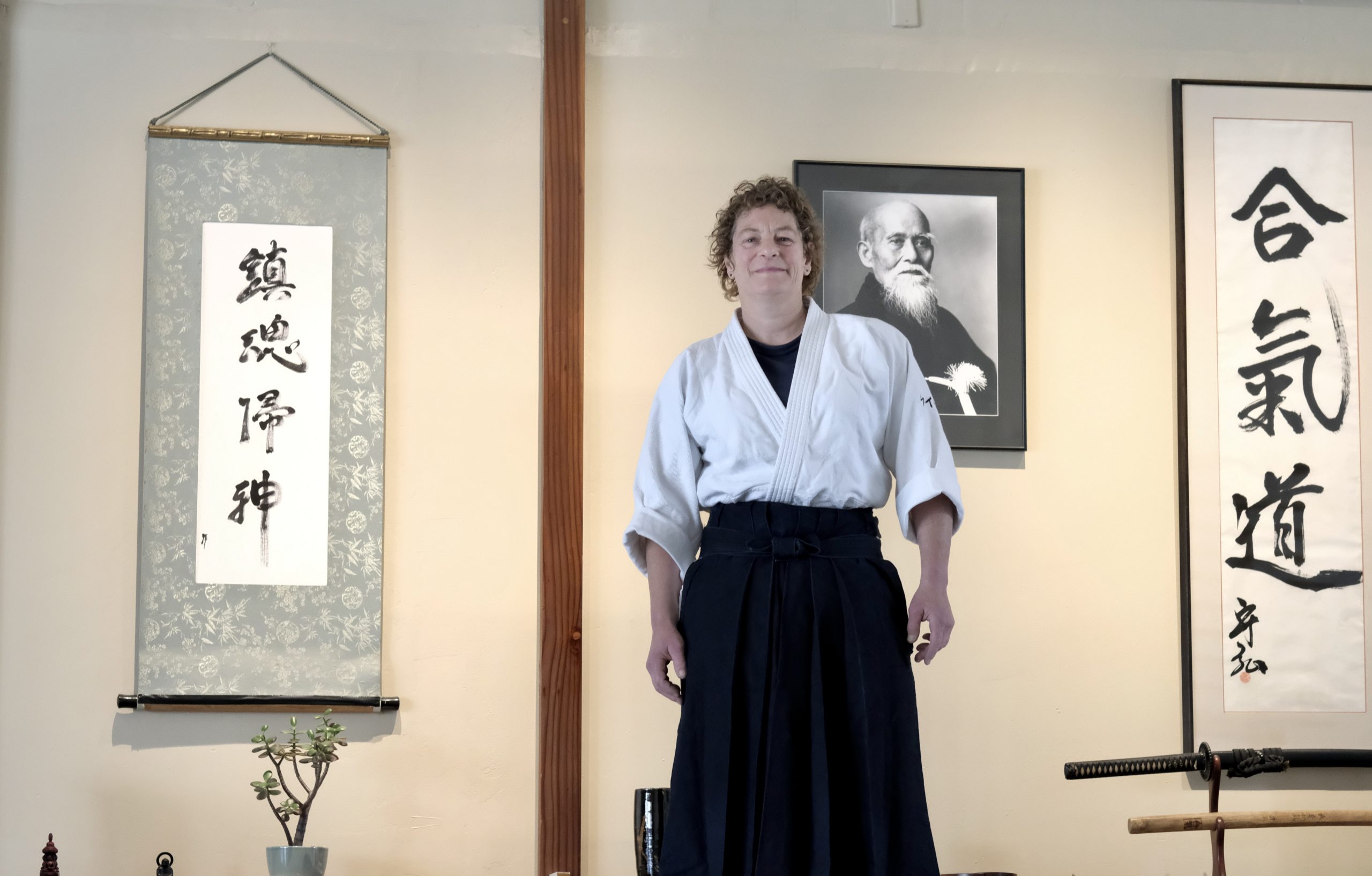
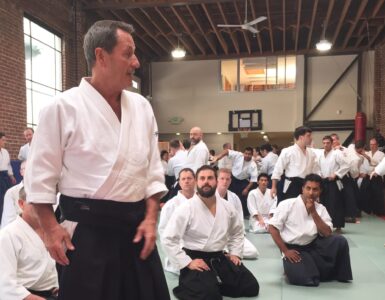
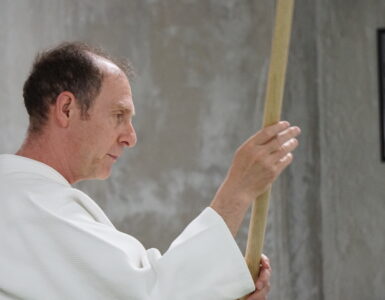
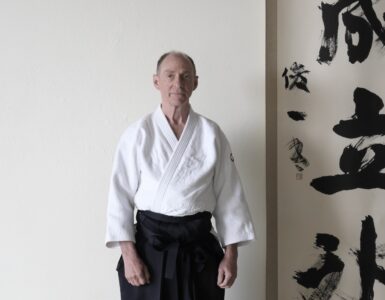
Kayla Feder Sensei, 7th dan, Aikikai, is the Dojo-Cho of Aikido of Berkeley. In 1973 at age of 9 Kayla fell in love with Aikido and now has almost 50 years of continuous training in the art. For the first 20 years of her practice, she was greatly inspired by her training under Morihiro Saito Sensei. In 1980 Kayla traveled to Iwama, Japan to train with Morihiro Saito as an uchi deshi (live-in apprentice). During subsequent trips to study Aikido in Japan, Kayla trained under many direct students of the founder of Aikido, including Kisshomaru Ueshiba, Seiichi Sugano, Motomichi Anno, and Kazuo Chiba. Since childhood she has also practiced with and been strongly influenced by Frank Doran, Robert Nadeau, and Hiroshi Ikeda. In addition to running Aikido of Berkeley, Kayla teaches seminars throughout the U.S., Europe, and Israel and holds a Masters degree in Holistic Health Education.
Josh Gold: Thank you for joining us today, Sensei. You started Aikido when you were very young. What attracted you to the art?
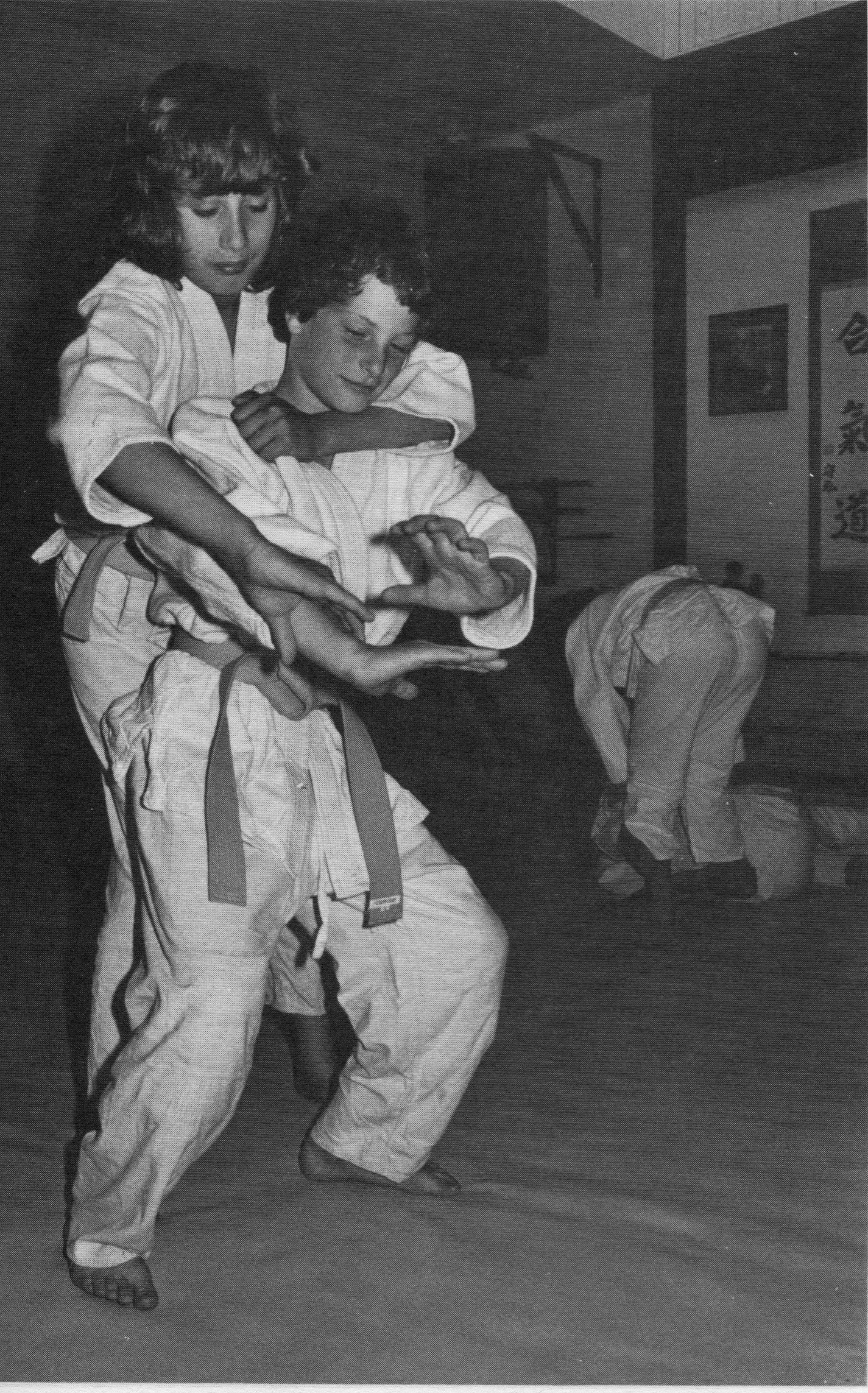
Kayla Feder: I knew I was passionate about Aikido the day I walked into my first dojo in 1973 at age nine. I had been practicing baseball and soccer. I loved sports and moving my body, but I didn’t like the idea of one team winning and another team losing.
When I found Aikido, I was elated. I still remember that first day- just racing home and saying, “Mom, I have to do this. Please sign me up.” And somehow I just knew that Aikido was going to be in my life.
Tell me about your first experience as an Aikido teacher.
When I was 17 years old, some family friends asked me to teach in a town called Benicia, which is about half an hour from Berkeley. I knew I wanted to play a role in sharing Aikido with others so I agreed and started teaching at a youth activity center there. I loved it, and it grew. Before I was 18, I had opened a dedicated private dojo in Benecia. I don’t think that could happen so easily now.
How did you even sign the dojo lease as a minor?
I don’t know. I just signed it and got started. Twelve years later when the landlord found out how old I was, he said, “I never would’ve leased to you if I had known you were 17 years old.” In those days, we didn’t have the beautiful Zebra mats we have now. We put down tire shavings and then had a sail company make canvas covers with grommets for the mat cover. We were really resourceful in getting started. But yeah, I didn’t really think about the fact that I was opening a dojo and becoming a Chief Instructor at age 17. I just did it.
Did you encounter any challenges in terms of teacher-student dynamics due to your age?
I had a lot of students in their 30s, 40s, 50s. It didn’t seem to bother anybody. I don’t know that a lot of them knew how old I was. My mom told me I was always confident in my role there, but I also knew my limitations. Perhaps that’s why I didn’t have challenges with my students.
What’s most important lesson you learned from that experience?
Always be open to growth and learning from the students. I came to the conclusion that as a Chief Instructor, it’s important not to use the position to isolate yourself or think of yourself as better than your students. If one does that, openness to growing and learning is gone. Never let the ego run the show, always be openhearted about learning and changing. And the longer I teach the more I find I have to learn.
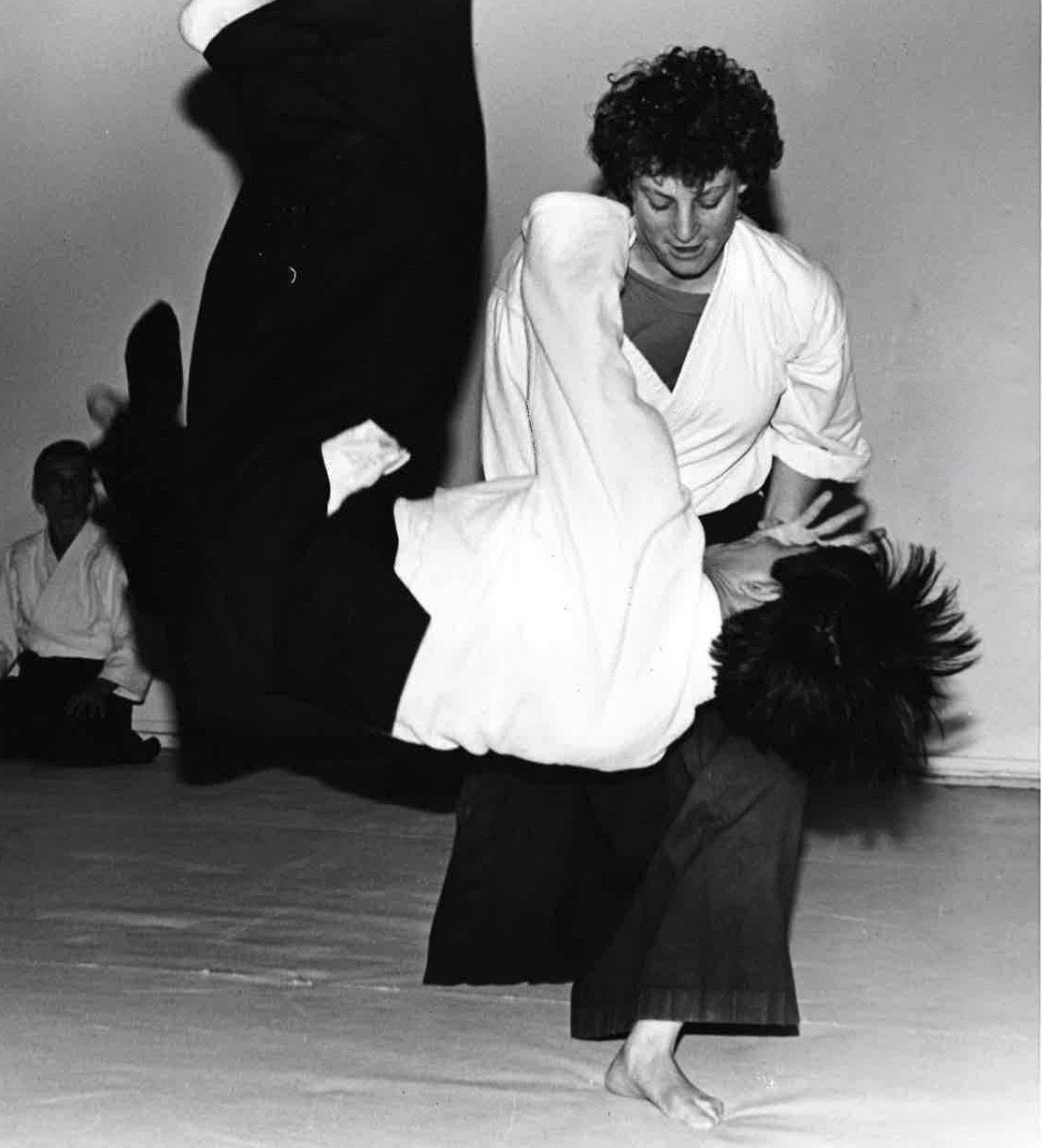
You’ve been practicing aikido for almost 50 years now. How has your own understanding and personal expression of the art changed over time?
I started in Iwama lineage, which I feel is a beautiful way to begin training. Saito Sensei’s way of teaching was very canonical, very step oriented. Looking back, I’m really grateful that’s where I began. There was so much clarity. Clarity in what to do with your hands and feet.
One way to think about building skill in a system like Aikido is by visualizing a pyramid. The bottom of the pyramid is the foundational movements – big, broad, movements and core mechanics. So as you build the pyramid, when you get to the top, the foundation is there to support it.
“I didn’t really think about the fact that I was opening an Aikido dojo and becoming a Chief Instructor at age 17. I just did it.”
I think it’s really important that at a certain point in a person’s learning of any art, they begin to go free. My image of my own Aikido is through the lens of that pyramid. I feel that the bricks on the bottom are really clear and well crafted. And I’m so grateful to Saito Sensei and even to Bruce (Klickstien) for having supplied that clarity.
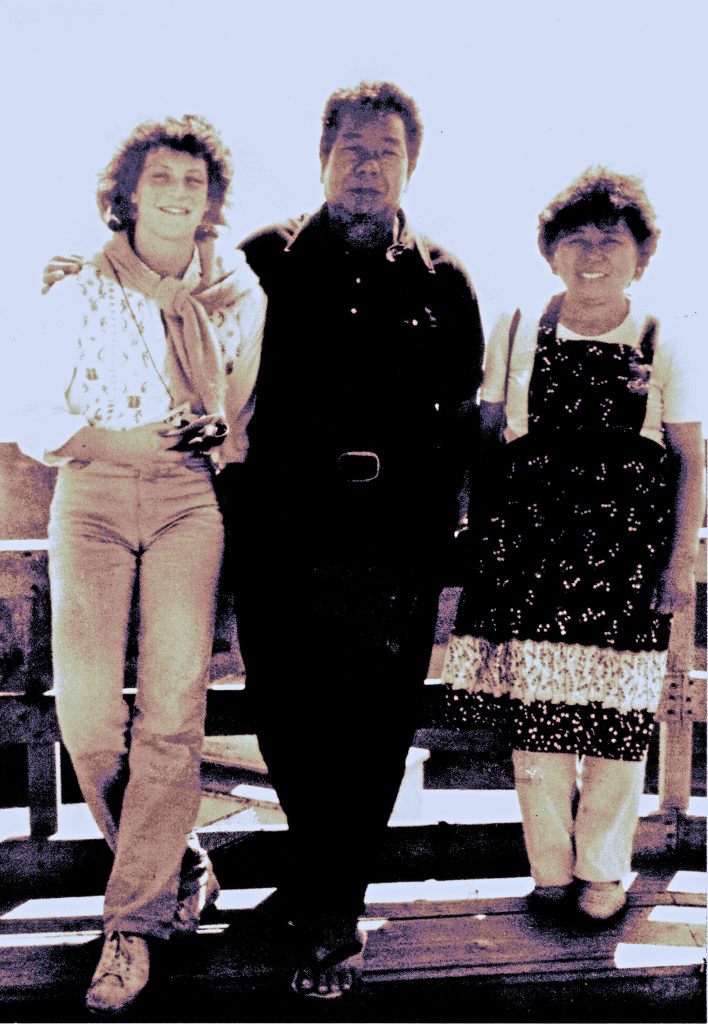
But at some point, I remember feeling like, okay, I can do aikido in this way, but I want to find a way to become freer. So at a young age, I started to broaden my training experiences. I went to summer camps, including the San Rafael Aikido camp for a week, every year.
I met Frank Doran Sensei, Bob Nadeau Sensei, Terry Dobson, and got introduced to Ikeda Sensei. I was introduced to these people at a young age and loved what they were doing. And through those experiences, I started exploring other ways of moving and looking at the art. I feel that Doran Sensei has really been a major influence on my Aikido and my teaching. And although I wasn’t his direct student, I have trained with him a lot and almost think of him as a grandfather figure.
So that really clear step by step practice, that canonical way of learning was wonderful. It took me a long time to break out of that shell. One of the things that keeps me going and inspires me now, is to continually think about how to improve my teaching and my own practice. I’ve always felt awed by the hugeness of Aikido.
Here’s the thing I love most: the infinite line from basic movement (learning where the hands and feet go), to fluid movement, to Takemusu Aiki (the creative flow in which one doesn’t plan what comes forth), to the study of subtle internal practices and finally the divine or spiritual practices. These all support and create the growth of Aikido inside of us. I’ve read and heard that it was difficult to understand O-Sensei when he lectured, so his young students often preferred to get up and train hard physically. Understanding, studying and trusting that which cannot be seen can be tricky. Thus many of the subtler spiritual practices aren’t always included in our daily training. It’s very human to do that which we can only see.
“…the idea of a rite of passage is really important to me. We don’t get that enough in our culture and this particular rite of passage (shodan test) is something everyone can appreciate and participate in because it’s not tied to a particular religion or culture. I think it’s so special for somebody to work hard at something, commit themselves, put their heart and soul into what they’re doing, and then see the benefit and attain their goal.”
Saito Sensei and many other of O-Sensei’s direct students did a masterful job at teaching and categorizing movement, in spite of the complexity of O-Sensei’s teachings. One way I’ve learned to incorporate the spiritual, in a tangible, simple way, is as often as possible to think about love and practice it in teaching, in training, and out in the world off of the mat. “There are many paths leading to the top of Mount Fuji, but only one summit: love“ — O-Sensei.
O-Sensei was adamant that his spiritual life is what created the magnificence of Aikido. He lectured to his students tirelessly, but I’ve read that he felt frustrated because the spiritual parts of his practice were not being incorporated. Let’s keep searching, growing, reading his writings and other teachings, doing our own inner work to develop the divine parts of Aikido, that which cannot always be seen. I like to find a way for each move and technique, no matter how basic, to hold the qualities of clear hands and feet placement, internal work and a big spirit.
You mentioned earlier that sports or activities with organized competitions didn’t really resonate with you. Through Budo Accelerator, I’m introducing aikido to an increasing number of young people. Many of our college students tell me one of the most attractive things about aikido is that it’s a martial art they can practice that’s not competitive. They tell me they have enough competition academically and want a way to build a skill and develop meaningful connections without competitive pressures.
“As Aikido practitioners and human beings, look around you for the people who can help you grow in life. Every person and every situation can be our teacher.”
Aikido can help change our world if its most advanced practitioners keep in mind and heart the founder’s vision of making the world one family. True victory isn’t proving that one is stronger or better than another, “true victory is self victory”. I’ve heard many stories of students who were abused by their teachers, because the instructors didn’t keep their egos in check. That makes me so sad.
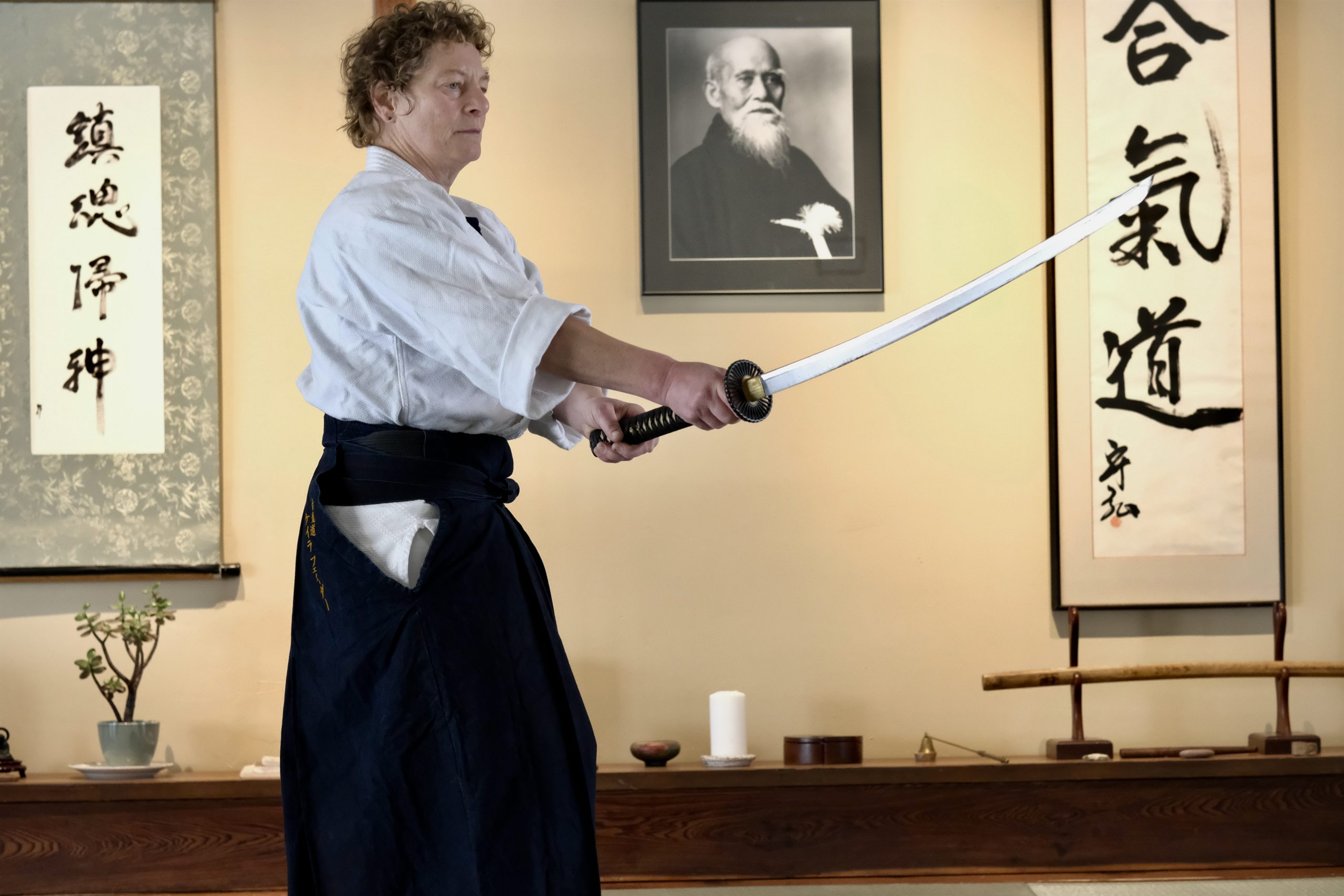
What kind of abuse?
Emotionally, generally. But my first aikido teacher, Bruce Klickstien, was both physically abusive and emotionally abusive.
Bruce Klickstein was your first aikido teacher. And in the 1970s, he abused you. Most people would despise a person like him, and everything about him. Yet a couple of times today, I’ve heard you say that you’re thankful to Bruce in some ways. How do you find a place in your heart to be able to say positive things about somebody who was horrible to you- and other people?
That’s a really good question. I completely forgive him. I don’t forgive what he did, and he should never be allowed to do that to anyone again, but I forgive him. He’s another human being. And my hope is that he’s growing and changing and learning. I’m very fortunate because I’ve been able to work through what happened to me and because of it, I’m a wiser, stronger, better person. And if I were hating him, I would still be stuck in that place. So I’m actually very grateful to him and still feel fortunate that his Aikido school was walking distance from my house when I was a kid.
Thank you for sharing that with us. I really admire the resilience and compassion you show related to this very unfortunate part of your early Aikido experience. Let’s switch gears a little bit. I was fortunate enough to take your class last night and I saw you leading special training for a couple folks who are getting ready for their shodan (first-degree black belt) test. How do you think about preparing people for their shodan test and as a teacher, what does the rank of shodan mean in your eyes?
Shodan means beginning. When somebody earns their shodan, they’re ready to really start their Aikido journey. The process of practicing regularly and intensely is so good for us as human beings. Preparing for your black belt test can really bring the intensity of one’s practice to a very high level, but in a positive way. I also find my own relationship with students training for a test becomes closer through the process. We learn more from one another in this period of focused preparation.
Also, the idea of a rite of passage is really important to me. We don’t get that enough in our culture and this particular rite of passage is something everyone can appreciate and participate in because it’s not tied to a particular religion or culture. I think it’s so special for somebody to work hard at something, commit themselves, put their heart and soul into what they’re doing, and then see the benefit and attain their goal.
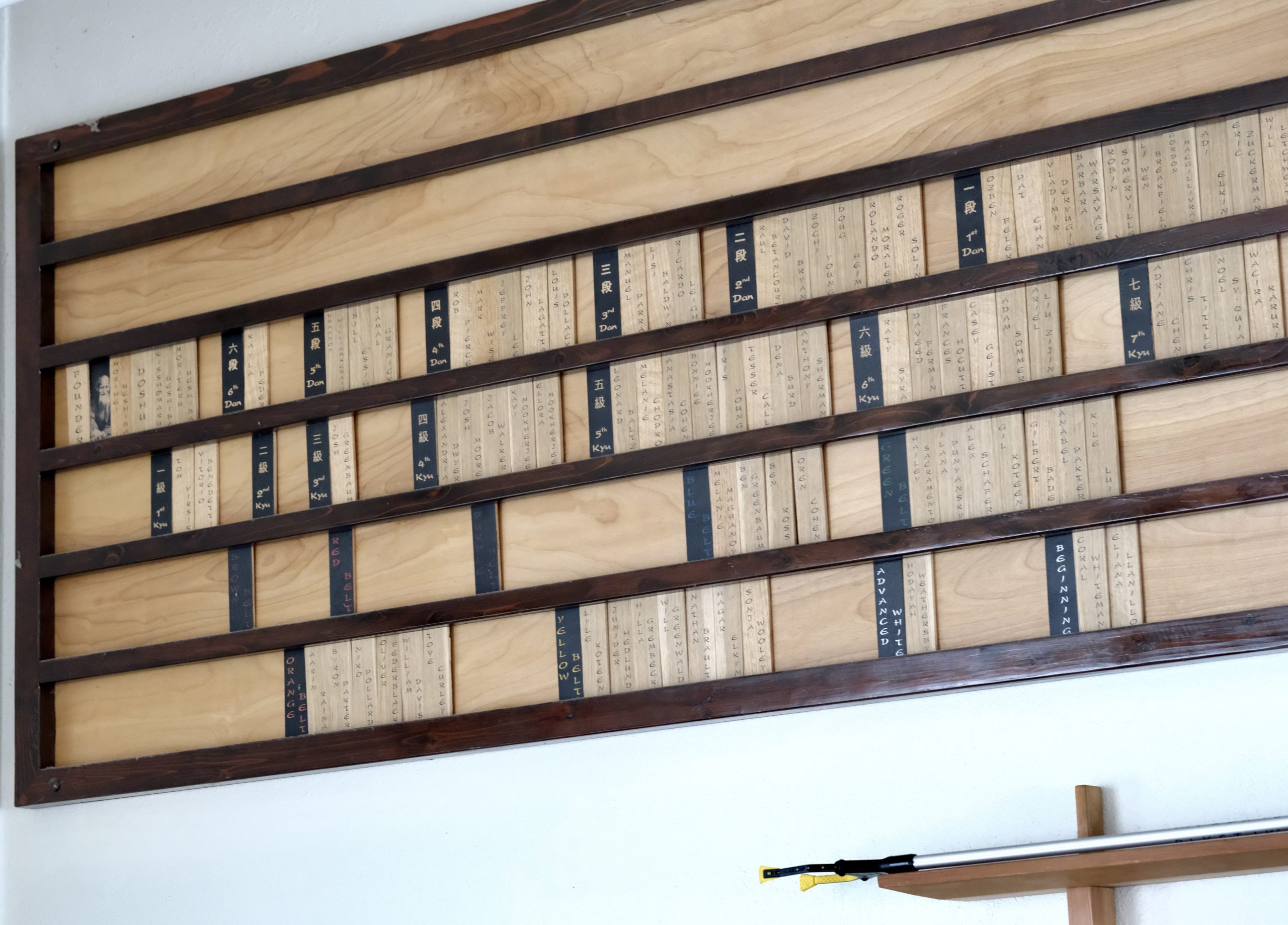
At my dojo, Aikido of Berkeley, I purposefully have adults keep a white belt until shodan. And a person doesn’t wear hakama, whether they’re male or female, until shodan. Then on the day of a shodan test, I make a big deal out of it. I get their belts embroidered with calligraphy. I choose a calligraphy for their belt – they can have their name, or I choose a kanji that’s meaningful for them. We get the hakama embroidered and these people are honored on that day. I put them through a lot. I mean, I really put them through the grinder. We make them work, and then they come out of it feeling really good about themselves.
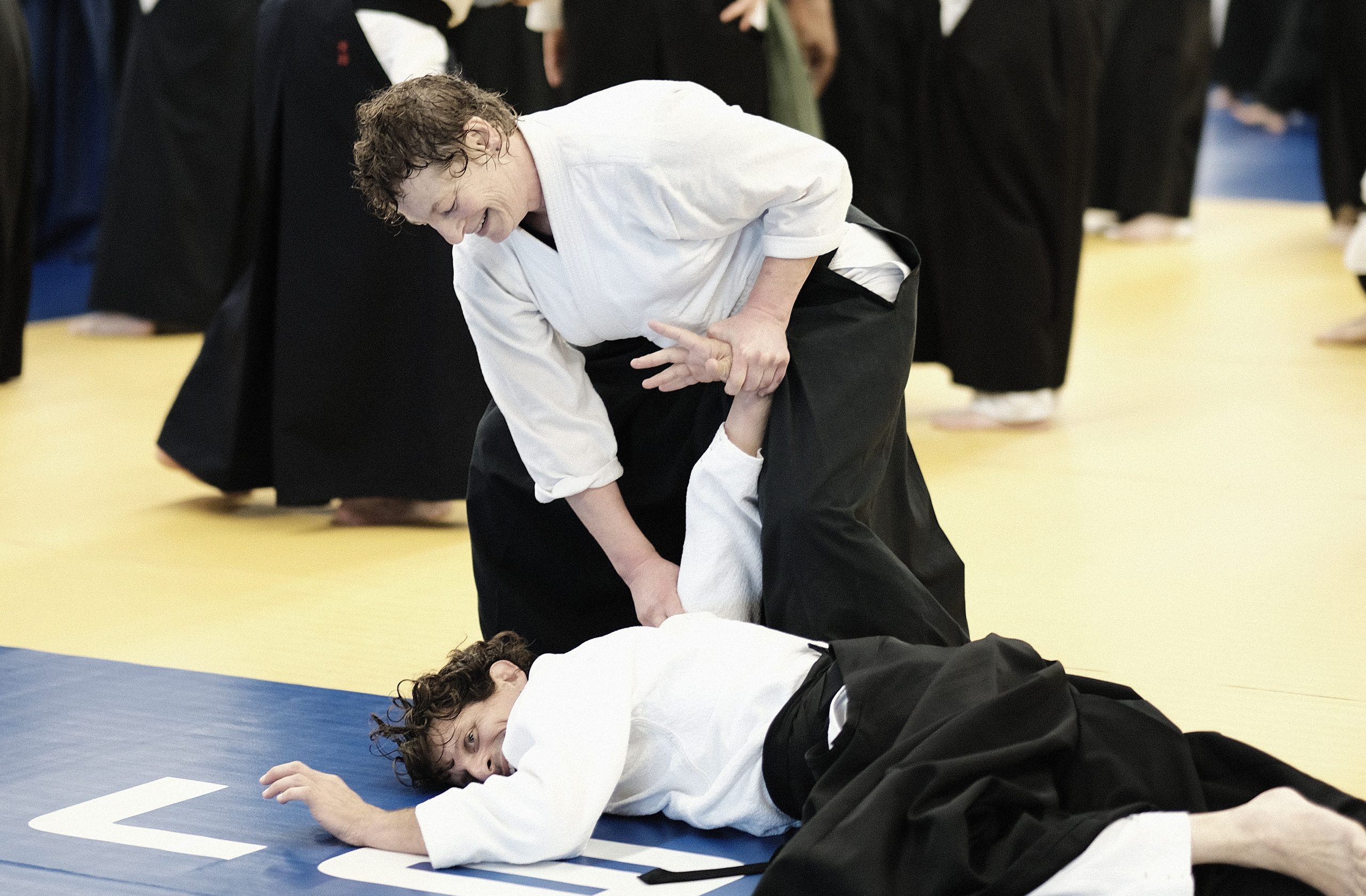
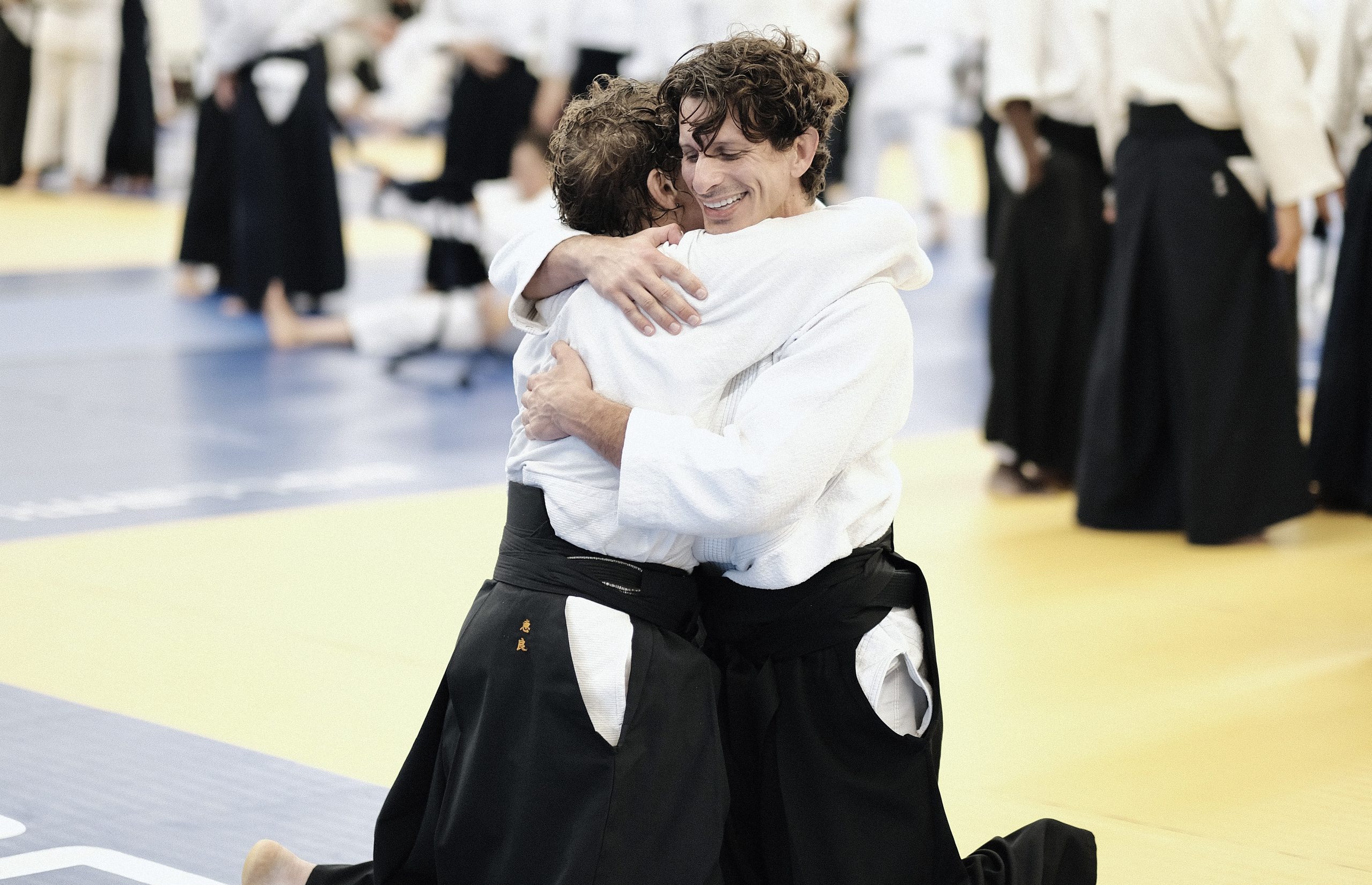
Do you have anything else you’d like to share with the Aikido community at large, or even Aikido instructors specifically?
Don’t stop growing. Those were O-Sensei’s words. There’s never an end to our growth. As Aikido practitioners and human beings, look around you for the people who can help you grow in life. Every person and every situation can be our teacher. If you’re regretting anything you’ve done, or a decision you’ve made – look at it as another opportunity to grow, learn, change and become a better more effective person. We can all do this, and the art of Aikido is a wonderful way to train our capacity for this.






This brings back some special memories, thank you
The first mat we built with Akira Tohei Sensei at the Midwest Aikido Center in Chicago was made with a base of tire chips, then upside downcarpets, with a heavy canvas cover
The seams of the canvas had sharp edges and would take little bites if your Ukemi wasn’t smooth enough, then you were responsible for cleaning up any blood drops
Often it was like practicing on a changing, unlevel surface, slippery at times during the summer bc there was no A/C
Much more challenging than Tatami mats, and better for balance, core development, and conditioning imo
Tohei Sensei was with us whenever we picked up paint, mat materials, etc, and worked side by side with us, he always led by example
Peace
A very nice insight into the history and mind set of someone whom we have had the pleasure and honour to welcome in our dojo as a guest instructor. Thank you for sharing this, Kayla Sensei. And thank you, Josh Gold, for publishing this.
I truly appreciate your perspective, Kayla Sensei, and honor your long experience. I also appreciate that you forgive your abuser, but don’t you think we need to do more as an Aikido community to stop abusers and prevent future abuse? I understand that Klickstein was teaching for years after his crimes were exposed. Here on the East Coast, the sexual abuse and gender discrimination rife in the United States Aikido Federation has been denied and covered up, and the victims shamed and punished. What can we do to stop this ongoing disgrace in Aikido?
@liese
Aïkido journal is convering up the abuses too. Several people have posted abd their comments have been censored.
The sexual violence against women will continue as long as organizations such as Birankai, usaf, and the aikido journal continue to pick and choose who they allow to have a voice, and what narratives they allow to exist.
At aikido journal you are contributing to the abuse by silencing those harmed by those you feature in your “journal” of partial truth.
Dear anonymous poster:
Someone on our team brought this comment to my attention so I thought I’d use this an opportunity to clarify our community policies. We welcome engagement from everyone in the aikido community but we require the following for comments to be posted on our site:
1. A valid name and email address. We don’t allow anonymous posts (which is consistent with almost every social media/community platform)
2. Comments must be respectful, constructive, and coherent
Aikido Journal does not “cover up abuses” and has no knowledge of any cases of abuse or alleged abuses that have not been made public here or in other venues.
Any comments that have not been published on our website were either: automatically categorized as spam by our filter, or made without using a real name / email address, and/or were derogatory or disrespectful.
Liese’s comment is an example of the kind of engagement we like to see at Aikido Journal. She raises a very important issue and does so in a clear and constructive way. We welcome this kind of discourse here and hope that you and any other anonymous posters who wish to engage in discussion on the Aikido Journal website will do so within our community guidelines.
If you have any concerns or questions about our community policies, feel free to reach out to me directly at [email protected]
I really enjoyed learning about your Aikido journey, and love your message! Thank you.