
 Josh Gold
The interview below with Noriaki (Yoichiro) Inoue, nephew of Aikido Founder Morihei Ueshiba, was conducted by Stanley Pranin in 1988. Inoue Sensei’s testimony on the early days of aikido is an extremely valuable reference for understanding the process of the development of aikido. This is the fourth part of a four-part interview with Noriaki Inoue. Read the third part here.
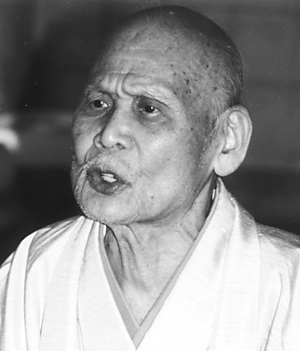
Inoue Sensei: I was able to finish the manuscript this soon because Unagami Sensei took great pains to help me. I didn’t know how to organize my ideas in manuscript form. Fortunately, Mrs. Unagami’s husband is my friend and she does editing work. She was a great help. Without her assistance maybe I would not have submitted this manuscript to you. I might have said I don’t want to. (Laughter) I did not speak out because I wanted my words to be published in a magazine.
Unagami Sensei: You have lived such a long life and are still active, Sensei, and I wanted to introduce you to people.
That’s why I wrote this. I don’t like to criticize the dead. There are no witnesses. If there were any, then I wouldn’t hesitate to write about any subject. I would debate with any great master. I don’t want to embarrass anyone who has died even my uncle [Morihei Ueshiba]. When he was alive I used to quarrel with him. I would say: “What should I do about him. He used the name “Kobu” [meaning “Imperial Martial Art].” I mean it would have been all right with the emperor’s permission but he didn’t have it. So I was actually mad at him and said, “You will fail sooner or later and come back to Aiki.” As a matter of fact, he did change the name back to “Aikido.” I continued to teach under the name of “Aiki Budo.” As I lived with Ueshiba for a long time I know him even better than his children.
You mean from the days of Tanabe (in the early 1900s)?
Yes, I knew him during the Tanabe and Hokkaido days. I was always with him.
When did you go to Hokkaido?
It was when I was in the 6th grade (about 1914).
Did you go there by yourself?
I was accompanied by his parents. The other day while I was talking to Unagami Sensei, she told me that I had a lot of things to talk about. Actually, I can talk forever.
As I remember everything, one day is not enough to finish my story. I remember these things because I had to learn the study of affinity and military tactics. When I was a child I studied them all day long at school. Therefore I know myself, even my shortcomings. I remember everything from the age of 5. I’m ashamed to say so, but I was a weak-minded child. I thought I had to improve my condition and remember everything to try to change myself.
We understand that Morihei Ueshiba Sensei first met Sokaku Takeda Sensei in Engaru in February 1915. Were you present at the Hisada Inn at their first meeting?
My uncle, Takeda Sensei, myself and several others met in the reception room of the Hisada Inn. It was there I first came to know about the existence of Daito-ryu Jujutsu. It was when I was 13. As I was little I just watched the training. Usually they didn’t allow other people to observe their practice. You had to pay even if you were only watching. That’s how secretive Takeda Sensei was in his teaching. He never showed his techniques. If someone came to see, he would take him and throw him [out]; therefore, there were absolutely no peak holes [in the sliding doors] in the dojo. Is the person living in Abashiri his oldest son or the second son? I am sure his oldest was named Soichiro.
That is his second son.
Is that right? What is his oldest son doing?
Around 1930, his wife and one of his children died during a fire [in Shirataki].
I know that but that was a baby. Maybe that’s him. It seems to me that when Takeda Sensei came to Osaka he brought along a boy as his secretary. Since Takeda Sensei could not write, we would prepare scrolls for him. We wrote, for example, the contents of the first technique (ikkajo), the second, the third and so on. However, I became angry at Sokaku Sensei for dividing the techniques into first, second and the third techniques. The first one should be the basic, don’t you think? Without number one you can’t go to one hundred, one thousand or ten thousand. I told him the “nth number” is not necessary. Takeda Sensei said: “Oh, I see. You’re saying that again.”
I don’t know why but it seems that we got along very well. Takeda Sensei never got angry with me. I also liked him very much. I always took him out to eat. (Laughter) If he were with someone else he would be taken to nicer restaurants, but I took him to cheap places only. There was a tempura restaurant called the “Daikokuya” in Asakusa which stills serves tempura on top of rice in the bowl and I took him there. He said, “It’s delicious, kid! You’ll take me here again, won’t you?” I always took him for cheap meals. (Laughter) An old man like that probably preferred that kind of food. In those days everything tasted good. While I talk about Takeda Sensei like this, I have this feeling he might show up and say, “Are you speaking ill of me?”
I believe I was the only one who told him in front of many great people: “It’s not worthwhile practicing with you!” However, he didn’t get angry with me probably because I was small. He said, “I see. Have it your own way!” (Laughter). If an adult told him this he would have been angry with him.
I understand that Kotaro Yoshida introduced Sokaku Takeda to Ueshiba Sensei.
I don’t know because there was more than one person there and I didn’t know who Mr. Yoshida was. I don’t think Sokaku Sensei could have made a living without having at least ten students. One was not allowed to observe sitting cross-legged. I am now sitting cross-legged in front of you but in those days I would sit in seiza (formal position) wearing a hakama. I thought while observing the [Daito-ryu] lesson that this martial art school was different. So I didn’t want to be taught.
My uncle, Takeda Sensei, myself and several others met in the reception room of the Hisada Inn. It was there I first came to know about the existence of Daito-ryu Jujutsu. It was when I was 13. As I was little I just watched the training. Usually they didn’t allow other people to observe their practice. You had to pay even if you were only watching. That’s how secretive Takeda Sensei was in his teaching. He never showed his techniques. If someone came to see, he would take him and throw him [out]; therefore, there were absolutely no peak holes [in the sliding doors] in the dojo. Is the person living in Abashiri his oldest son or the second son? I am sure his oldest was named Soichiro.
When Takeda Sensei came in 1931 to Tokyo I served as his partner because my uncle was sick. I didn’t go to watch when Takeda Sensei was practicing with my uncle even though I was told to come. On that occasion Takeda Sensei stayed a long time. Ueshiba must have been very tired.
I’d like to ask you about your martial arts training experience before Daito-ryu. I understand that when Ueshiba Sensei was still in Tanabe, Kiyoichi Takagi, a Judoka, was invited and he practiced with him. After the Russo-Japanese War Ueshiba went to Sakai City and practiced Yagyu Shingan-ryu.
That’s right. Ueshiba liked martial arts so he went everywhere.
It took a long time to get to Sakai from Tanabe at that time, didn’t it?
Yes, but there was a ship. It wasn’t that hard because there was also a road.
Did Ueshiba Sensei go there often?
Sometimes he would stay over night. I guess he practiced a little Yagyu-ryu.
Did you ever go with him?
No, I didn’t. I thought I didn’t need to practice Yagyu Shingan-ryu. My uncle liked martial arts very much. He went out to practice but never told his parents. People including my father thought they had to do something about him and sent him to Hokkaido. My mother was the eldest sister of Morihei Ueshiba. They sent Morihei to Hokkaido saying that if he wanted to work he should do something big. If he needed money he should take it with him.
When I was in the fifth grade of elementary school, I went on strike. (Laughter) I was a fifth grader on strike, you see! My teachers had a hard time handling me. So my father thought I was unmanageable and sent me to Hokkaido to let me run loose. I would not have gone otherwise. I became a good boy after I went to Hokkaido.
I don’t know why but it seems that we got along very well. Takeda Sensei never got angry with me. I also liked him very much. I always took him out to eat. (Laughter) If he were with someone else he would be taken to nicer restaurants, but I took him to cheap places only. There was a tempura restaurant called the “Daikokuya” in Asakusa which stills serves tempura on top of rice in the bowl and I took him there. He said, “It’s delicious, kid! You’ll take me here again, won’t you?” I always took him for cheap meals. (Laughter) An old man like that probably preferred that kind of food. In those days everything tasted good. While I talk about Takeda Sensei like this, I have this feeling he might show up and say, “Are you speaking ill of me?”
Ueshiba’s parents were very charitable. They had their own paddy field [in Tanabe] and early one morning they went over there and found a dead baby. They felt sorry for the baby and took it home and buried it. In those days they had not yet had a child. It seems that soon after that Ueshiba’s mother had my mother. I heard this story many times [from my mother]. I would often be scolded by my mother when I said to her “Oh, I see. You are the reincarnation of the baby.” (Laughter) Morihei Ueshiba’s father, Yoroku, was a fine, kind-hearted man. Therefore, after my grandfather died, I would often visit him. He used to employ many people.
When did you first go to Ayabe?
That was in 1920. I first learned of the Omoto religion in 1917. After that I was allowed to stay in Ayabe for a long time. That was before the Ueshiba family came to the Omoto headquarters. About one year after that Ueshiba came to Ayabe with his family [the Ueshiba family came in the spring of 1920]. I was not in Ayabe all the time but in Kameoka.
Was that during the “Ueshiba Juku” period?
The words “Ueshiba Juku” appear in an old picture. I did not attend practice very often so I don’t know much about it. There were tatami mats laid in the dojo. I trained with my uncle there sometimes because otherwise I would forget my techniques. I liked the sword from the time I was a boy. I read many books about sword masters. I was really impressed by the power of the martial artists from the Koshindo [lit., “old path of the gods] of the “Kojiki” (Record of Ancient Matters). They would fell their opponents merely by staring at them.
I often tell my students that strength and weakness are unimportant. If you really gain courage and a “thin mist of breath” you have nothing to worry about. I can say this out of experience. It would be easy for me to throw you out of here if I wanted to. (Laughter) However, there would be no point in doing that.
Although we are from different countries and have different languages, we are all alive through the ki power of the Universe, not through kokyu, aren’t we? Everybody’s kokyu is different. However, the case is different with ki. Because the ki of the universe is united in a precise manner, we are able to live, isn’t that so? I have been studying these things with my students for a long time.
Ueshiba’s parents were very charitable. They had their own paddy field [in Tanabe] and early one morning they went over there and found a dead baby. They felt sorry for the baby and took it home and buried it. In those days they had not yet had a child. It seems that soon after that Ueshiba’s mother had my mother. I heard this story many times [from my mother]. I would often be scolded by my mother when I said to her “Oh, I see. You are the reincarnation of the baby.” (Laughter) Morihei Ueshiba’s father, Yoroku, was a fine, kind-hearted man. Therefore, after my grandfather died, I would often visit him. He used to employ many people.
If one really believes in me and finds my practice interesting, I do not mind having only one student. The content of my lectures would be the same regardless of the number of students. I stop my class when the time is up. It would not be right if you decided not to give a lecture just because you have only a few students one day. What worries me is that one cannot do anything if he is disliked by people in general. Your class must attract them. It is only when you and your class are liked that beautiful things are born. Therefore, I am always examining myself. I am always concerned that what I have told you might cause problems for my grandparents, Yoroku and Yuki, and also my mother. What I have said should not hurt any of my ancestors, should it? If it’s only me who is hurt, that’s all right. However, there are relatives involved, you know. And what’s more is that there is the wonderful Onisaburo Deguchi Sensei of the Omoto religion to consider. This is why I don’t want anyone to write lies about me. If a person writes the truth I will cooperate with him.
Various people have made money using things I have said. In the old days, admirals were very prominent people. When these people came to practice and talked to me, the media would come and record our conversations and publish them as group interviews. This is how they made money. Therefore I decided not to talk. This is why I asked Admiral Takeshita not to allow anyone to come to my lectures because I did not want anyone to write any lies.
This is the fourth part of a four-part interview with Noriaki Inoue. Read the third part here.






Add comment