
 Josh Gold
“Setting the stage for a successful execution of techniques”
Aikido training in virtually all styles follows a series of rituals. Students seldom question the techniques and assumptions that underlie what they are taught. As a result, poor training habits can gain a foothold and are perpetuated over generations.
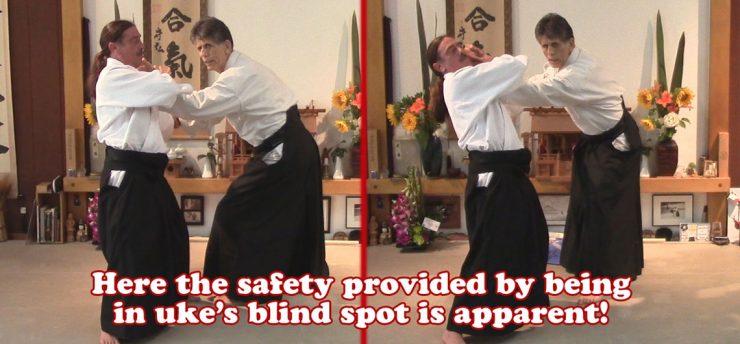
Stanley Pranin takes a look at the simple katatedori — the single-hand grab — and proposes that we rethink our range of responses to gain an immediate advantage. This sets the stage for a successful execution of techniques.
—————————————————–
Watch this video for insights into solving the
technical problems that hold back your progress!





Stan:
Excellent observations, diagnosis, and prescriptive remedies.
Your teachings here recall some of your earlier examinations of:
Go no Sen | Sen no Sen | Sen Sen no Sen
– – –
The term “sen” describes three possible timing variations in Japanese budo (martial arts).
Go no sen:
means to counter-attack. For example: You block or evade your opponent’s attack and then respond.
Sen no sen:
means to simultaneously attack. In sen no sen, your opponent might attack with a punch to your face while you simultaneously kick your assailant in the stomach. The idea is that your kick, which was launched simultaneous to your opponent’s punch, will disrupt or nullify the punch.
Sen sen no sen:
describes sensing your opponents intention and launching a pre-emptive attack. Sen sen no sen is more than simply launching a blind offensive; it involves knowing what your opponent is about to do and effecting an appropriate “pre-emptive response”.
– – –
This understanding can also be used to gain insight into all manner of encounters off the mat as well. Just a cursory look at the current Republican and Democratic Debates gives us a dramatic look at all of these ‘Strategies’ being played out. I’ll leave it to your readers to figure out just who is doing what to whom and why. But there it is, in all it’s beauty and ugliness.
– – —
IMHO:
First and Last:
As a ‘serious’ martial artist … get comfortable with and accomplished at Go-no-Sen. Most ‘good people’ are surprised and initially overwhelmed by aggression and violence. Most of us ‘nice and decent folks’ have been socially domesticated and our environments have been made reasonably safe enough so that we, unlike our ancestors, do not have to navigate a jungle full of threats and predators all day, everyday, 24-7-365. Thank goodness.
But, it has dulled our threat alert awareness and has slowed our reaction time and the ability to rapidly and effectively ‘see ya and raise ya’ in energy (ki).
No wonder O’Sensei (and his teachers like Takeda) were always so hyper-alert. And why he put his uchi deshi on notice that they could attack him any time that they sensed an opening.
Between First And Last:
Use every opportunity on and off the mat to train yourself in the awareness and skills of Sen no Sen and Sen sen no Sen. (Intuition and the subtle energy of intent) This is where Internal Arts like Aikido can contribute enormously to the quality of our lives across the entire spectrum of the Realm of Relationship.
These awareness and skills are what will assist us most in following O’Sensei’s admonition to humanity to, “Create a beautiful world.”
Respectfully,
~ David Brown
I am following your advices – technical recommendations for some months, since I started again the Aikido practice. Thank you very much and Congratulations for yours very good and objective articles and publicatios on Aikido Journal.
Omedetoo Gozaimasu !
Rilton Rodrigues – 5. Dan – Zenshin Karate Dojo. Pernambuco State, Brazil.