
 Josh Gold
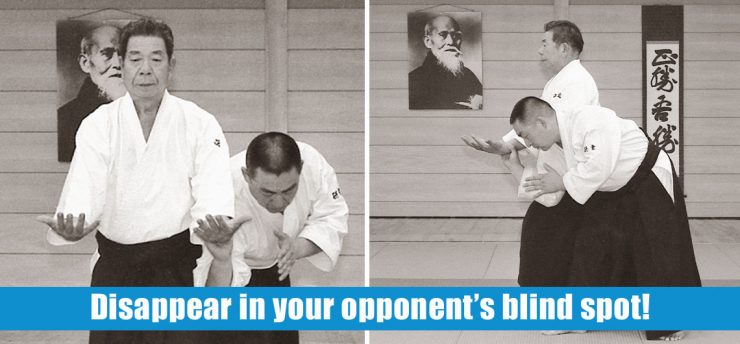
“Create a strong base while making yourself invisible”
“Daily practice begins with tai no henko. First open your fingers. The basis of ura movements is footwork. Bring the toes of your left foot to meet the toes of your partner’s right foot. Turn in a circular movement into a position along your partner’s side. When pivoting, open your fingers fully and extend your ki. Learn to keep your hips stable regardless of whether your partner pushes or pulls. At one time the founder executed tai no henko with a single hand, but in his later years he used both hands. Pivot around and bring the fingers of both hands to the same level.”
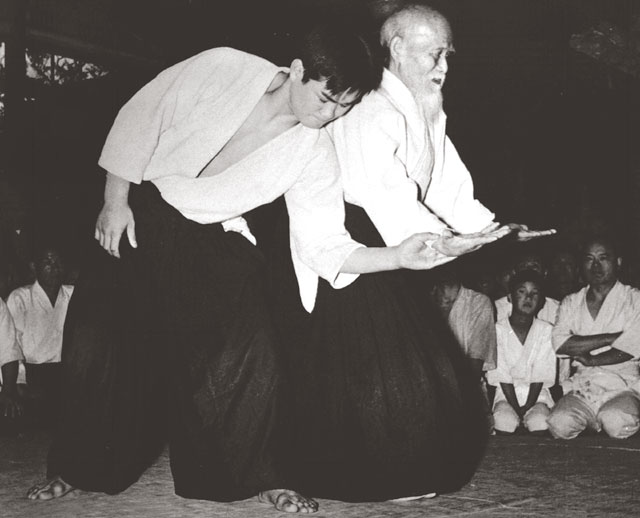
The Iwama aikido curriculum as disseminated by Morihiro Saito, 9th dan, has its roots in the techniques taught by Founder Morihei Ueshiba in the postwar era in Iwama, a small town in the countryside of Ibaragi Prefecture.
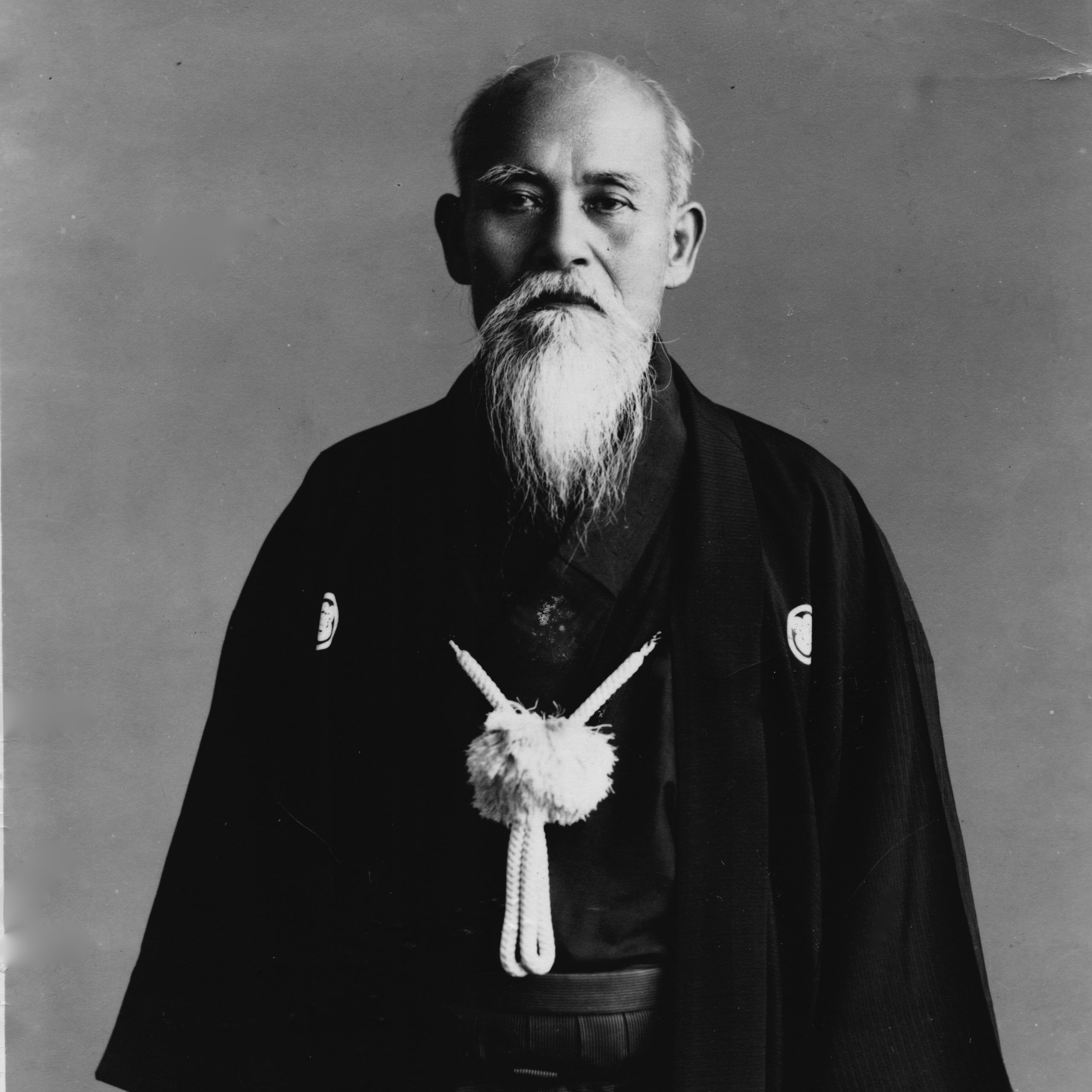
Morihei Ueshiba lived, farmed, and practiced his aikido with great intensity in Iwama after the war left Japan in a poverty-stricken state. For the first time in years, he was able to concentrate his efforts on the perfecting of his martial techniques and spiritual development. This period is generally regarded as the birth of aikido as recorded by Morihei’s son, Kisshomaru Ueshiba. O-Sensei used the term “Takemusu Aiki” to refer to his art at this stage. The literal meaning of “Takemusu Aiki” is “Aiki which gives birth to martial techniques.” Morihei explained that this was the highest level of aikido where one is capable of spontaneously executing perfect techniques.
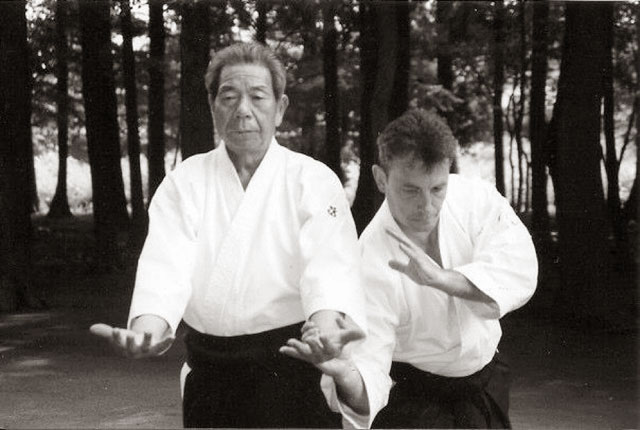
Uke: Daniel Toutain Sensei – photo courtesy 1998 Eric Savalli






In all of the pictures it looks like nage is putting uke into his blind spot.
Also, what is keeping uke holding on with just finger tips? The direction of the movement appears to be toward the weak spot in the grasp (between thumb and fingers).