
 Josh Gold
The word “Aikido” is simply a word. Like the word “Love”, or “Hate” or even “Peace” are each but mere words. Like when looking at our atmosphere, we may see “blue” skies, or fiery “red” sunsets, or even the “grey” cloak of sunlight intercepted darkness. Does our description of what we see actually define what it is? Or do we need to explore, digest and understand more of what our minds and emotions may reveal by taking the time necessary to truly evaluate what our senses are apparently revealing to us? Perhaps we will discover what conclusions or judgments we make, by examining the actual lenses we look through, or what filters we construct and employ to better discriminate amongst the sensations and sensory inputs we encounter.
In the seeming cacophony of definitions, descriptions and theories of what “Aikido” is or may have significant meaning to us individually, is it any wonder that we must truly fail whenever we attempt globally to reach any general consensus of what Aikido truly is.
Traditionalists may want to begin with the root definitions of the Japanese characters or kanji, but even then do we find conflicting and agenda driven positions taken by the “experts” and scholars amongst us. How is a “newbie” to make any sense of, or take comfort in having faith in the word or its origin? Does “Ai” really only mean “love” or “harmony”? Does “Ki” only mean “spirit”, “mind” or “energy”? Does “Do” only refer to a “path”, a “way” or a process? And what of the choices of meanings that are possible with the combinations of those terms?
Then we have the “new age” thinkers and opportunists who revel in the seeming randomness and uncertainty, even amongst the so called high ranking seniors of the art. Who to believe, who to listen to, and who to entrust with the immense responsibility of “getting it right”? Is it even truly necessary to “get it right”? By what concensus? By whose decree? In what time frame?
Certain purists may then come forth and proclaim, “it’s in the training itself”, so simply “shut up and train”, and then the truth will emerge for those willing to pay the price of long years of intense dedication to their selected mentors, and their uniquely singular programs of “correct” interpretation of the Founder’s intent and discovery. Let us dispense with meaningless dialogue, misleading videos, and the ultimately useless diversion of reading online treatises and discussions, and support each other’s sincere attempts to add their interpretations to the mix, and allow history to decide.
By some accounts, the word “aikido” was given to the Founder to use by a consortium of Budo organizations or such like in 1942. I am unclear as to the exact nature of Budo politics at the time, and will defer to better knowledge than mine. Even so, the Founder himself, if the account is correct, was given a choice as to how best to interpret and to then integrate the word of aikido into his system.
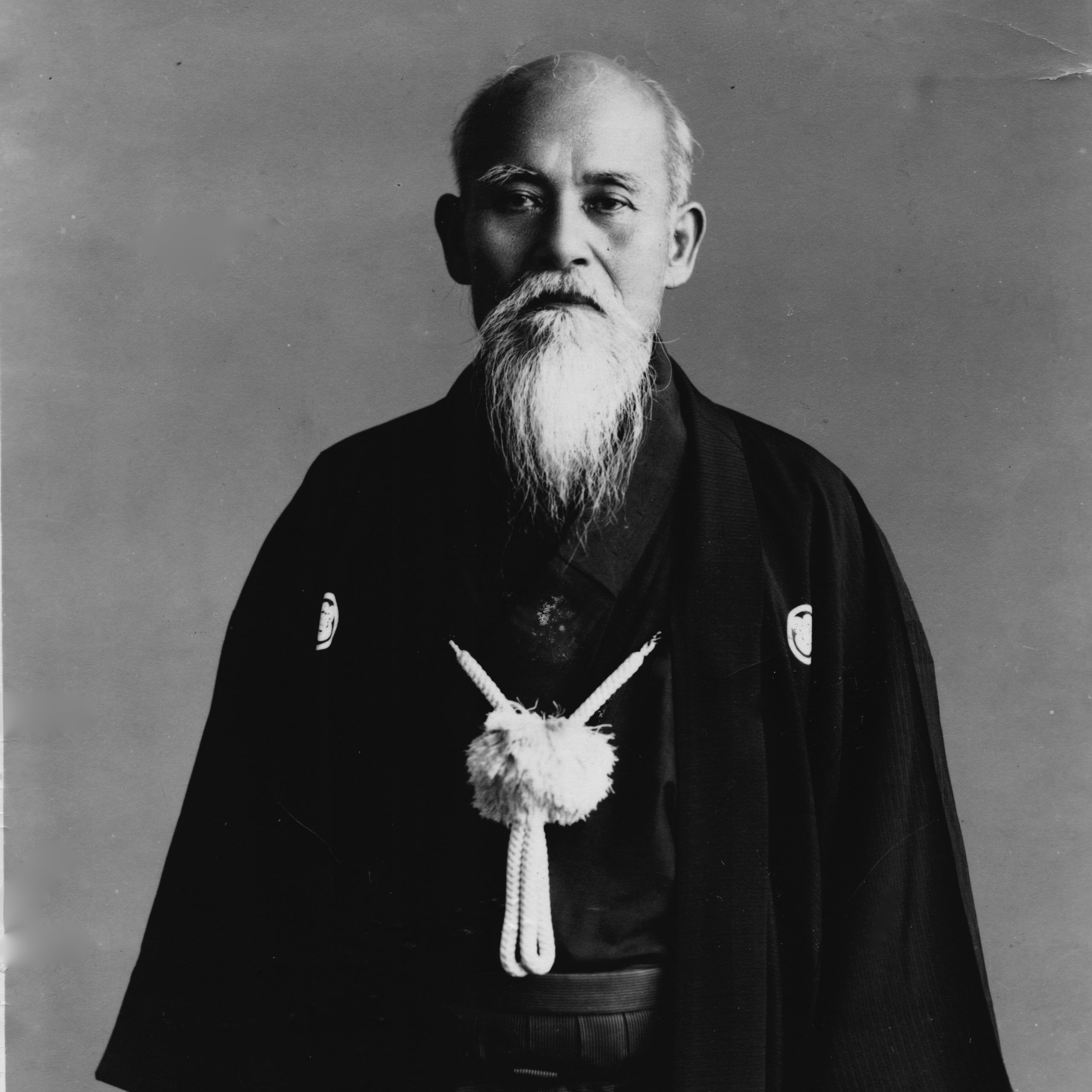
The Founder made it abundantly clear that we individually and collectively are free to create our own template of Aikido, based if we wish, on the model that he himself created. This may also mean that we can interpret the meaning of his Aikido, and that of our own creation, in the manner that best suits our purpose, our sense of fairness and respect for the original model, and one that best serves our relationship with our peers and our students over time
For me then, I find it convenient and useful to state that I study the martial art of Aikido, as introduced and taught by Morihei Ueshiba, and represented by Aikikai Foundation, currently headed by Doshu Moriteru Ueshiba. This is for public consumption, and declared in the interest of general identification for my dojo and my constituents. Personally, however, it is a vastly different matter, as I regard my own values, standards of training, and goals for personal development strictly my own business, and not defined in any way by organizational, philosophical or sociologically determined parameters, constraints, or identification.
Yes, for me it remains a word, the definition of which is my own to ponder, the application of which is mine to own, even as I freely acknowledge others the right to do the same. Aikido is just a word, like any other, that takes its significance, relevance and impact on the way we use it in our dealings with others. Perhaps in the end, we may hopefully find mutual satisfaction and empathetic agreement on the training mat, where it all started.
Click here to view the original article in Aikido Academy USA. Reproduced with the kind permission of the author.






I love what is written here, and I completely agree. In practice, I have practiced in many purist dojos. I had Sempai who I thought confused Their Way for The Way. I listened and learned but questioned.
I am now Sempai to a number of new agers. Some choose to call Aikido their way of life. To look at their way of life, it is no different from what it was when they hadn’t started training yet! Because Aikido is all about their freedom to create and chose, they pick and chose like they are at a smorgasbord. If they don’t like something, then it is not Aikido. When this happens too early, such people don’t chose what Aikido is based on the result of their own hard work or study, history or martial effectiveness or even spiritual development but rather on what they Like.
When a student choses to identify for themselves what Aikido is, that is good. But, the student needs to still be open to other definitions and directions from their seniors or the Art, the history and the need for a dojo or Aikido at all is lost.
Thank you for this reminder.
Strong likes and strong dislikes are incompatible with the study of budo.
Please keep sharing your experience with us.
Patrick Augé