
 Josh Gold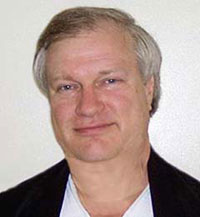
About the Author: Aikido Eastside Chief Instructor George Ledyard Shihan began his Aikido studies in 1977 under the direct instruction of Mitsugi Saotome. Ledyard Sensei currently holds the rank of 7th Dan in Aikido and Shodan in Daito Ryu Aikijujutsu (under Howard Popkin and Joe Brogna Senseis). He counts Hiroshi Ikeda, William Gleason, Howard Popkin and Joe Brogna (Daito Ryu Ginjukai), Mary Heiny, Tom Read, Endo Seichiro, and Dan Harden as strong influences on his Aikido. (source)
Let us look at the nature of Self-Defense. There are two kinds of self-defense, and one is merely a distortion of the other.
The first kind of self-defense is authentic. It is the evolutionary, biological right of any animal to defend its life and those of its family or social group. When it comes to humans, this involves the development of certain skills coupled with the addition of technical development. The skills and technology of True Self-Defense are simply an extension of those developed for survival over hundreds of thousands of years. So True Self-Defense is the defense of the physical body when under some threat.
The distorted form of Self-Defense is not authentic and is the result of illusion. It is based on the instinct for self-preservation on which authentic Self-Defense is founded, but it is distorted by the illusion of self-identity under which most people operate. In other words, from the time of our birth we develop a series of self-images which we put forward as “who we are.” These self-images or “primary selves” are who we consciously believe we are and reflect the ways in which we have learned through our personal experience to exist in the world.
“So most of what we see as ‘Self-Defense’ is the distorted use of aggression in defense of false notions of who we are… Only when we cease falsely identifying with our illusions of who we are can we be free of the need to ‘defend’ the false self.”
The problem is that this is not really who we are. There is a whole series of “disowned selves” who from infancy we have learned to put away from our consciousness. The more we identify with these “primary selves,” the more energy it takes to maintain that incomplete self-image—that illusion of who we are.
So what we do as human beings is to devote most of our energy to trying to maintain our false, conditioned construction of ourselves. Anything that threatens that sense of identity feels like a threat to our very survival (whereas it is only a threat to the survival of the false identity). We seek out companions and experiences that support our false sense of self and yet at the same time there is a counter-drive for us to look inward towards our deeper nature.
All aggressive behavior that is not True Self-Defense is the result of this false identification with the mental constructs that create our “primary selves” and the fundamental reluctance and fear we have of recognizing that we are not who we maintain we are. We will distance ourselves from, attack, divorce, etc. anyone who threatens our fundamental sense of who we are, and we tend to seek out people and activities that reinforce the identity we put forth to the world (and ourselves). To have this sense of self threatened is experienced as a survival issue by the conditioned self.
So most of what we see as self-defense is the distorted use of aggression in defense of false notions of who we are. This can lead to personal violence or it can manifest as violence between social groups, fighting to maintain their collective self-illusions.
So the only way that we can be sure that we engage only in True Self-Defense is to get in touch with our True Selves, the unconditioned essential Identity that underlies all these “primary” and “disowned” selves. Only when we cease falsely identifying with our illusions of who we are can we be free of the need to “defend” the false self.
“[O-Sensei] stated: ‘True victory is Self-victory’; this victory is nothing less than experiencing who we really are … our True Selves which are an integral part of the undifferentiated Universe.”
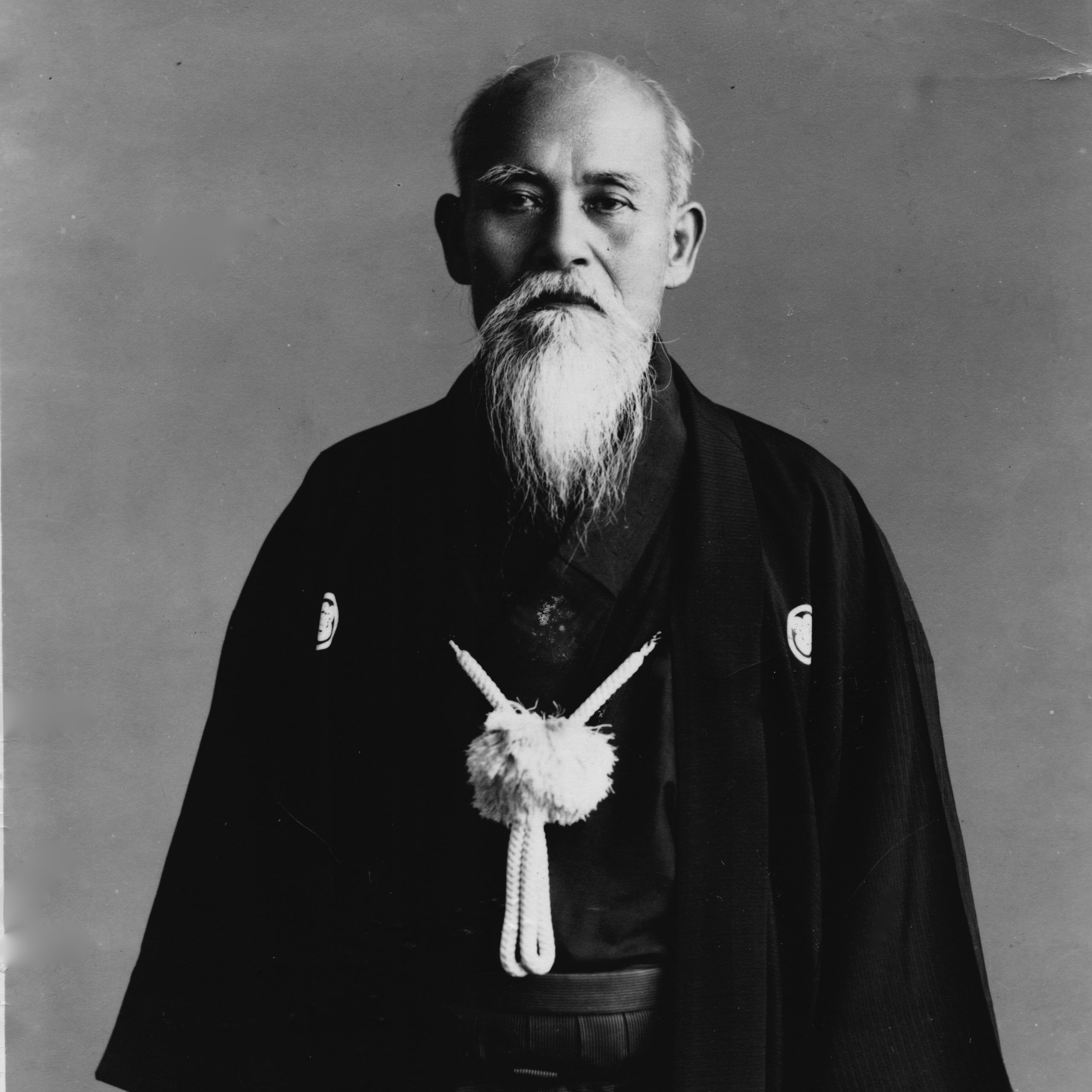
O-Sensei’s vision of what Aikido should be is just this. He looked to create the true “Spiritual Warrior.” He stated: “True victory is Self-victory;” this victory is nothing less than experiencing who we really are, not experiencing ourselves as separate little identities which require constant defense to maintain, but as our True Selves which are an integral part of the undifferentiated Universe.
Aikido practice is designed to teach True Self-Defense while it simultaneously seeks the cessation of the distorted False Self Defense. It can only do that if there is an internal component to the practice.
Students cannot, as most tend to do, seek out training that merely acts as a reinforcement of who they already think they are. Many dojo are nothing more than mutual admiration societies which allow like-minded individuals to avoid the discomfort that comes with the need to let go of the false self-images that we all carry. At the same time, other dojo are merely places in which fearful people mutually develop an illusion of strength through tough martial practice but never confront the fundamental need to let go of these defenses in order to engender fundamental change.
So even as we study the techniques of True Self-Defense, we must simultaneously attend to developing the direct experience of our True Natures. Until the time at which all human beings have experienced their true selves, there will be a need for the martial techniques of True Self-Defense but it is only as Spiritual Warriors who have done battle with their own internal demons that we can operate on this level which is the “Spirit of Loving Protection” of which the Founder spoke.
Contact George Ledyard’s Aikido Eastside in Seattle, Washington






Hello Ledyard Sensei, thanks for this great article.
Here are my thoughts from reading this. Though I’m just a beginner I’d like to post why I think this is a great article. I don’t know if I read this long ago, but I think I am much better equipped to understand it now!
1. To suggest that discarding the false self (in favor of discovery of the true self) is the main goal of training is perfect, and I think it encapsulates previous discussions of the goal being the mastery of fear. They are both true but this provides the big-picture context where the older discussion of fear fits in (i.e., fear is related to the perception of threat, and perception of threat is related to perception of “self”).
2. The dissolution of false self is the same idea as the path of other “spiritual” leaders, like Siddhattha Gotama (founder of Buddhism). To follow Gotama’s suggestion further, ultimately there is nothing about our biological individuality that is truly “self.” (I think you alluded to this idea by saying, “victory is nothing less than experiencing who we really are, not as separate little identities … but as our True Selves which are an integral part of the undifferentiated Universe.”) I think reading about Buddhism (and Daoism) really helped me understand what O-Sensei meant, and it sounds like you are interpreting his teachings the same way here. This point of view reveals to me the value of the idea expressed by “I am the universe,” an idea that I think comes from following a path where physical training and philosophy/metaphysics are revealed to be one and the same.
3. This article is extremely succinct! It should be required reading. In the end the best thing about this is that it sums up what MA practice is (or should be) all about, and why it has importance for the human race. This importance is not specific to any culture or age (other than the boundary time described in the article, “until the time at which all human beings have experienced their true selves”). In other words this isn’t about ancient feudal warriors, and it isn’t about modern aerobics and “studying Japanese culture” (as was recently discussed on Aikiweb). It is about something deeper than any of that: the revelation of the truth of the identity of “self” and “universe,” independent of any culture or age.