
 Josh Gold
Intro
Josh Gold: You studied under Chiba Sensei for many years. His Aikido was quite dynamic and powerful. I heard he many people were captivated by his Aikido when they first saw him.
Didier Boyet: He was extremely powerful as you said – very dynamic and very demanding. He didn’t have that many students; he had a few. A lot of people first saw him and said, “oh very interesting, that’s powerful,” but once he throws you, a lot of people would give up because it was painful. It was very hard to train with him or under him.
I’ve heard it was very hard to be his student.
I was a little bit lucky because although I knew him in Europe before I went to Japan, I was never one of his students; I was a Hombu Dojo student. I took private lessons with him and Bruce Bookman. He treated us as if we were his students, but actually we were not, so he would take extra care with us. I’ve seen him in his own dojo with his own students and you can see if they don’t understand, they can get hit. He would lose people very quickly.
He was a teacher, so his goal was to find the one that would continue after him. Not succeed him, but continue after him. He spent his whole life, especially the years that he lived in America, trying to find that person or these persons. He always said that if you can make one, that’s enough, but they have to be better than you. The idea is to pass your knowledge until somebody becomes better than O-Sensei or would make Aikido move one step forward.
Is there anything in particular that you found interesting in Chiba’s relationship to Morihei Ueshiba?
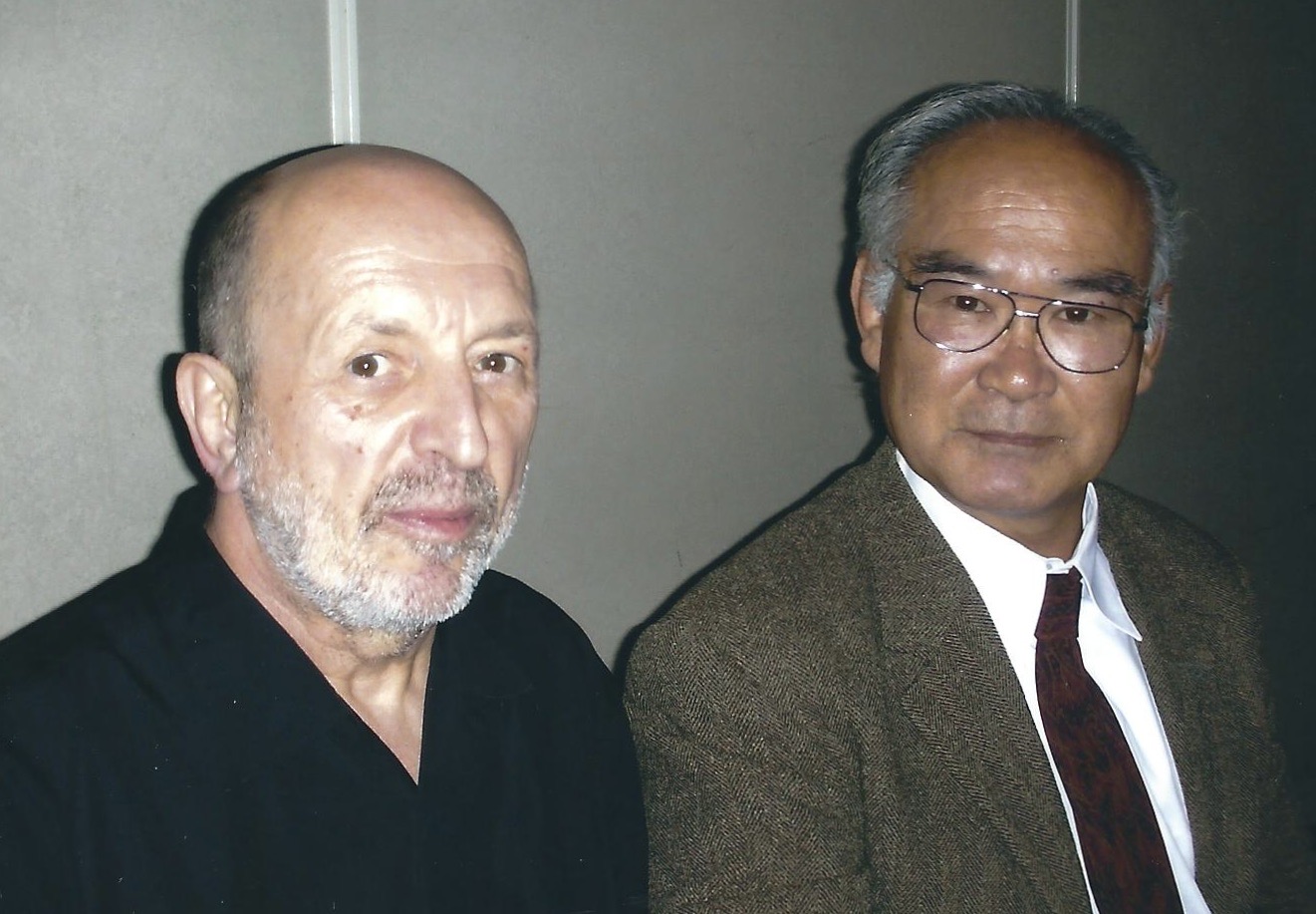
Chiba Sensei spent three or four years traveling around with O-Sensei. A few months of every year, he was taking ukemi for O-Sensei, and so his body understood what O-Sensei was doing.
When you think about it, when he was sent to England in 1966, he had done Aikido only for eight years. That’s almost nothing. He reconstructed the whole of Aikido during that period of 10 years until he came back to Japan in ’76 only by memory and what his body had memorized. And his goal was not to keep it to himself and play the big Sensei in the dojo. No, it was to share it immediately. Pass it on at any cost.
You mentioned that Chiba Sensei had only been training eight years or so before he left for England. What do you think allowed him to learn at such a deep level so quickly?
This also caught my eye because I thought – if he did that, he must have the essence of it. He had the knowledge. Even if he couldn’t express it, he could recreate it because he received it from O-Sensei directly. Of course Doshu and Osawa Sensei and others were teaching it in Hombu, but he had that chance of going out with O-Sensei and taking ukemi for him a lot, which very, very few other people did.
I heard you were at a seminar in Spain where you were uke for Tamura Sensei and Chiba Sensei, who you didn’t know well at the time. Apparently the demonstrations got a little rough.
Yes, at the time I was not a beginner, but I had been doing Aikido for two or three years at most. I had no idea what ukemi was about. I remember clearly because Chiba Sensei was doing shomenuchi iriminage and I was late because I had no connection. When he hit me with his arm, I was still in the process of standing up, so it hit me really hard in the face and knocked me out. I got up again, but I forgot what I had to do. So when I was grabbing him, I got hit even more and Tamura Sensei had to step in.
That must have been frightening.
Not really, it actually gave me courage. I said, “Oh, what am I doing? I have to work on that.” After that is when I started to visit him in England. Getting hit wasn’t personal because when I talked to him a few weeks after, he forgot completely. Nothing personal at all, that’s the way he was.
So he had a lot of problems in England with his ukes because at the time, people there didn’t know how to take ukemi. When they finished, some of them ended in the hospital because they got hurt. Chiba Sensei didn’t understand why they didn’t take ukemi, because it saves your life. “Why don’t they take ukemi?” The answer was – they don’t know how.
In Japan nobody teaches you ukemi, the teachers started to use you when they see that your ukemi is fluent. But nobody teaches it. At one point after he had come to America, Chiba Sensei realized that maybe he should tell students what to do, but when he was in England, it never crossed his mind that people didn’t know. They didn’t have the knowledge to immediately work on it so that they wouldn’t get hit.
He was not violent however. That is misunderstanding of him. He was dynamic and his movement was full. He was in the learning process all his life and as he was learning. He would never do something that was halfway or that was aborted in the middle. Everything was to the fullest and it’s very hard to follow and to not lose connection.
And with Chiba Sensei, if you lost the connection, you got punished?
You get hit.
That’s what makes it real in Aikido. If you lose the connection, you get hit. Sometimes you have to hit people. Not badly, but just to make them understand that if they lose the connection then they leave an opening. You cannot explain it at first to somebody who has never done it. It’s a process that takes time and a lot of practice and tension.
I remember Chiba Sensei’s classes were extremely tense. And not because he was hurting you for the sake of hurting you, it was always an accident. I remember the four years of private lessons, it was twice a week a couple of hours each. Bruce Bookman can confirm this – there was never an accident. They were eight people on the mat, and none of us was hurt ever in four years.
Why do you think nobody was hurt in that venue, but then in regular group classes or other places people were getting hurt?
Well, if you don’t know how to take ukemi you can get hurt. We knew what was going on and were focused. He would not hit you for the sake of hitting you. If you’re not focused and something is going to hit you, then you’re in trouble. In England there were several cases of people being hurt because they had no idea to take ukemi, but then after some years, people started to become more fluent with ukemi and didn’t get that badly hurt.
With Chiba Sensei you had a relationship with him for …
Almost 15 years. And after he moved to England, he ended up in Southern California. The lifestyle and culture were radically different from both England and Japan.
How did he settle into that culture? Did he like it?
That’s a good question. I’ve been asking myself that question many times. I don’t think that he liked it, but the way Japan became in the 70s and the 80s, he disliked Japan even more. There was a lack of discipline. We would see it differently because it’s still very much different from western countries. But for him, this was not the Japan that he had known as a child. As a teenager, it was very strict, very tough. I don’t think that he would have liked living in Japan again, so he established himself in Southern California.
He was mostly a self-taught person, so he read a lot and he was interested by everything. He read a lot even in English, and things that are quite difficult. He appreciated Southern California, but with him you never knew since he had a discourse that was a bit nationalist. He would always place Japanese people first.
I could imagine it must have been a huge culture shock for Chiba Sensei – growing up in post-World War II Japan and moving to California where you’ve got surfers, palm trees, and Hollywood.
Since he had back problems, the weather was a plus for him. And he did treat women equally and promote them, which doesn’t happen often in a patriarchal culture. Some of them were his best students.
Birankai North America has a lot of women shihan.
Yeah, and they were all students of Chiba Sensei. He would treat people quite equally. He adapts to what you give him. But he will give a little bit more than you can take, so it’s up to you to get there. He would push you. He did that to women equally and it worked out.
In terms of the legacy that Chiba Sensei left, there are all of the people that he trained, but also the Birankai organization, which is global with some separate entities in different countries. Every organization has its own culture or its own emphasis. What would you say is the Birankai culture, whether it’s technically or philosophically? What’s that legacy or distinctive element?
It’s the teaching of Chiba Sensei, but you can’t put all the Birankai in the same bag because it’s so different. The students that trained with him seriously and intensively are very different from people that have only run Birankai clubs after barely seeing his form maybe once in their life at one seminar.
There is nothing special in it, except that he insisted on multi-form practice, so Aikido, bokken, jo, zazen, eventually misogi. When misogi came, he was not pushing it. If people want to do weapons and zazen, they would create a Birankai club but they are always disparate. Yes, they all include some kind of -do, except that a lot of these teachers don’t have the level to teach it.
Unfortunately when you have somebody the size of Chiba Sensei leading a group, when that person disappears, chances are the group is going to collapse at some point because he was dragging them behind him.
The problem is always when you descend the scale. For example, with Chiba Sensei you have two, three, or four of his students that became professional, and they open a dojo – what is coming out of this? That’s what you have to look at. If nothing is coming out, then it’s going to fail very quickly.
If you don’t create something, if you don’t succeed, nobody succeeds. It’s a lifelong study. If it’s your life to do this, then you share it, so the success is through passing it on.






Add comment