
 Josh Gold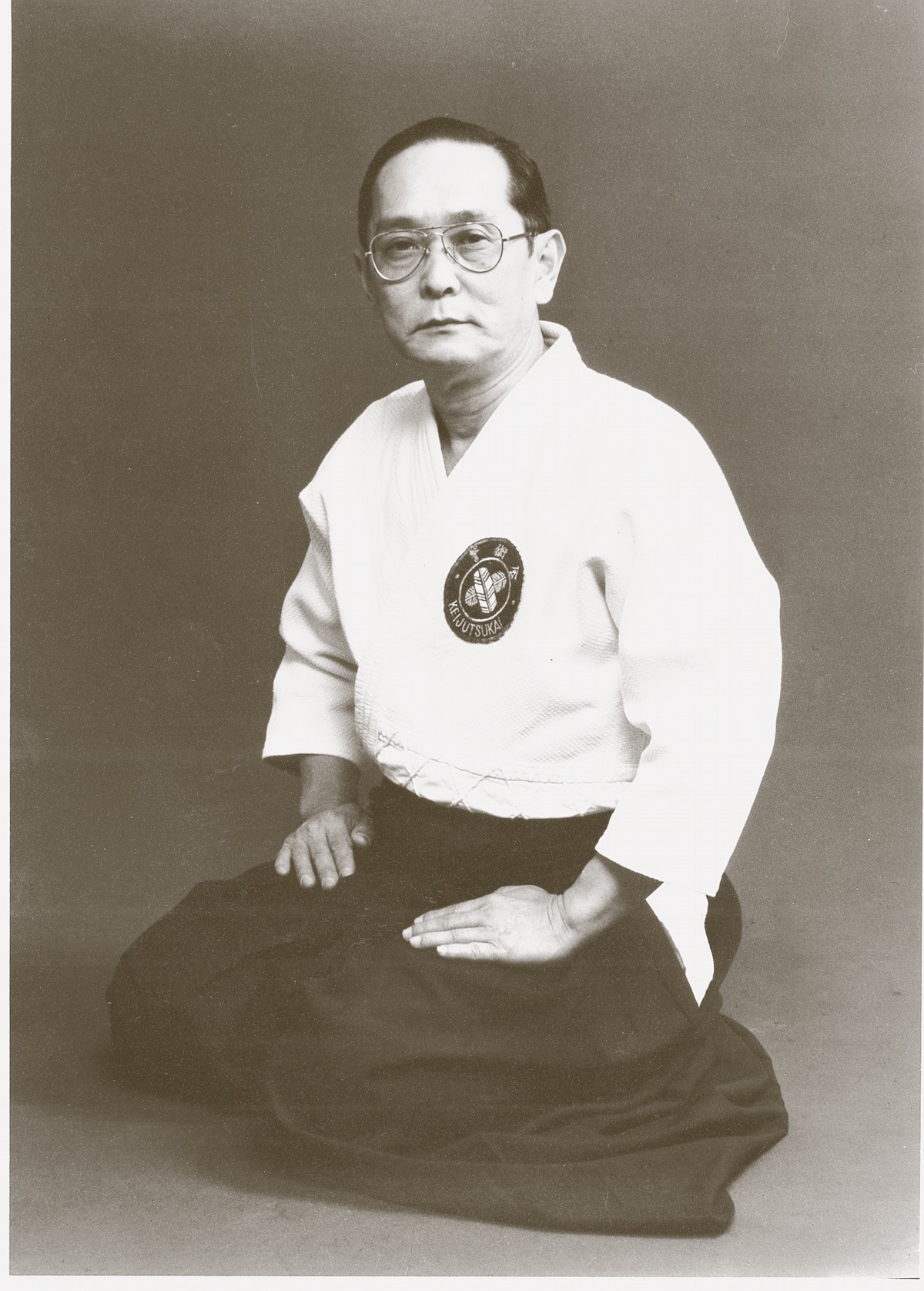
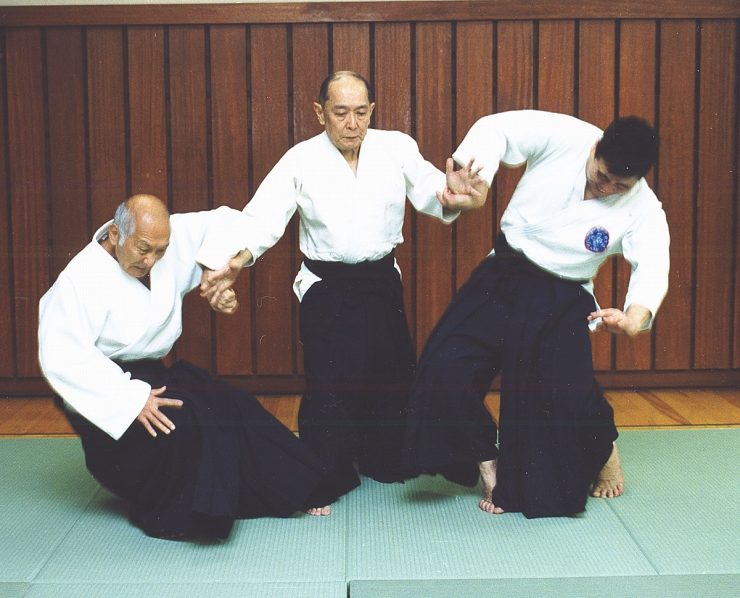
Thomas Makiyama started budo at the age of 18 in January 1947 after enlisting in the U.S. Army. He went to Japan from his home state of Hawaii immediately after basic training and was stationed in Yokohama, where he was assigned to the 8th Army’s military police criminal investigation division. This was during the early Occupation, before the outbreak of the Korean War.
This interview was conducted by Norm Ibuki on January 7, 2001 at (appropriately) an American fast-food restaurant in Tokyo, where members of the Keijutsukai, founded by Makiyama Sensei, meet for coffee before practice. He touches on his long involvement with aikido, his way of instructing, and the contrasts between American and Japanese culture. This is the first part of a two-part interview. Read the second part here.
Norm Ibuki: Did you study budo before you came to Japan?
Thomas Makiyama: No, but I was exposed to it because there was a lot of judo in Hawaii. Some of my classmates practiced, but I didn’t and I used to wait for them to get off training so we could go to the beach. The judo instructor, who also taught at the Japanese school, was always trying to get me to join the group but I declined. He asked me why and I said, “Because it hurts!” He called me chicken.
I was the little guy in the outfit and I had to do something, so within weeks of arriving in Japan I went looking for a judo dojo, as that was the only budo I knew about then. I joined the army primarily to take advantage of the GI Bill whereby, if you spent three years in the military, you got a free college education. I wanted to become a famous attorney like Perry Mason and I had read all the Perry Mason books.
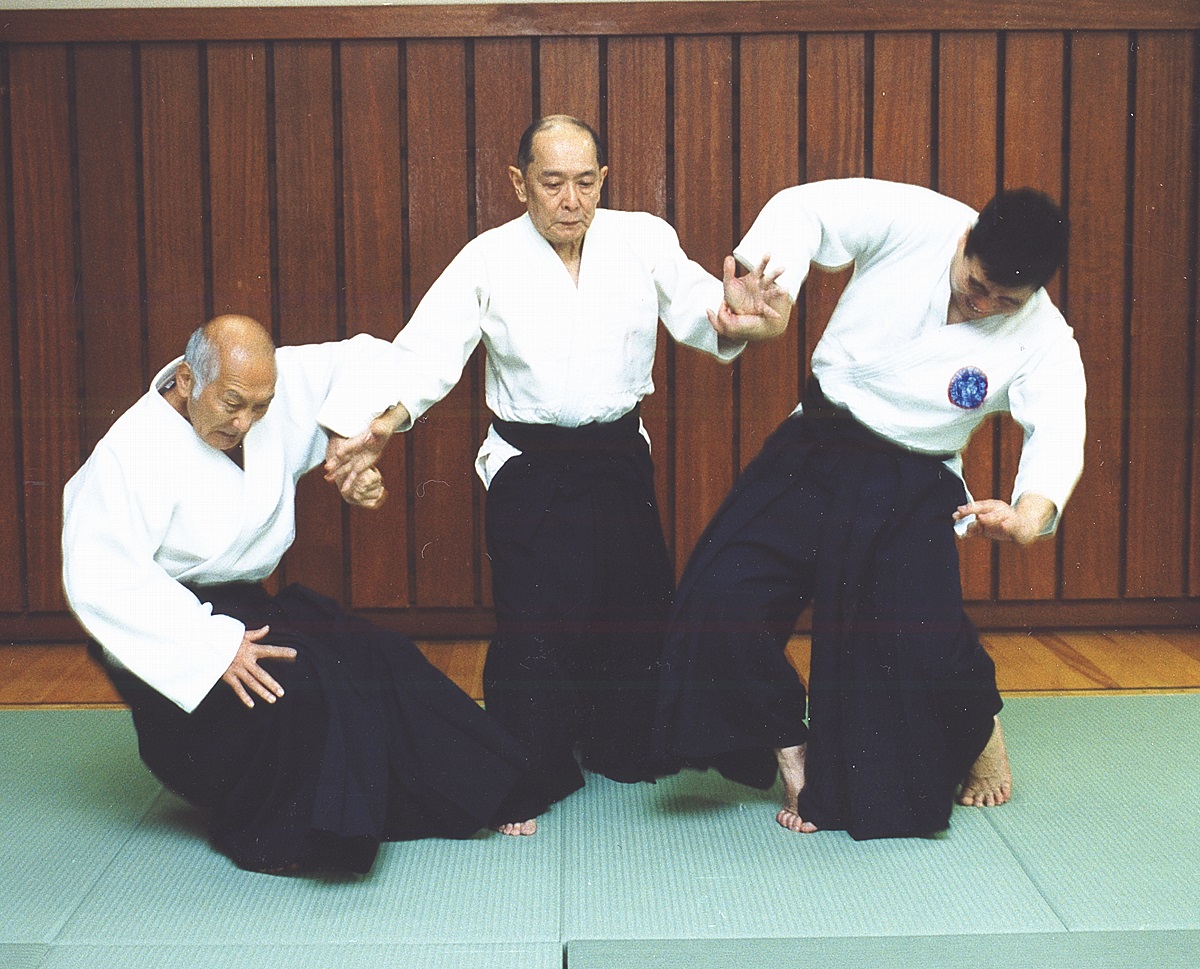
When I went to Honolulu for training and assignment someone suggested that we go to Alaska—that’s how damn stupid we were. One of the guys in the army office, the older brother of a classmate, said, “Why the hell do you want to go to Alaska, it’s all ice!” So I asked him to find me another place and he said, “We have an opening in Japan.” I said, “OK, one place is as good as another.” That’s how I ended up over here.
I learned aikido for the first time around 1947 or 48. I was attending two or three different classes a week in jujutsu and karate, mainly because of my duties and my small size. From what I had read judo was great stuff, though of course I found out later it ain’t necessarily so. All martial arts were banned at the time, so I had a hard time locating a teacher.
I started judo at the Isezaki-cho police station in Yokohama. The teacher was living in a ramshackle place in the back and there was no dojo. From there I started getting into different arts.
All the arts have changed a lot. In those days, for instance, in Goju-ryu karate, you took your opponent’s best punch then got back twice as hard and knocked him down. All of the martial arts I took then emphasized strength and power. I had a difficult time learning because very few people spoke English and I wasn’t bilingual, although I knew enough Japanese to keep out of trouble. In Hawaii, we had many Issei (first-generation Japanese migrants) from Kumamoto, Hiroshima and so on. My dad was from Saga-ken.
How did you hear about aikido?
It wasn’t called aikido then. It was one of the jujutsu systems. You must understand the situation in Japan at the time. There were all kinds of names for these arts, but I wasn’t interested in names, only the art as such. Nobody called it aikido. Most of the instructors were cops, but I don’t remember their names either. I used to go half way out to Yokosuka to a police substation to learn from a detective-sergeant there who specialized in one of the jujutsu arts. I found out later that most of the things I did more or less resembled aikido.
I learned from this guy for two or three months, others for a couple of weeks. All of these teachers, and there were many, exposed me to different arts. The judo instructor I initially went to was an old-time judoka, one of the few to perform in front of the Emperor I was told, a little guy who really looked the part—pretty beat up, but he taught me the rudiments of judo.
I learned aikido for the first time around 1947 or 48. I was attending two or three different classes a week in jujutsu and karate, mainly because of my duties and my small size. From what I had read judo was great stuff, though of course I found out later it ain’t necessarily so. All martial arts were banned at the time, so I had a hard time locating a teacher.
After all this time fooling around with different arts I heard about aikido from a news item in the Nippon Times (now the Japan Times). The police were looking for some guy who had committed murder. They cornered him at his parents’ home but word was out that he was trained in aikido, and they dispatched a lot of extra officers because it was supposed to be a vicious art! I immediately lost interest in all the other arts.
Who were your first aikido teachers?
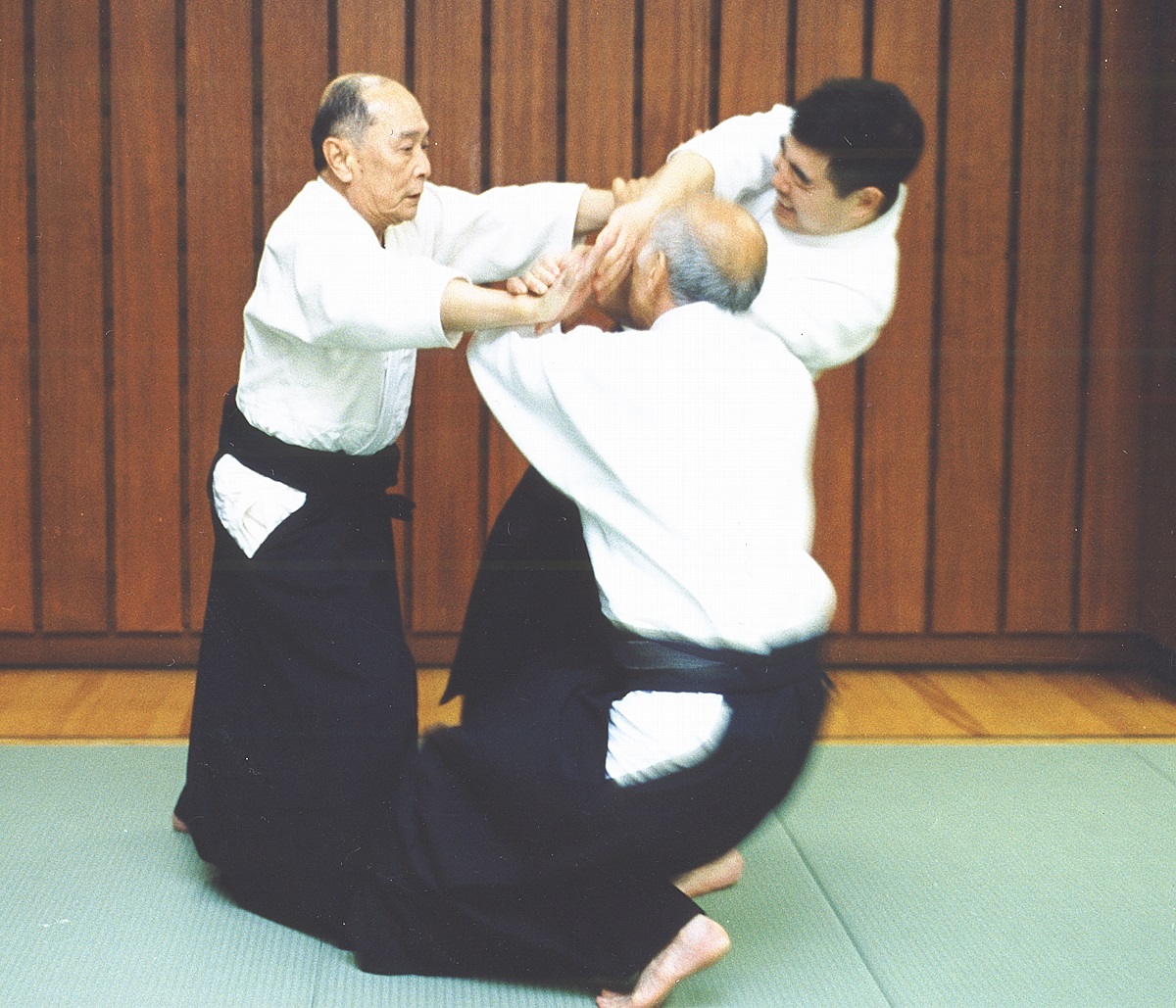
That was something, trying to find an aikido teacher! One was Yukio Noguchi Sensei who was affiliated with the Yoshinkan and whom I later invited over to Hawaii. He was primarily a karate man and judoka. There were also two or three other teachers from different areas. None of these guys were teaching for money. They couldn’t anyway as the martial arts were banned until 1949.
What attracted you to aikido?
I adapted very easily to aikido because of my past judo and jujutsu training. These arts all resembled each other; only the names were different. After trying eight or nine different types, you begin to think, “Gee, the human body only moves in so many ways.” Moving into aiki was no big deal. As to what made me continue, it’s very easy to explain: aikido is something you can continue for years. The longer you stay with it, the more it becomes an art of minimum effort and maximum results. Not everyone masters this, but that’s what I try to preach.
How long does it take to reach shodan, nidan or whatever? I’ve always said, and this is for the record, that any damn fool can learn the physical part of the art as long as he stays with it long enough. But what’s more important is the mental aspect. In other words, you learn not only the physical art, but also why these things work. You learn with your body. It’s a long process.
I learned everything the hard way and I had a hell of a time converting from hard to soft. I became aware that something was wrong when I went back to Hawaii and I was teaching a seminar to 170-odd students none of whom knew about aikido, as such. Jeez, there were very big Hawaiians, cops and so forth, coming to learn. Sure, I could take them down all right, but I realized there must be an easier way of doing these things. That’s when I started having my doubts. I had to find out why I had to use so much strength with these guys. Then, I thought, “What if they resist?”
What I teach now is the result of thinking this way, plus the variety of different training experiences I have had. I don’t like to say it’s my art, as such, since the principle has been around for years.
I try to teach with a sense of humor. If you can’t master something today, you’re not going to lose your job tomorrow, nor are you going to die! Take your time. This is a very different approach to many instructors. Another rule in my dojo is that the sempai (seniors) are there to teach, not to show off or take advantage of new people. It’s no problem for seniors to throw new people around. Instead, they should try to earn their respect. Not, “Do as I say!” but, “Follow me gang and I’ll teach you the way.”
Most aikido schools rely too much on strength, but it was not meant to be so. Another problem is that the opponent, unless told, will not resist. They know in advance what to expect, so you often see them diving all over the place before the waza is actually applied. That’s ridiculous and doesn’t do the art justice. When I teach, if anybody jumps before the waza catches, they catch hell from me!
Did you ever see O-Sensei?
I saw him perform many times but I was never a student of his. My interest was different, I was with the military and was not interested in conforming to the Japanese way of learning, or following any one teacher.
I originally didn’t even know what I was learning or who started the whole thing. Nobody knew. Now I look back and I don’t know if these guys were actually students of O-Sensei or not, with the exception of Gozo Shioda.
Shioda Sensei and I were good friends and I could say anything I wanted to him if I disagreed with him. For over 20 years I tried to help him expand his organization and actually, though they may deny it, I’m the guy who started the Yoshinkan’s international expansion, to Hawaii in the late 1950s. This is not mentioned anywhere in Yoshinkan history, though people who know admit it. I say, “Well, are you ashamed that an American helped you?” and they say, “No, no. no.”
I adapted very easily to aikido because of my past judo and jujutsu training. These arts all resembled each other; only the names were different. After trying eight or nine different types, you begin to think, “Gee, the human body only moves in so many ways.” Moving into aiki was no big deal. As to what made me continue, it’s very easy to explain: aikido is something you can continue for years. The longer you stay with it, the more it becomes an art of minimum effort and maximum results. Not everyone masters this, but that’s what I try to preach.
What’s your connection with the Yoshinkan now?
We are good friends, but Keijutsukai is connected to “me, myself and I,” nobody else.
Did you break away from the Yoshinkan?
I’ve never broken away from the Yoshinkan. I have always helped them as a friend. Shioda Kancho just asked for help and I said OK. It was no big deal. A lot of people cannot understand it, but I’ve helped them purely as a friend all these years.
What is “ki“?
What do you think?
It has often been explained to me that it is vital life energy, but as to how it relates to executing effortless aikido techniques I’m still at a loss. I don’t understand it.
Neither does anyone else.
How did the great debate about “ki” get started?
When you see people being thrown around without any apparent effort, and you try to duplicate it and you can’t without using a lot of strength, and even then it’s sometimes impossible, the easiest way to explain the inexplicable is to treat it as a mystery.
Where did this start?
At the Aikikai. O-Sensei was a deeply religious man. He belonged to the Omoto-kyo religion and, though I don’t know for sure, he may have used aikido to convey his own religious beliefs. So, if he does these seemingly impossible things, it must be ki!
What do you think about aikido as practiced elsewhere?
To each his own.
How is your aikido different from other schools?
Me, I guess. First of all, generally speaking, I don’t emphasize strength to finish a movement or a technique. Secondly, there is absolutely nothing mysterious about it. It’s just commonsense and elementary physics that you learn in high school.
What advice do you have for beginners?
Look around, check and find out if the instructor is qualified and sincerely wishes to teach something, or if he is involved in money making and selling things. Of course, a dojo has to make money, but sometimes I find people are taken for a ride in every way possible. I’m not picking on anyone in particular and I have nothing against people making a living from teaching, but they should keep it within reason. Make a living at it, but don’t take advantage of the students by asking them to buy this and buy that.
Most aikido schools rely too much on strength, but it was not meant to be so. Another problem is that the opponent, unless told, will not resist. They know in advance what to expect, so you often see them diving all over the place before the waza is actually applied. That’s ridiculous and doesn’t do the art justice. When I teach, if anybody jumps before the waza catches, they catch hell from me!
What is a good student?
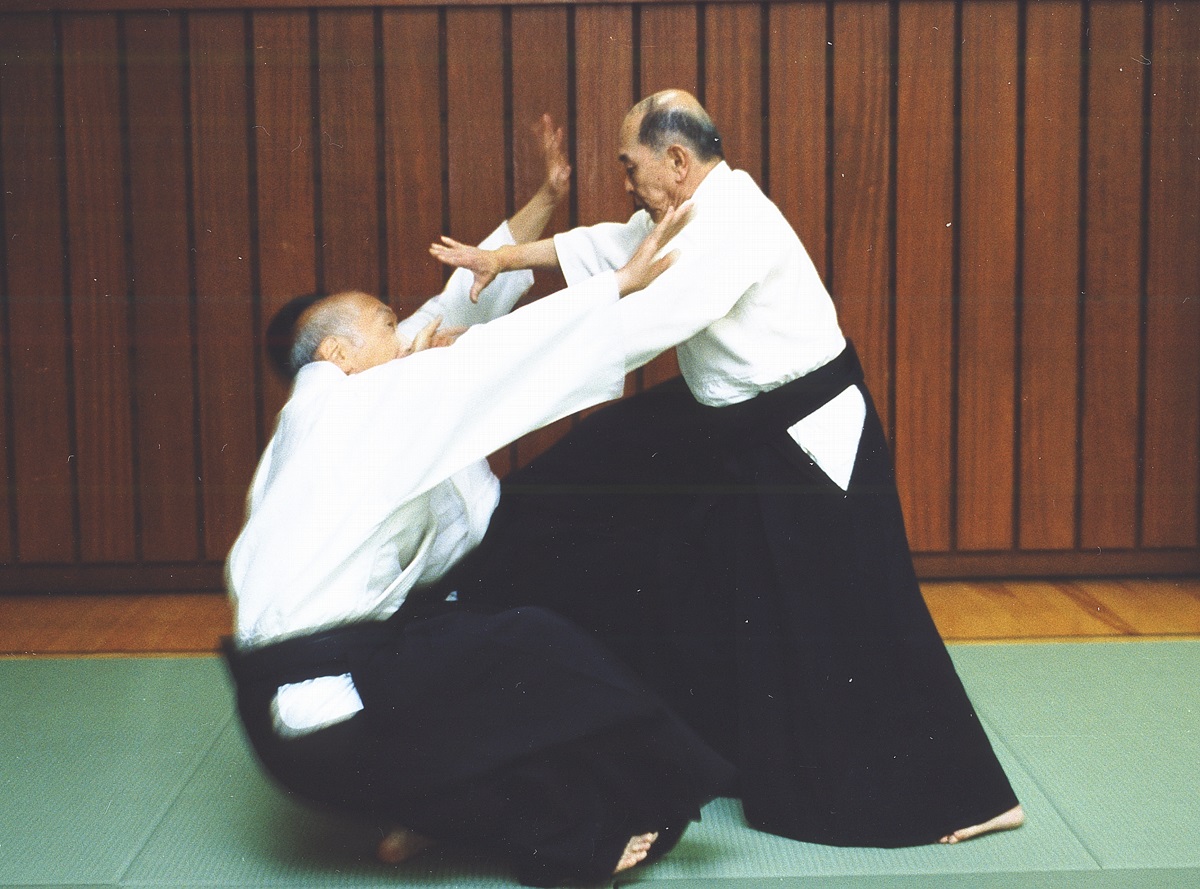
Someone like Noriko Takahashi (a long-term Keijutsukai student), well-rounded. In our dojo, it’s a matter of being strict, yet very informal, with a good sense of humor. As an example, in other schools (in Japan) it’s rare for students of different levels to mix informally. But if a new student joined us today, they would be welcome to go out with us eating or drinking. The “establishment” doesn’t look at things this way.
Is there a special need for aikido today?
Not only aiki, but all of the martial arts. I’m very neutral. What they have to offer will depend on the people running the school. I know what I can offer my students. I teach them a lot of commonsense stuff and tell them to make their own decisions. I say, “Don’t always agree with me, I could be wrong.” This is normal, but it is not the Japanese way. In the Japanese system, not only in the martial arts, you do as you’re told, and don’t question anything. I might be gradually converting them into a Western way of thinking, though. I have always worked on the principle of osmosis with my Japanese students anyway. They may not realize what the hell I’m trying to say but gradually they absorb it, though it may take them 20 years.
What has happened to aikido since the war? Was there a heyday?
Yes, back in the very early 1950s, because nobody knew about aikido. When it finally went public, a lot of judo people helped get aikido established as they were the only ones who had schools. But the favor was never reciprocated. A lot of aikido people today criticize judo. This should not be so because they have a great deal of obligation to the old judo people who went out of their way and used their students to pass on aikido. This connection seems to have been forgotten, which is also a characteristic of Japanese culture.
What about the concepts of “harmony” and “love” that are often talked about by aikidoka?
I feel that all teachers, whatever school they come from, should get along with each other. They should all participate in demonstrations together—work together. There’s something wrong in this area, possibly to do with money. And some schools appear to have an inferiority complex, and will not permit outsiders to watch their class, even to this day. Anybody can come to my class at any time. I have nothing to hide.
What is “harmony” then?
Getting along with each other, getting along with everybody, whether they come from Timbuktu, Canada or the U.S. Instead of just talking about harmony, aikido people should demonstrate it by working together for one common cause, “ai-ki-do.” I think that’s harmony. I may be wrong.
When did the fractures start to appear?
They came about gradually when certain people broke away from the Ueshiba dojo with O-Sensei’s permission. After he died things went haywire and everybody went their own way. There are a lot of foreign dojo that are not affiliated to any headquarters in Japan. These are the ones I feel sorry for, the ones I’m trying to help. I call them “factory rejects,” just like me!
Ten years ago I went to the U.S. and met some of these breakaway groups. I said, “You guys are all factory rejects, you’re not the belonging type. You have your own ideas, that’s why you broke away. If you guys are mavericks, I’m the worst one around! We can all get together.” It worked out very nicely.
I feel that all teachers, whatever school they come from, should get along with each other. They should all participate in demonstrations together—work together. There’s something wrong in this area, possibly to do with money. And some schools appear to have an inferiority complex, and will not permit outsiders to watch their class, even to this day. Anybody can come to my class at any time. I have nothing to hide.
Who am I to say what is right or wrong? But I do resent people saying this or that school is no good. This applies to martial arts in general. All the arts change, some for better, others for worse. What the hell are some of them trying to do? Some try to keep things half-Japanese and half-Western. They observe certain “Japanese traditions” in the dojo, but they don’t realize that these end up looking ridiculous.
I don’t want to be too specific because I might hurt someone’s feelings, and they are doing it in good faith, but these things should be changed. If you want to have Japanese etiquette, have Japanese etiquette, not half-Japanese, half-Western.”
What traditions do you have at your dojo?
The Japanese tradition has been maintained, but the Western part comes in where I try to teach my students to speak up for themselves and ask questions. If you don’t understand something, speak up and ask; that’s the only way you’re going to learn. Someone will work with you as long as necessary. This is different from the Japanese way. So, whether my dojo is Westernized or Japanese, I can’t say. But overall, hopefully, I’d say that I have maintained the good parts of Japanese tradition. The difference is that I happen to be an American, which I have never forgotten. I treat Westerners and Japanese the same.
What do you offer that other teachers don’t?
Humor. I take things with a grain of salt. It ain’t always the way it looks, especially in this country. You got to have a sense of humor. People should not try to be what they are not. One thing I notice about Western students is that they are far more dedicated than Japanese students. Why? They are here for a short period and have a limited time to learn. The Japanese say, “Well, I’ll do it next week.”
What do you see for the future of aikido?
It depends on the teachers. I’m trying to develop teachers that I think will do a good job. I tell them to go out and look at other people’s training. It’s difficult for me to comment on other people because I don’t know what the hell they’re thinking, except that to me some dojo often sound like a money-making ventures. In my case, and my students will back me up, boy, this is a Salvation Army project!
Westerners often break away and form their own group after they get their shodan. This could be one reason why the quality has fallen. I don’t say that a shodan is not qualified to teach, but they may not be if they haven’t received proper training. Some obviously think a “black belt” is enough. In recent years there have been, “10th-dans” and “11th-dans” advertising themselves in Black Belt Magazine. I’d be ashamed to make claims like that.
What’s your opinion on the place of weapons in aikido?
The bokken and jo are primarily used for showmanship in aikido today, especially the jo. Then you have ways to defend yourself against a bokken. Rarely will you see bokken-versus-bokken, bokken-versus-jo, jo-versus-jo, or jo-versus-unarmed. This is something I incorporate into my training. I have only tried to do so with the seniors. I start at lower levels with kata, but it’s tough. I consider weapons to be extensions of your hands, not separate objects. They should move together with the body, be fused. If you can’t do a movement unarmed, how the hell are you going to do it fooling around with weapons
How about suwariwaza?
Suwariwaza is passe. Very seldom when someone attacks you today is he going to come at you in shikko (knee walking). I think it’s just a waste of time. We do have a kind of suwariwaza, though I don’t call it that. When I find that my students are having a hard time using their hips properly, or they’re using a lot of power, relying on their feet to keep their balance, I say, “OK, seiza! You stand up and attack, and you kneel in seiza and receive.” Then they’re in trouble: “See, I told you not to use your feet, use your koshi (hips).”
Another thing is when the students have difficulties generally they all have the same difficulties, so I will say, “Hold it,” and line them up to correct them. Regardless of size everyone should be able to do the same waza. What I’m trying to say is that you should try to fit in.
But how do you get away from using strength?
Your body absorbs the attacker’s power. You don’t try to fight power with power. It’s impossible. I try to explain through examples from sports that students are familiar with.
For example, pushing?
If you’re pushed and you push back you have a stalemate. But if one side pushes and the other side moves, and the hand is no longer there, he just keeps going, so it’s his own power that defeats him. It’s nothing mysterious, it’s really common sense. I know some things are difficult to understand, even for the 20-year veterans. I say, “Stop cocking your head!” and they say, “I know what you’re saying and my mind tells me I know, but I still don’t understand.” I reply, “Well, wait another 20 years.”
Can you chart your development as an aikidoka?
I haven’t seen many changes. I’ve always been myself. I always try to work well with people unless it happens to be someone who gets on my nerves or deliberately eggs me on or baits me. In that case, I’ll wait for them to beat me then I’ll clobber them in my own way. That again is harmonious movement. It becomes kokyu atemi, a compatibility strike.
What’s that?
It’s nothing mysterious. It just means to fit in, to be compatible with one another. You like your boss, you don’t like your boss; your girlfriend likes you, she doesn’t, maybe it’s a one-sided love affair. That’s not compatible. When I say compatible I mean you have to fit in: timing, speed, all of that. The simplest way I put it to them is the “3 Rs”: Relax—React—Relax. I say, “Most of you are reacting from the very beginning then, when you start the technique, you’re still reacting, and when you finish you’re still reacting.” But no matter how simply I put it to them, it still confuses them.
What advice do you have for the serious student of aikido about coming to Japan?
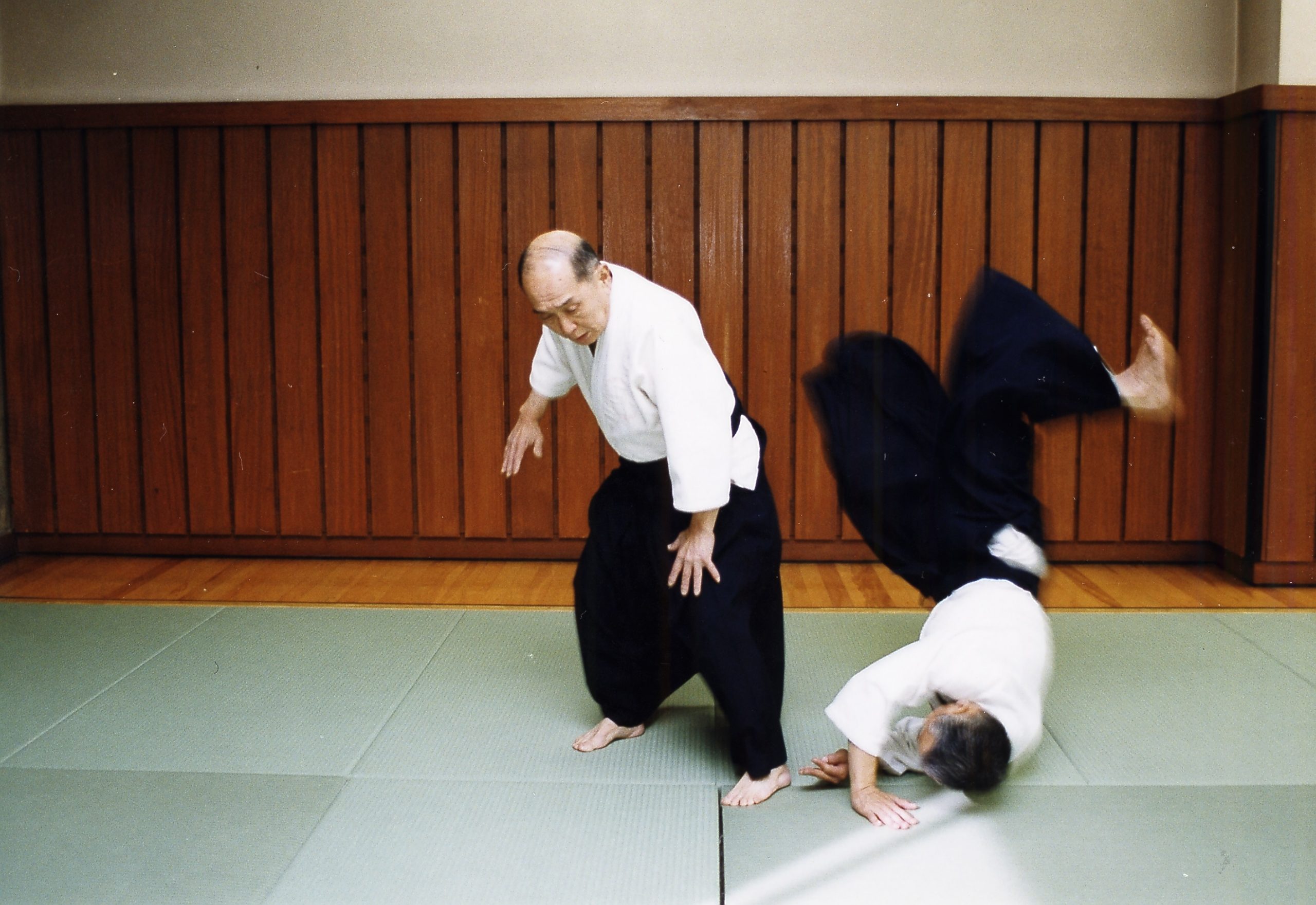
If you’re thinking of coming over here for two or three months, don’t, because you’re spending hard-earned money and you cannot learn anything in three months, especially if you’ve been fooling around with aikido before. The bad habits are going to take a long time to correct. I don’t believe that anybody should come over here for just a few months to study something.
Personally, I don’t accept private students. I tell those who want to come here to save their money, but if they do end up here and manage to find a job of some kind in Tokyo they are welcome to join my classes. A lot of people think that after three months they’ll be top-grade when they go home. After all, they’ve studied in Japan! It’s not that easy. People think I must know all about Japan because I have been here for so long, but I have only scratched the surface.
What don’t you understand about Japan?
I hear Westerners shoot their mouths off, saying things like, “The Japanese! What a bunch of jerks! They just can’t throw away their old way of thinking and education, or the way they’re brought up.” I certainly wouldn’t have the gall to say such things. On the contrary, a big problem now is that the filial loyalty the Japanese had in the old days no longer exists.
Who the hell are these experts? Not only Americans, but all kinds of foreigners say this sort of thing on Japanese television. No matter what the subject, they seem to be experts. One guy is an attorney and apparently an expert on just about everything. Another guy who was very fluent in Japanese tried to crack jokes but they fell flat. He was speaking Japanese but thinking in English and didn’t even realize it, poor guy. There are many like that.
Do non-Japanese think about aikido differently?
Quite differently from the Japanese. Westerners tend to think it’s something from the “exotic Orient,” whereas the Japanese think about exercise—practice, practice, practice—just do as you’re told, and don’t ask questions. The subject is very deep. Not only aikido but all of the martial arts.
Why can we understand ‘compatibility’ intellectually but can’t execute it with our body?
Because you have it back-to-front. You should learn with your body not with your mind. Most people react by thinking first. If two people face each other one is often already confused and the battle is lost at that point. I don’t say you have to learn meditation or anything like that. Just relax. Relaxing can mean many things and your body needs time to understand.
It’s nothing mysterious. It just means to fit in, to be compatible with one another. You like your boss, you don’t like your boss; your girlfriend likes you, she doesn’t, maybe it’s a one-sided love affair. That’s not compatible. When I say compatible I mean you have to fit in: timing, speed, all of that. The simplest way I put it to them is the “3 Rs”: Relax—React—Relax. I say, “Most of you are reacting from the very beginning then, when you start the technique, you’re still reacting, and when you finish you’re still reacting.” But no matter how simply I put it to them, it still confuses them.
When I say budo is very deep, I mean you have to learn many aspects that you can’t find in books. You learn with your body, training, staying with it, and analyzing it when something is wrong. I learned most of my art the hard way when I was young. The training was very strict but I knew that “strength, strength, strength” was wrong. That’s why I started changing my thinking, and before I knew it I had changed completely. That doesn’t necessarily mean that the power is not there, but it’s not strength-versus-strength. You have to have a sense of humor. I never take these things seriously. A lot are too serious. I say, “Look at your neck muscles. You’re too tense. Relax.”
What about the importance of committed attacks?
We sometimes have what I call “the circle” where one student stands in the middle and people can attack any way they want. I try to teach that to avoid blows you don’t have to run away from them. Many people jump back. If somebody strikes and you jump away you have that much more distance to try and catch up with him again. If they strike and you let the fist zip past you, you don’t have to exert yourself. But if you jump back, you lose your effective operating distance. It’s psychological. If somebody attacks, you flinch, but you shouldn’t. I very seldom move. I usually stay in one spot. I’m getting too old to fool around with moving all over the place.
When I went to a seminar in California, two weeks out of the hospital, I got to the airport and they noticed that I had lost weight. I told them there had been a slight “misunderstanding,” and I had to go to the hospital for a little operation. They asked, “What kind of operation?”
“A little obstruction, you know.”
“Why didn’t you tell us, we would have cancelled.”
I said when I made a promise, I was going to be there even if I had to come crawling on my stomach. They all worried but I told them I didn’t need to be in tiptop condition since aikido is already ingrained in me. In the hospital, after the operations, I was pushing the goddamn stand, with tubes sticking out all over, up and down the corridor. The doctor said it was too soon to be doing that and I should wait until tomorrow, I said I didn’t have until tomorrow. I had to be in California.
Do you plan to expand Keijutsukai outside Japan?
I don’t think that it is fair to set-up a dojo elsewhere unless I can service it regularly. I’m very different that way. I will offer affiliation, but that is purely paternal.
“An independent aikido fraternity devoted to international friendship and understanding through the medium of aikido,” (Sensei reads from a draft certificate he’s preparing.)
The affiliates’ job will be to set up seminars so that I can educate them gradually. I don’t tell them what to do. These affiliates will hopefully be closely related to us, but to join us they do not have to be members of the Keijutsukai system.
I don’t like to explain aikido in mysterious terms, or tell people they have to meditate. Several years ago, a group of us went to California and Seattle for demonstrations. In Seattle we were met by a police officer. He was very serious. Everything he did had to be just right, or so he thought. At the airport on our way to Vegas he said that at New Year’s they went to a waterfall to do misogi and meditate, and asked,
“Do your students do that too?”
I said “No.”
He said, “We were told we had to do this. How come you don’t, and you’re teaching in Japan?”
I said, “First of all, we’d all catch colds.”
He said, “I’m serious.”
I said, “So am I!”
“Something you’re doing is different,” he said. “Your students are all laughing and having a good time. I didn’t expect Japanese to be like that.”
Norm Ibuki is a writer and aikidoka based in Sendai, Japan.
(Except for the portrait of Thomas Makiyama, all photos are by Tadashi Watase.)
This is the first part of a two-part interview. Read the second part here.





Add comment