
 Josh Gold
 All martial arts are bullshit!
They must be. Someone has, at some stage, said this of just about every training method that exists. Except the one that’s in vogue at the time. The latest trend. Or the favourite prejudice of the complainer, his “style.”
What do people mean by this? What makes them come up with such a comment? What exactly are the qualifications of the persons making these executive sweeping statements from a distance?
Have they tried the practice they are criticizing for twenty years or more? Do they have direct in-depth personal experience, having road tested the art for more than one day? Have they conducted a series of fully scientific double blind comparative tests? Have they personally evaluated in the real field of battle and completed a properly scrutinized study?
Or are they merely shooting off at the mouth?
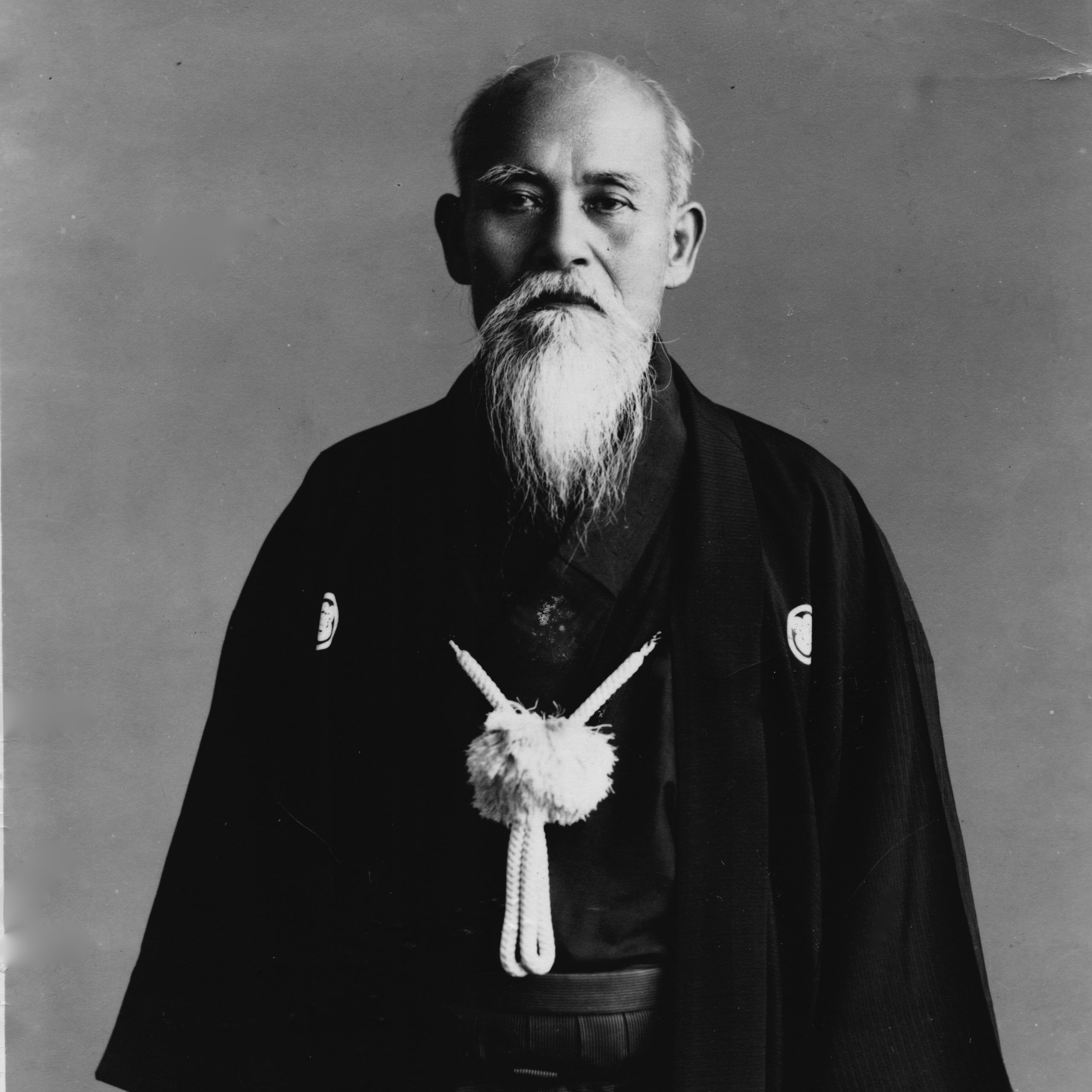
Even Morihei Ueshiba, clearly stated, “What we demonstrate is fake!”
So there you have it.
Or do you?
Can we move on? Or do we blithely stop training altogether, based on a comment made by someone casually passing by?
We could investigate and find out why so many people are spending so much of their time or money to practice fertilizer.
In such a study we can not include beginners of five years or less training since beginners are easily duped by conmen for lucre.
The question arises: Why do some individuals continue to practice fertilizer after twenty, thirty, forty, fifty years or more.
Could they all be deluded?
Many of these have been professional protectors active in any number of fields where direct application necessitated and was applied: Did they dream their life? Was over a thousand years of Japanese battlefield experience preceded by fifty thousand years of Asian wars just a fantasy.
To suggest that, would be to stretch a rather long bow.
Armchair experts, who read and talk a lot. Instant experts with all of two years of experience in yoga-dance… what do they qualify for? What is their experience? Other than lots of talk and vacant opinions based on some waffle they read?
Since the very first war, men discovered that although a drill is never same as the real situation, it will augment the chances of success. Each drill contains valid elements and parts that simulate the real situation. Of course they cannot fully predict the next episode, since each moment in time is unique and individually different.
The greatest power in controlling a fight, a war or anything at all is PREDICTABILITY. How do we obtain predictability? How do we achieve it authentically without mystical fantasy that may not be predicting anything at all but the paranoia which generates self-fulfilling prophecies?
How do we get genuine predictability?
Could it be by practicing? By reformatting and rearranging scenes? By role playing? By activating the subjective and objective as well?
What Morihei Ueshiba, really said, was: “What we demonstrate is fake.. because nobody dies or is killed.”
He is also on record as having stated, “All martial arts are good.”
Naturally, in training we have to remove some elements in order to make training safe. We strive to approximate the reality of violent, aggressive, ugly combat, but we do so in a safe way. Necessarily. This requires no explaining to a reasonable person.
We explore rationally the predispositions of action, reaction, mind, energy, matter, spacing, timing and other aspects; and refine through the attrition of work, wearing out the excrescences that get in the way of economy of motion and true skill. Our own blind spots, which are really what defeat us.
For safety, we awaken to the non-valid parts and exclude them. The oft used out of context excuse, “spiritual reasons” for sloppy training means nothing. Spirit is precise, not sloppy. If you want to see spirit in action, watch the true masters, not the excuse makers who’ve never applied their art professionally
Every art may have something to offer.
Why not look at them all, with an open and enquiring mind? Any reason?
Another feeble excuse, “How can I remember all that?” is merely an apology for being lazy. Intellectual memory is largely irrelevant in combat arts since real action is faster than thought. You should strive to forget everything you do in training. It will follow you. A handful of basics will do as points of reference. Body memory forgets nothing. All training accrues credit and refines skill.
Shelve opinions until after trying a method seriously. Always practice a new method asking yourself: Where can this have purpose and in what context? Exercise the mind!
Once you’ve moved a particular way, you will be able to again, provided there is a real need. You learn to address what’s truly relevant by training regularly. Natural kinesthetic logic develops through use, not talk.
Training provides the relaxed confidence to do. Training exploratively without fear of success or failure, serves to expedite the learning curve to refine and hone ability. The confidence to do, will provide the paper thin, split second, edge that will make the difference between survival and death.
Drills strive to approximate probable scenarios. Nothing more. On this basis, so called “dead form” is valid training. So long as you realise this is a starting point, not somewhere to get stuck. Dead patterns are good as drills, but they were originally designed to as stepping stones not millstones. Learn to show initiative and safely in training, find the potentials that exist around the basics. Pay attention and notice. Learn from yourself.
In reality, no two scenarios are ever the same. Training develops adaptability and forward thinking and therefore augments the possibility of success, because it increases the faculties of predictability and adaptation.
Reality has its own plans. You can know the best zenkutsudachi, but it will be useless when faced with a tsunami. As the song goes, “Life is what happens to you, when you’re making other plans..”
All nature is like that and has always worked like that.
Over time, some individuals may become attached to one, or some pieces of the jigsaw, imagining it to be the whole story. Perhaps that’s all they saw. Perhaps the are silly enough to be biased. Perhaps anything. Deadwood makes itself extinct by the detour it calcifies itself into.
Dare to break the mold. At least occasionally.
Mastery comes with understanding where the pieces fit. Context. When you finally work out the jigsaw go even beyond that.
No two situations are identical. Similar, but different. If something can go wrong it usually will. You seldom get attacked when conditions are ideal; and if you wait for “the right time” to start training, you never will begin. “Ideal conditions” and “the right time” are mere ideas, concept held only in the mind. Bad ones, because they are self-defeating ways to procrastination. Time wasted can never be made up.
The drill provides a basis and then you wing it. That is all you can do. That’s what anyone of note can do. Even the kami wing it.
If you practice sound basics and also winging it, or work where you have to put into application, you improve real skill.
Beginner drills are valid. Everyone, no matter how advanced, must continue to practice them. They are your foundational ABC’s and Doh-Re-Mi’s, points of reference and springboards into spontaneous action that is contextual and meaningful and that works well in a real situation.
And departing the basics at the proper stage in development is natural. Still, the basics remain anchors as a basis for training.
In the end, survival necessity is all the same thing. Each training method is merely another way of expressing it in training. Preparation.
When you see people with big titles who have not gone further than beginner drills, it is cause for concern. For them. For their safety. The worst enemy of the budoka is self-deception.
You can’t bite off the full picture, but you can bite one piece of the jigsaw at a time and always be open to learning new things.
There are many things that happen before, during and after an event. Fights do not “just happen.”
Knowing the pre-incident indicators will enable prevention, by providing the predictability that results from good training. As a result, at least most of the time, you will be on the right page. Understanding strategy, technique and mind control are developed during the practice itself; as well as thinking about it – kufu geiko, as an auxiliary practice. And making the effort to understand how to follow up any event that may happen, will keep the matter as legal as it is possible to do so. Hopefully, you will never have to fight. But you never know.
A parochial and cloistered attitude is so self-defeating, it alone, has already lost you your next encounter.
Every art has its merits and it is up to the individual to find them through sincere investigation and practice. Even the most “bullshit” practice may have something to teach and a new dimension to reveal. But you will never know unless you try it and explore it with an open mind.
Ask yourself: Why did the proponents of this method decide to embrace it? To what does it allude? Where did it come from? What inspired it? What was lost in the telling? How can I modify it to be useful? How can I recover its proper use? And so on.
You will never know unless you try it.
And that, may be the very attribute that saves your life on the day! Better it is in your warrior’s toolbox, that floating around in an imaginary mental pasture.
It is easier to ridicule than to investigate, but it not as gainful.
Nev Sagiba






“You will never know unless you try it”….
Is what I tell all those that ridicule…..I generally stay silent unless they inquire more….
I just say come and train if you have the balls….
They never come.
Next thing you’ll be saying is that organizations are bullshit too!
Another gem, Nev. Well said.
Hi Nev,
I don’t know where that quote/thought comes from but you/we should not take it seriously – clearly just borne of ignorance.
I have been in the military, have participated in three different martial arts to a fairly competent level (not including 20th century weaponry) and can say with the benefit of experience (as in life and death experience) that while the spirit is of critical importance (physical strength too, depending on the situation), there simply is no substitute for training.
Bottom line, whoever said that has never been there and consequently has no idea.
Go well.
Gary
“why study martial arts for 30 years? you’ll just be an artist. you can be a samurai right now. if given a choice between life and death, choose death.” – Hagakure
Very well written. My 2 cents, by the same token that “All martial arts are good,” all martial arts are bad. It is easy for the dabbler or reader to find flaws in the arts which are trying to convey the experience and wisdom of many years of trial and error into practices which, for time and safety’s sake, omit most of the errors for the student. Makes it easy for a new student to think that they have magically exposed some flaw in a system that they have spent very little time practicing – and with senior students giving them some breaks due to their new status. However, if they stick with New students will think what is demonstrated seems impossible, then think they get it, then realize, hopefully, that getting it is the work of decades.