
 Josh Gold
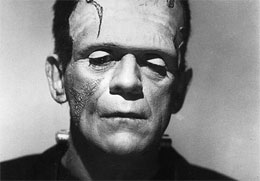
“Attackers may stretch out their arms like classic horror movie monsters. Nage may bypass the ‘attacks’ using whatever aikido blend seems appropriate.”
 I will start by giving full credit for this drill to Frank Doran and Bob Nadeau, and tell the story Nadeau sensei told about its evolution. Way back in prehistory sometime (that is before I started training and dinosaurs roamed the earth), Frank and Bob were concerned about succeeding with multiple-person attacks. I don’t know what the specific problem was, but we can all imagine bad things happening if you DON’T succeed in that scenario. I think I recall a Marin lady under a dog pile at her shodan test once upon a time…
So, with that preamble, here we go. We all understand the standard setup for multiple-person attacks on a dan test. There is a line of attackers seated opposite the aspirant, such that the one in the middle is directly in front, and therefore the others are arranged on the flanks. But there is sufficient distance between the attackers (ukes) and the aspirant (nage) that the ukes are all about directly in front of nage.
At the signal, all rise to their feet and rush together. The ukes each attempt some relevant attack, and nage attempts some appropriate simple technique. Things go usually downhill for nage if either they go to the center of the line, try something fancy, or if they EVER back up. It is POSSIBLE to thread between two attackers, but it’s also easy to get caught. Techniques that take more than one move are a bit like backing up. The rule of thumb for backing up is that, for every retreating step, you accumulate another attacker.
So far, so good. Rules of thumb, then, are nage should go to the outside of the uke line, and always enter. There are a few variations. For instance, if the line gets strung out in closing the original distance, nage should take ukes in the order of closest first. Then the rule morphs into Musashi’s, deal with multiple attackers as though threading fish on a string.” For the ensuing engagements in the evolution of the test, that rule, along with “always advance”, becomes paramount.
Fine. At this point we have a few good rules of thumb, but we have only a full speed practice. This is where Frank and Bob come in. Their inspiration was to run the whole thing at about one-quarter speed, omitting throws and greatly simplifying attacks. I’ve usually done this with everybody starting standing at typical test distance. I keep time, that is, I count slowly, usually to four and repeat. For each count everybody may take one step. Attackers may stretch out their arms like classic horror movie monsters. Nage may bypass the “attacks” using whatever aikido blend seems appropriate. Simply avoiding the attacks with distance has a similar result to retreating. Nobody may accelerate their pace. If an uke is bypassed, they have to re-engage in the same slow pace, no quick pivots. Nor can nage do “double time” to get out of a bind. If nage gets stuck with two or more attackers, start over. If everybody is scrupulous about keeping time, the result is that nage gets a good feel for the evolution of the ukes’ group geometry, and how to set themselves up to only meet one at a time. You will see that Musashi’s rule comes out pretty quickly, almost always after each of the ukes have been bypassed once if not sooner.
A corollary of the basic rules of thumb is that, if you don’t see one or more of your attackers ahead of you, they’re behind you. When you’ve advanced and taken all of your attackers, therefore, turn around because one or more of the group will by then have recovered and re-oriented their attack. Advance to take the nearest re-attack first. In succeeding full speed iterations, the ukes will probably become more widely separated, but this will be less likely or obvious in the slow speed exercise.
At higher speed, there are a couple other fine points. It pays to throw ukes at each other so that they interfere with each other’s re-targeting. It will slow number one down if he has to go around number two, or two and three. Even at the first go, it may be possible to drop number one in the way of two and three. This won’t be as obvious at slow speed.
The big advantage of the slow speed exercise is that you can do it for hours if you want. Technical throwing skill can be developed elsewhere or in the more energetic full speed practice. Placing your attackers can be perfected at Frankenstein speed.
I’ve successfully proved it out “on the street”, one of the advantages of living and walking in San Francisco for a couple decades. As I recollect, Bob Cornman did too. In Bob’s instance, breaking up a purse snatch, it wasn’t evident at the outset who or how many the attackers were. Remember in a “real” situation, people won’t fall well, or maybe at all. But good techniques and solid atemi will still achieve the expected results.






Nice article and food for thought. I have never tried this but I do routinely practise moves at very slow speed. Good for strength and excellent for technique.
As to the street bit, my experience has been that the best strategy is to lash out at/ deal with your attackers starting with the closest and moving as fast as possible. Don’t bother too much about controlling the attackers – just execute a quick technique and move, trying to keep them all in front of you.(Think Bruce Lee).
This way you gain the initiative and space and can, if needs be, get away (which is often the best strategy). The exception is when one or more of the attackers have or are suspected to have guns or other range weapons. In that case it is best to shoot or otherwise neutralise them first if possible – or just flee!
…sorry to comment on my own piece, but as i read this i think of General Patton who exhorted his troops always to keep moving and always advance…
Aikido Randori to most Budoka is BS…thay all fall down because their supposed too…try Judo randori or boxing sparring against resistance…now that’s REAL.
http://www.youtube.com/results?search_query=aikido+randori&aq=f
More here…
http://www.aikiweb.com/forums/showpost.php?p=269174&postcount=56
Thanks for sharing this, Charles. Interesting stuff with a nice list of rules of thumb for Aikido free-practice with multiple ukes (I don’t say “attackers” since using that term betrays a low-level understanding). What percent of free practice with multiple ukes should be practiced this way? (I’m not saying “randori” either since that sounds too much like judo competition.) Or is this just something we might be encouraged to do once in a blue moon for some light-hearted fun, especially, say, in kids classes? I would think that the difficult part is for ukes to discipline their movements to take just one step with each count or beat of the drum (which might end up like herding cats, Johnny, wait for it…). I presume that if nage is physically engaging uke at the time of a given count/beat, he or she would complete the technique during that count. I would add that having digested those rules of thumb through focused practice we take the next step and clear our minds of them.
Judo randori is bad for Aikido because it’s competitive?…another Aikido bunny me thinks.
But maybe he doesn’t know it yet….?
There is some good stuff in aikido if applied in the right quarter…. No atemi? dream on…..
Taisho, have you noticed how so out of shape these people are that purport to understand randori? The compliant uke who dances round them while they stay virtually still….? They are an absolute joke and cannot see how ridiculous they are….
Oh dear, it just makes me so embarrassed to say that I even practise aikido now…. I going to have to think of another name? Would Tony jutsu suffice, maybe not…. Ye Old Englishy method of grappling and self defence or just simply Eckythump!! Wadya reckon?
Yoseikan Budo and Shodokan (Tomiki Aikido)are great because they have sparring/randori against resistance by uke, and not just “Grab my wrist nonsense”… with Kata like practice only…against a MMA type fighter…YOUR DEAD!…and Eckythump always worked for me.
More comments here…
https://aikidojournal.com/blog/2010/12/02/aikido-journals-new-dvd-clip-on-youtube/#comments
You’ve got a good sense of humor, Taisho, providing the comic relief on this website.
Just to clarify what I said above about not using the work “attacking” to describe what uke does. It’s true, of course, that talking about uke as “attacking” nage is the common way to describe it. Not sure if they use a similar word in Japanese or not (a word that identifies the uke as the “attacker”). “Uke” is just the much better word. And “uke” is probably untranslatable. It’s not “opponent” either. And “partner” is close but doesn’t sound exactly right either. “Uke” may be a relatively unique term to aikido. Uke is not attacking but providing the context or opportunity for the practice. What uke does resembles attacking in certain ways, but it is not attacking and not even simulated attacking. Those who wrongly think it is attacking then falsely criticize aikdio for not “attacking” well. Better to stop pandering to these misinterpretations and avoid the desciption of ukemi as attacking. It’s setting the context for the practice of a given technique. It’s forward looking. Many don’t understand this. Thus the hackneyed criticisms from outsiders or diletants.