
 Josh Gold
| Year | Event |
|---|---|
| 1882 |
[Jigoro Kano establishes the Kano Juku School, the forerunner of the Kodokan.] |
| 1883 | Birth of Morihei Ueshiba in Tanabe, Kii Province (Wakayama Prefecture) on December 14. |
| 1901 | Moves to Tokyo in September and works in business of relative Koshiro Inoue. Studies Tenshin Shinyo-ryu Jujutsu under Tokusaburo Tozawa in Tokyo. Possible brief study of Shinkage-ryu Sword school. |
| 1903 | Marries Hatsu Itogawa in Tanabe. Joins 61st Army Infantry Regiment of Wakayama (late December). |
| 1904 | [Beginning of Russo-Japanese War.] |
| 1905 | Departure of his regiment to Manchurian Front. |
| 1906 | Discharged from Army. Returns to Tanabe. |
| 1908 | Receives Yagyu-ryu Jujutsu certificate (probably Goto-ha Yagyu Shingan-ryu) from Masanosuke Tsuboi (or Masakatsu Nakai). |
| 1909 | [Kodokan Judo Headquarters established.] |
| 1910 | To Hokkaido to evaluate government sponsored land development project. Soon returns to Tanabe. Supports botanist Kumagusu Minakata in opposing government shrine consolidation policy. |
| 1911 | Brief study of judo under Kiyoichi Takagi in Tanabe. First child, a daughter Matsuko, born. |
| 1912 | Heads group of settlers from Kii Province who settle in Aza-Shirataki, Kamiwakibetsu village in Mombetsu County, Hokkaido. |
| 1915 | Meets Sokaku Takeda of Daito-ryu Jujutsu in Hisada Inn in Engaru with introduction from Kotaro Yoshida. Completes first 10-day Daito-ryu seminar (March 5). |
| 1916 | Engaged in intensive study of Daito-ryu Aikijujutsu. |
| 1917 | First son, Takemori, born in July. |
| 1918 | Serves as town councilman in Kamiwakibetsu village from June 1918 to April 1919. |
| 1919 | Leaves Hokkaido in December due to father’s illness. Turns Shirataki land and property over to his teacher, Sokaku Takeda. |
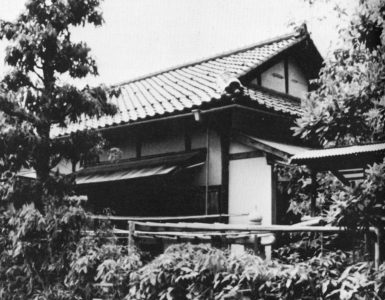
| 1920 | Meets Onisaburo Deguchi of Omoto religion in Ayabe. Father, Yoroku, dies in January. Arrives home in Tanabe shortly after Yoroku’s death. Moves to Ayabe, site of Omoto religion, in Kyoto Prefecture, with family. Opens Ueshiba Juku dojo attached to his residence. Second son, Kuniharu, born in April. Oldest son, Takemori, dies in August. Second son, Kuniharu, dies in September. |
| 1921 | [First Omoto incident occurs.] Third son, Kisshomaru (Koetsu), born in June. |
| 1922 | Mother, Yuki, dies. Sokaku Takeda visits Ayabe with his family to teach and stays from c. 28 April to 15 September. Receives Kyoju Dairi from Takeda qualifying him as certified Daito-ryu instructor (September). |
| 1924 | Goes to Mongolia with Onisaburo Deguchi with goal of establishing a utopian community (February to July). Captured and held prisoner by Chinese military for plotting overthrow of existing government and narrowly escapes death. |
| 1925 | Gives special demonstration in Tokyo for high-ranking military officers and dignitaries. |
| 1926 | [Kenji Tomiki begins training.] |
| 1927 | Moves to Tokyo with entire family. Establishes temporary dojo in billiard room of Count Shimazu’s mansion in Shiba, Shirogane in Sarumachi. |
| 1928 | Moves to Shiba, Tsunamachi, site of temporary dojo. |
| 1929 | Moves with family to Shiba, Kuruma-machi, and sets up temporary dojo. |
| 1930 | Moves to Shimo-ochiai in Mejiro. Judo founder Jigoro Kano observes demonstration by Ueshiba in Mejiro dojo and dispatches several students from Kodokan including Minoru Mochizuki to study. |
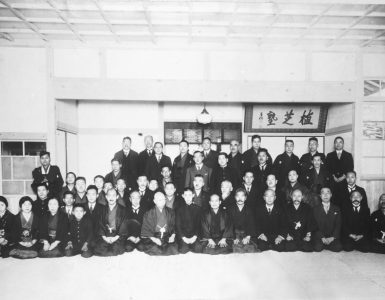
| 1931 | Dedication of Kobukan dojo in Ushigome, Wakamatsu-cho. Sokaku Takeda teaches seminar from 20 March to 7 April at Kobukan Dojo. Ueshiba’s name appears in Takeda’s enrollment book. |
| 1932 | Budo Senyokai (Society for the Promotion of Martial Arts) is established with Ueshiba as its first head. [Gozo Shioda enters Kobukan Dojo.] [Shigemi Yonekawa enters Kobukan Dojo.] |
| 1933 | Begins teaching at Asahi News dojo in Osaka with assistance of Takuma Hisa. Technical manual, Budo Renshu, is published. [Rinjiro Shirata enters Kobukan Dojo.] |
| 1935 | Making of Asahi News film documentary in Osaka with Takuma Hisa. [Second Omoto Incident occurs. Arrest of Onisaburo Deguchi and his wife and other Omoto leaders.] |
| 1936 | Shooting of Noma Dojo photos, more than 1,000 images capturing Morihei Ueshiba’s Aiki Budo technique. Sokaku Takeda appears in Osaka and takes over instruction of Asahi News dojo. |
| 1937 | Ueshiba’s name appears along with that of Zenzaburo Akazawa in enrollment book of Kashima Shinto-ryu school. |
| 1938 | Prince Teh Wang of Mongolian puppet state hosted at Kobukan Dojo during state visit to Japan. Technical manual, Budo, dedicated to Prince Kaya, containing photographs of Ueshiba’s techniques is published. |
| 1939 | Invited to Manchuria to instruct at Kenkoku University. Meets famous sumo wrestler Tenryu who becomes his student. [Koichi Tohei enters Kobukan.] |
| 1940 | Attends martial arts demonstration in Manchuria commemorating 2600th anniversary of Japan. [Kenki Tomiki receives first 8th dan given by Ueshiba.] [Kisaburo Osawa enters Kobukan.] |
| 1941 | Gives demonstration arranged by Admiral Isamu Takeshita at Saineikan dojo on palace grounds before members of imperial family. Teaches at military police academy. Invited to instruct in Manchuria for University Martial Arts Week. Becomes martial arts advisor for Shimbuden and Kenkoku University |
| 1942 | Name “Aikido” becomes official and is registered with Ministry of Education. Invited to Manchuria as representative of Japanese martial arts to attend Manchuria-Japanese Exchange Martial Arts demonstrations in commemoration of 10th anniversary of independence of Manchuria (August). Moves to Iwama, Ibaragi Prefecture. Kisshomaru Ueshiba becomes Director of Kobukan Dojo. |
| 1943 | First Aiki Shrine built in Iwama. |
| 1945 | Kobukai Foundation ceases activity due to postwar ban on martial arts. Iwama dojo completed. |
| 1946 | [Morihiro Saito enters Iwama Dojo.] |
| 1947 | [Sadateru Arikawa enters Aikikai Hombu Dojo.] |
| 1948 | Engages in farming, intensive training, and meditation in Iwama. Zaidan Hojin Aikikai, a non-profit foundation, established 9 February 1948. Aikikai Hombu Dojo moves to Iwama, office opened in Tokyo. Kisshomaru becomes head of Aikikai dojo. |
| 1949 | Regular practice resumes at Tokyo Hombu Dojo dojo. |
| 1950 | Hiroshi Tada enters Aikikai Hombu Dojo. |
| 1951 | [Minoru Mochizuki to France to teach judo and aikido.] |
| 1952 | [Koichi Tohei promoted to 8th dan by Ueshiba.] [Tadashi Abe relocates to France as student while teaching aikido as representative of Aikikai Hombu Dojo.] |
| 1953 | [Koichi Tohei to Hawaii for initial stay of one year.] |
| 1954 | Large aikido demonstration held in Tokyo sponsored by the Life Extension Association attended by 15,000 people. [Yoshinkan Aikido Dojo opened in Tsukudo Hachiman.] |
| 1955 | Aikikai Hombu (headquarters) moved back to Tokyo from Iwama. Several foreign dignitaries attend a demonstration given by the founder at the Aikikai Hombu arranged by André Nocquet. |
| 1958 | Appears in U.S. television documentary Rendez-vous with Adventure. [Kenji Tomiki establishes the Waseda University Aikido Club in April.] |
| 1960 | Receives Medal of Honor with Purple Ribbon from Japanese government. |
| 1961 | Invited to Hawaii for opening of Honolulu Aikikai (February). Appears in television documentary made by NHK. [Mutsuru Nakazono relocates to France as representative of Aikikai Hombu Dojo.] [Masamichi Noro relocates to France as representative of Aikikai Hombu Dojo.] [All-Japan Student Aikido Federation established with Ueshiba as president.] |
| 1962 | [Aritoshi Murashige relocates to Belgium as representative of Aikikai Hombu Dojo.] |
| 1963 | [All-Japan Aikido Demonstration held for the first time at Hibiya Kokaido (October).] |
| 1964 | Receives Order of the Rising Sun, 4th Class, as the founder of aikido. [Hiroshi Tada relocates to Italy as representative of Aikikai Hombu Dojo.] [Nobuyoshi Tamura relocates to France as representative of Aikikai Hombu Dojo.] [Yoshimitsu Yamada relocates to New York, USA, as representative of Aikikai Hombu Dojo.] |
| 1965 | [Katsuaki Asai relocates to Germany as representative of Aikikai Hombu Dojo.] [Seiichi Sugano relocates to Australia as representative of Aikikai Hombu Dojo.] |
| 1966 | [Kazuo Chiba relocates to London, England, as representative of Aikikai Hombu Dojo.]
[Shuji Maruyama relocates to USA, settling in Philadelphia, Pennsylvania, as representative of Aikikai Hombu Dojo.] [Mitsunari Kanai relocates to Boston, USA, as representative of Aikikai Hombu Dojo.] [Toshikazu Ichimura relocates to Sweden as representative of Aikikai Hombu Dojo.] |
| 1967 | [Yasunari Kitaura relocates to Spain as representative of Aikikai Hombu Dojo.] |
| 1968 | [New Hombu Dojo building dedicated.] |
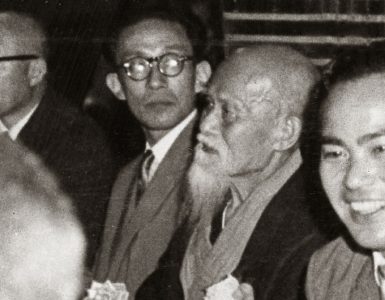
| 1969 | Makes final trip to Kansai during which he awards an oral 10th dan rank to Michio Hikitsuchi of Shingu. Gives final demonstration on 15 January at Kagami Biraki Celebration. Succumbs to liver cancer on 26 April. Ashes buried at Kozanji, Tanabe. Hair preserved at Iwama, Kumano Dojo, Ayabe and Hombu Dojo. Made honorary citizen of Tanabe and Iwama. [Wife, Hatsu, dies on 26 June.] |






Great piece of work there, Stan!
Thanks for it. But I see a missing piece at first glance: Kisshomaru’s birth is not indicated in the chart! Not that that makes the chart unusable 😉 but… the first three children been there and not him looks odd.
Anyway, thank you for your countless efforts!
Oops! Thanks for pointing it out. I have added mention of Kisshomaru’s birth. Please have a look.
Thanks for the article. I was hoping that there may be a biography of Morihei Ueshiba. Do you know of any? Are there any planned?
To what degree did o’sensei practice other martial arts and why did Sokaku have such an effect on Morihei?
I have so many, perhaps trivial questions that only something like a biography would help me.
Again thanx for the article any info on the founder is appreciatively lapped up into my memory.
Greig,
All of the subjects you mentioned are addressed in great detail on this website. There are also scores of biographical articles on the Founder. You have only to explore and read.