
 Josh Gold
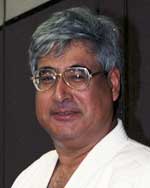 “Teaching is the only major occupation of man for which we have not yet developed tools that make an average person capable of competence and performance. In teaching, we rely on the “naturals,” the ones who somehow know how to teach.”. This more than apt description by Peter Drucker of how we “cause another to know something,” describes the phenomenon of teaching like no other, in my view. In other words, we owe it to ourselves to constantly identify, locate and commit to the best available teacher(s) in the arenas of our sincerest and most passionate interest. We cannot afford to settle for any less in terms of maximizing finite time, the costs of high energy output, the need for consistent and committed effort, and to humbly realize that resources are precious and rare, and never guaranteed. This is most certainly true when it comes to choosing our mentors, and our teachers. We must do whatever it takes to find them.
Does it truly follow that highly effective teaching should only result from the time intensive accumulation of impressive reservoirs of knowledge and experience? Do we need to seek out only “acknowledged masters” of some esoteric and fascinating body of knowledge and tradition, under whose tutelage we can have the best opportunities to grow? Or do we dare to primarily teach ourselves, by availing and exposing our minds, bodies and spirits to the same resources and experiences that were successfully used by acknowledged masters from the past? Do we reasonably have enough time and resources to perhaps find a working combination of the above?
Then there is the matter of “what” to teach. Are we focusing mainly on some craft, and the concomitant amassing of techniques and proven applications of some system of power and performance? Are we more interested in gleaning and extracting “wisdom” from philosophers and their philosophies enshrined in time, lore and mysticism, to then act as “pied pipers” for the lost, the aimless, and the non committed? Or are we intent on becoming “experts” in some proven system, and then attracting likely students to instruct, without any true regard for what they individually need and/or are capable of incorporating and assimilating in their own search for meaning and accomplishment? In other words, do we attempt to teach only the Aikido we know and are familiar with, or are we honestly interested in seeing how much our relatively meager store of knowledge can influence and benefit the majority of our students, and their uniquely individual search and discovery of their own forms of Aikido.
Are we then sincerely attempting to identify serious students who have an honest interest in what we have to offer, and are willing to invest the requisite time, effort and energies to actually appreciate, acquire and to apply the lessons learned? Or are we simply and unconsciously regurgitating the lessons we have previously learned, without the benefit of careful scrutiny and review, or the progressive enhancement of earlier lessons learned, or even being accountable for the value, integrity, timeliness and appropriateness of what we are actively teaching?
“Everybody who is incapable of learning has taken to teaching.” This example of the sardonic wit of the immortal Oscar Wilde strikes truer than it would seem. The rather inelegant metaphor of trying to speak and think simultaneously comes to mind, with the dilemma of deciding which should always occur first.
In truth, how can one reasonably “teach” what one has not already “learned.” Surely, we can agree that we may not pump water from an unfilled reservoir, or pour milk from a pitcher as empty as the cauldron of collected wisdom and good intentions from our elected politicians. Then, of course, we may recall the sarcastic and equally ridiculous admonition that “those who can, do, and those who cannot, teach.” If at all true, I am done here. See you in the next life.
It is my profound belief that the power and promise of achievement and fulfillment resides in every person. Like the great Michelangelo and his famed statue “David,” where he freely admitted that his subject was already existing within that magnificent piece of stone. The great artist humbly acknowledged that his was merely the work of removing those pieces that did not fit. Great teachers of today can do no more.
A true teacher is indeed entrusted with the task of removing the obstacles that work to prevent the true student from emerging. It is then the noble obligation of the sincere and dedicated student to teach and to inspire himself or herself accordingly. The mundane act of teaching mere craft and technique is never the sole role of the so-called teacher. Surely, there are infinite other ways and means for the ambitious and open-minded student to acquire similar knowledge, and to develop truly amazing competence. As well-intentioned teachers, we must accept that the needs and the unique character of each student trumps any skills, “truths,” or knowledge we may want to impart. In reality, we are more “servants to the flame” of the students’ sense of self discovery, rather than being master minds to a new generation of wunderkind.
Aikido, like any other valid and worthwhile field of study and research known, cannot be considered to be especially unique or singularly important in its origin, or in its history and traditions. We can only teach what we are able to comprehend, and only those students who are willing enough to allow us the privilege. We must always be ready, willing and able to replenish, and continually enhance the content of our own pitchers, to constantly and consistently expand our acknowledged finite range of knowledge, competence and usable experience, not only for ourselves, but for the dedicated students of Ueshiba Aikido now, and for the forseeable future.
O Sensei always taught that we must ultimately teach ourselves. His is the example we must follow. His is the legacy we must emulate. Ours is the resolve to try.






Thanks again Takahashi Sensei for this great post, although I commented it already in the forum of Aikido Academy USA after translating it, the more times I read it the better I understand what a thoughtful article it is.
I think that teaching is not only to have reservoirs of knowledge and experience and regurgitating lessons one has learned. A great teacher enjoys to see how his students improve day by day, he is also a psychologist knowing how to treat everybody: the shy student different than the selfish one, he must take care that everybody trains with everyone. And in current times where people got to train after a stressed day of eight or more hours of work make sure that students will also have a bit of fun meanwhile they learn aikido techniques. I’m so lucky to have such a great teacher as I commented in AAUSA
http://www.aikidoacademyusa.com/viewtopic.php?f=5&t=305