
 Josh Gold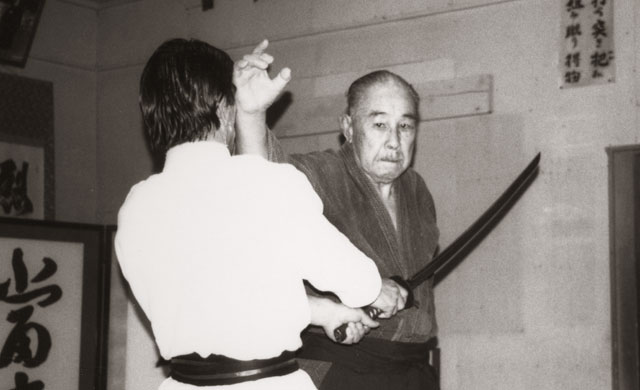
“The next step consists in applying the antidote to fear: familiarity. Little by
little, we become accustomed to the thought of the obstacle that bothers us.”
The point is to develop awareness, a by-product of concentration. Here, if we reflect on the fact that we are strongly attracted by some things and hate others, especially those that prevent us from getting the things that attract us, then we can look for the root of the cause. It may be associated with a strong emotion that arose sometime in the past. For example, our mother might have given us something at a moment when we were feeling happy and that became a favorite; or we might have received something after being scolded and we have hated it ever since; or we may face something that we don’t know and our conditioning, fear of the unknown, makes us reject it automatically.
If we force ourselves to behave according to what we think is expected from us (“If I don’t do it, I won’t get promoted!” Or “I will look stupid, ignorant, etc.!”), then we act out of obligation (rigidity). We bottle up all the frustration, and we set an internal time bomb that will detonate as rebellion, mental and/or physical disease, etc. If we force ourselves to do something out of fear, it will bring the same result as running away from it: unfinished business that will haunt us as long as we avoid managing what scares us.
The next step consists in applying the antidote to fear: familiarity. Familiarity implies moderation. Little by little, we become accustomed to the thought of the obstacle that bothers us. For example, we have a disagreement with our teacher. We sit down in a quiet place and do deep breathing meditation (shinkokyû mokusô) until our mind starts calming down. It may take several minutes and multiple start-overs, according to our training and the intensity of the emotion. However, the point here is not to eliminate the emotion (rigidity)—it acts as a signal of something that should be paid attention to and is also a reminder of our humanity—but to develop the skills to work with it (flexibility).
Once the mind is calm—and it will become calm—we can ask ourselves the following questions: “Am I here to learn or am I here to prove that I am right and that my teacher is wrong? Which is more important to me? Is my teacher teaching in order to continue his study and does he have his students’ best interest at heart; or is he just doing it for himself?” These are important questions that a serious student should ask himself. The teacher-student relationship is not a smooth path; it is paved with obstacles to overcome, such as greed, fear and doubt. Once our answers to those questions are clear, we develop understanding and wisdom (intelligence of the heart). We should contemplate this new understanding for some time in order to make sure it’s internalized and will be there when emotions arise again. The intensity of the emotions will depend on how long and to what degree we have let the chatter of the mind (the bat in the belfry) nourish them uncontrollably.
Then we are ready to go back to our teacher and confirm our will to continue our study under his guidance. This may be a humbling experience for us, but what better way is there to cultivate humility—an essential quality of a teacher—than humbling ourselves? On the other hand, if we look at it as humiliation, it’s an indication that our ego (the little dictator) stands in the way and that we have more reflecting to do.
The same process can be applied to relationships. We may have a broken relationship with a parent for example. One or both of us refuse to meet. But if I decide to apply the principle of flexibility and efficiency, I may think something along these lines: “He/she has been suffering as much as I have, or more, whatever the cause of the split. As his/her child, I am younger and his/her life will likely finish before mine. Who knows what he/she will face at the moment of his/her death? Once he/she is gone, it will be too late to do anything about it, and I will be haunted with that thought until the end of my life. Therefore, I will take the first step and I will let him/her know in an appropriate way—kindly, respectfully, truthfully, and in a timely manner (on his/her birthday, at Thanksgiving or at Christmas, for example)—that I wish for us to see each other. Once the seed has been planted, I will let it take care of itself.”
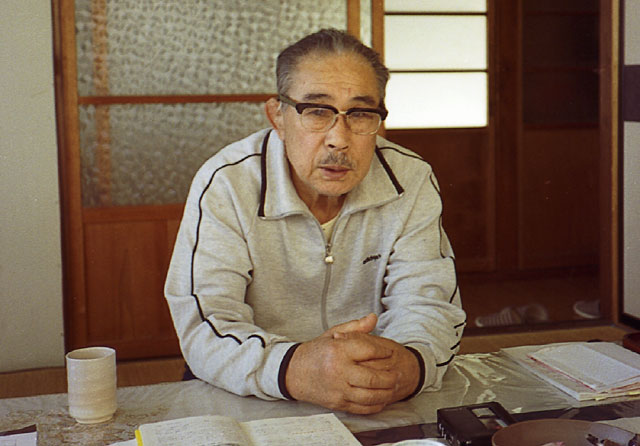
Mochizuki Sensei also said that Budô was forgiving. We forgive our enemy, but we do not forget his negative actions lest he repeat them. He still has to correct himself and repair the damage caused; it’s all part of his study and of the other students’ study, those who are mindful. That’s the meaning of shugyô.
Mochizuki Sensei had to expel some students due to their recurring negative behavior. However, he always kept his door open in order to make it possible for the student to go back to Sensei, apologize and correct his behavior. To Sensei, Budô was forgiving (yurusu), which means that expelling a student (hamon) was a wake-up call for the serious student to review his motivation and correct his behavior. It’s an aspect of the evolution of Bujutsu, in which hamon was final, into Budô.
Unfortunately, few took advantage of that opportunity to improve themselves and preferred to quit or start their own rônin organizations.
Among those cases was a skilled young martial artist who was working in law enforcement. I won’t get into details here, but he committed a prohibited act and was fired. He could no longer find employment in Japan. His family begged Kanchô Sensei to send him abroad. Sensei thought that he had been a victim of his immaturity and that, considering his age, he deserved a chance to reform himself. Sensei also believed in the educational value of living abroad. He gave him some adequate training and sent him overseas. However, that young man found himself struggling for survival and went right back to the only way he knew. He had passed the point of no return. After being hamon’ed, he assumed that he could fly on his own and became independent. But, some of his followers would eventually treat him the same way he taught them through his example. Several decades later, nothing is left of what he started! Occasionally, some well-meaning rônin will attempt to reintegrate into the main line, but the technical and spiritual deterioration resulting from years of neglect and misguidance becomes an insurmountable obstacle for them to overcome.
It is said that the greatest gift one might give or receive is the gift of “confidence,” also called “the gift of non-fear.” During my years at the dôjô, I have seen victims of bullying (a social disease in Japan) brought to the dôjô by desperate mothers. Within a couple of years, the transformation is evident. As those children develop physically, so does their confidence in their ability to throw, counter, fall, pin, and get out of pins. Teasing is no longer taken as a personal attack but as a joke that has little more effect than a laugh. Mochizuki Sensei taught that bullying could not be stopped by punishing the bully only. By educating the potential victim, the target would disappear, and hence, so would the bullying.
We also see adult students who have found themselves stuck in unfulfilling or unsatisfying jobs but who, as a result of developing concentration and of being exposed (familiarization) to a variety of people, realize that they have the ability to make a career change and decide to go back to school.
Occasionally, some students cannot handle their newly-acquired confidence. Take confidence, add greed to it, let it go out of control, and you have arrogance –one of the facets of insecurity. At one time, such students couldn’t take any initiative or do anything without encouragement and help, but suddenly they think that they know enough to no longer need their teachers and seniors. Then, their teacher vanishes from their CV, for they had been claiming a direct link with the head master of the school despite the fact that they might have had only a few hours or days of exposure to him. This is what happens when someone is being promoted to his level of incompetence. It’s a reminder of life’s vicissitudes: where there is responsible use, there is also abuse. However, as teachers, we must give opportunity to everyone who shows a will to learn. Sometimes we can tell when a student really deserves to be helped or not; but some times we cannot. Only the future will tell.
Mochizuki Sensei encouraged teachers to open their own dôjôs. Public facilities are fine to gain experience and establish a base of students, but they are often managed by administrators who care more about income than education. Accordingly, prime time is given to fads and popular activities; budô classes can be switched without warning to inconvenient times and locations. Lower fees also tend to attract more people but few are willing to get involved beyond attending their classes. In the case of rented facilities, one is at the mercy of a landlord who may raise the rent whether or not the dôjô does well or simply if he wants to get rid of it. As a result, some instructors lower their standards.
On the other hand, owning the facility makes us our own landlords. It gives us the freedom to organize our schedules, to run events such as camps and clinics, to stay after class to talk with students, etc. It shows our commitment to students and our will to stay. However, it requires a solid determination and preparation and is not for everyone. We all have been facing the same challenges: how do we maintain the discipline and the technical standards, and keep the students? Some instructors become baby-sitters and entertainers, use contracts which they sell to collection agencies, give black belts to children, use promotions as lures, etc. They are unable to maintain the standards and will either be expelled or quit on their own since they have no real leverage other than recommending students for promotion. But, owning a building doesn’t make a dôjô; it doesn’t make us teachers either. Can we in this age of consumerism and edutainment run a traditional dôjô and still make a living?
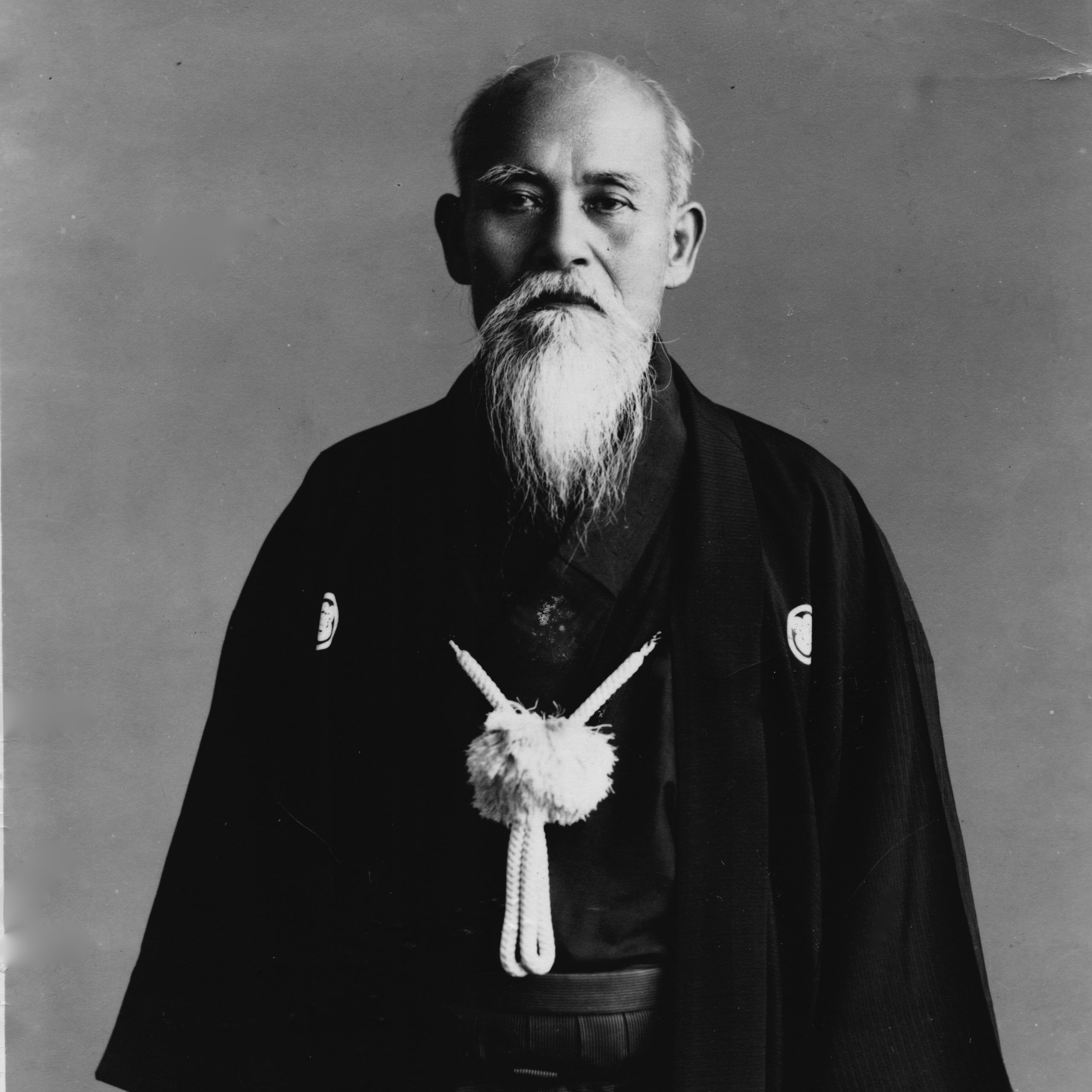
Yes, we can. However, we have to be willing to do what it takes. It requires a vision of the values our teacher represents and of the responsibility of our position, and a will to prepare ourselves mentally, physically and financially. Equanimity (maintaining an impartial mind in the midst of life’s changing conditions) is the quality that distinguishes professionals from amateurs. The right choice of a partner (spouse) is also essential. It is said that behind a person’s success is a great spouse. (The reverse is also true.) Mrs. Mochizuki’s unconditional support of Kanchô Sensei was a main factor in the continuation of his loyalty to his principles. We may wonder what would have happened if he had accepted Ueshiba Sensei’s offer to marry his daughter and take his name?
Mochizuki Sensei wrote that martial artists had to be educators on the streets. Educators have a responsibility to bear themselves in moderation. That includes, for example, staying away from brand name products and luxury items lest they attract the wrong kind of attention, or incite anger and/or jealousy in those who cannot afford them. As martial artists we must be aware of what we are representing and of the example we are setting. Quality, functionality, durability and good taste should be priorities in our choices (principle of efficiency).
To become an educator, first one has to educate oneself. For this Sensei emphasized the cultivation of ki. By ki, he meant attention, awareness, in the meaning of ki wo tsukeru (pay attention, be aware!).
Awareness is a by-product of concentration. First, we concentrate our minds on one single object for a length of time, excluding anything else, going constantly back to that object as distractions (the chatter of the mind, images, emotions, etc.) come and go until that object becomes one with ourselves. Then, we start noticing more and more signals related to that object as our senses are constantly scanning in and around ourselves while we are attending to other activities or while at rest. In one of the fifth battôjutsu (quick sword drawing) ura techniques, for example, we notice at a distance someone touching his weapon as he approaches us, as a sign of preparation to use it; thus, we take the initiative and strike him in a preemptive attack before he reaches his ideal maai (combative engagement distance) to draw on us.
While sitting meditation (zazen) is part of every serious Budô student’s daily practice, we do not have to spend hours doing it. Solo training is our best tool to develop concentration. A daily regimen of 500 to 1,000 suburi doesn’t take long to complete and helps us deal with distractions and develop a stable and present mind. After that, we can apply the same method to any task. We may be able to impress students with our technical skills, but what they are really looking for in a teacher are the qualities of mind they expect to acquire from him through osmosis.
Mochizuki Sensei emphasized that another way to work with our fears and develop confidence is to compete in shiai. For young people, he recommended to enter Jûdô tournaments, while their bodies are still flexible and less prone to injury. With that kind of training young students can develop explosive power that will translate to their Aikidô techniques while older students should avoid it for the good reason that they are slower and that it will produce the opposite result: stiff and sloppy techniques and injuries. They should concentrate on polishing their techniques through constant repetition with an emphasis on timing. Consequently, for those students in their thirties and over, he recommended the practice of chikara randori (power randori) in the dôjô.
In a four minute shiai or chikara randori one sometimes accumulates the experience of several weeks of training. Our concentration is near the level of a life or death situation. We are facing ourselves, our desires and fears, and there is no turning back. If we have trained ourselves to function in solution mode, we will immediately apply it. If we haven’t, then we will realize the necessity to train ourselves to do so. “Practice at the Kobukan in the 1920’s was like a shiai,” Mochizuki Sensei reminded us.
“In competition we find ourselves.” Our opponent becomes a partner of our self improvement. There is a tendency in the business world to try to eliminate the competition, but look at what happens after a corporation enjoys a monopoly status. It stagnates and deteriorates from inside. The same goes with people. In the old Bujutsu way, you eliminated the enemy after winning the war. Look what happened to Germany after WWI. In Budô, you make the enemy into a partner and help him recover after the war is over. That is the way to go nowadays. Our understanding of patriotism must take into account the existence and the needs of other countries as well as our own.
Mochizuki Sensei was in favor of competition as a part of practice, not as an end in itself as it has become nowadays. Kano Sensei admitted that he had lost control of the development of Jûdô. For that reason, he was against the inclusion of Jûdô as an Olympic sport. Mochizuki Sensei was against organized competition. When we get busy planning, raising and managing money, advertising, stimulating the athletes, dealing with politics and special interest groups, we lose the vision, we lose the purpose. Many athletes train hard and develop high levels of concentration; many have mastered the application of the principle of maximum efficiency but, due to greed and ignorance fueled by their lack of exposure to higher principles and the people who represent those principles, their development stops there. Few are able to apply it to their lives and develop the spirit of Mutual Welfare. However, nowadays, in this information age, ignorance is no excuse. It’s a matter of choice for each of us.
Kano Sensei developed a simple and logical philosophy which transcends culture and religion and can provide guidance for the modern budô student. This philosophy provided the foundation for other Budô geniuses such as Tomiki, Mochizuki and Shioda Sensei to interpret Ueshiba Sensei’s teachings, develop them to a higher level, and explain them to their students. An Aikikai shihan, a former skilled judôka himself, once declared in an interview that Ueshiba Sensei’s teachings were more advanced than Kano’s. He should have added that it was thanks to his Judô foundation that he was able to understand and develop Ueshiba Sensei’s teachings.
Everybody is free to think and do whatever they want with these teachings. Whether we focus on our feelings, negative or positive, about the way they are expressed or whether we focus on the deeper meaning of the teachings is a matter of choice. As the saying goes: “The teacher is pointing at the moon and the fool is looking at his finger.” If we call ourselves “Mochizuki Sensei’s students,” let us be the ones who are looking at the moon.
I would like to thank Mr. Alan Zeoli for correcting and editing this essay.
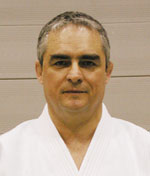
Patrick Augé
Click here for Part 1 of this essay
Contact Patrick Augé Sensei of the International Yoseikan Budo Federation





I found your comments about developing and attaining confidence very good. My aikido training has certainly developed my confidence and has reduced the fear factor of meeting challenges, but your article brought home the point of not becoming overly confident or fearless. When one becomes confident, it is hard to know when one becomes overly confident. It explains why we need to develop mutual welfare as we gain confidence. We need to constantly consult with others to stay on track and do thing efficiently and with the least amount of conflict with others. It has to become a habit.
Thank you Auge Sensei for sharing this deeply informative essay. There are many facets within it that will require much review and reflection to fully acquire a true understanding. In the essay, you referenced that “Awareness is a by-product of concentration.” In today’s age, information comes in at light speed and from multiple sources. Since many of us work in environments to where it’s like an information production line, there isn’t a lot of practice to be had on concentrating on items to attain a certain quality. Would you have any advice for those of us that are currently saturated in an information overloaded environment on acquiring better concentration skills?
Thank you again for the insightful essay.
Henry Jennings
Budo Yoseikan Student
We may consider the work environment as a battlefield. Consequently, we should choose our physical and mental activities as preparation, not as escape.
Concentration is the basic quality of mind that we have to develop in order to develop other qualities such as awareness, compassion, equanimity. It must be cultivated when we are young and mentally receptive. In my experience, very few adults are able to do it unless they had exposure to it while in their childhood.