

 Josh Gold
In response to the interest generated by our earlier post, “How Safe is Your Training?“, we’ve written a follow-up that outlines how we track, analyze, and respond to injury-tracking data in the dojo.
We’ve outlined below a 6-step plan to track and minimize martial arts injuries. While it’s not perfect and we’re still refining the system, we’ve found it to be a fairly accessible solution that produces positive results.
1. Define “Injury”
At Ikazuchi Dojo, we define an injury as a training-related physical impairment that prevents a student from training for two or more days. This definition is consistent with ones used in sports and other activities that track their injury rates. Using this definition for an injury, we would not log a bruise or bloody lip, for example. We would, however, log a sprain, dislocation, even an over-stressed joint that simply needs rest for an extended period.
We’ve found this to be a reasonable and unambiguous way to measure injury rates. However you chose to define “injury,” as long as your definition is clear, you’ll be able to gather internally consistent metrics you can compare reliably against prior periods of measurement in your own dojo.
2. Establish Your Data Sources
At Ikazuchi Dojo, we use two primary sources and one secondary source for operational data collection on injuries and training time.
 Primary Source 1: Mindbody
Mindbody Online is a software service that manages a range of dojo operational functions. One of those functions is attendance tracking.
At Ikazuchi Dojo, students log in for classes on an iPad mounted in the dojo. Workshop attendance, personal training sessions, and tests are also tracked using Mindbody.
There are many options for configuring the system based on your needs. For example, you can set it up so students self check-in on their mobile device or you can have instructors manually log attendance data into a mobile app.
There are alternative systems available to track attendance. Any system should do the trick as long as it allows you to calculate:
Attendees x class duration= total training hours for a given session.
If your students spend a lot of time on the mat outside of classes, like ours do (training for kyu tests, after class practice, etc.), you’ll need some way to account for this data point.
Even without logging these outside of class hours, you can probably just pay attention to the behavior in your dojo for a week and come up with a multiplier that would be a reasonable estimate. For example, for every 20 hours of class time, there’s about 2 wo/man hours of training outside of class, so we will multiply the total training hours for a given period by 1.2 to get a reasonable estimate. An alternative way to get this data is to survey your students (see Secondary Source below).
Primary Source 2: Instructor Injury Reports (email)
Our dojo has a team of 12 instructors, who log and email reports of any injuries that occur in their classes. In the injury report, we collect:
- Nature of injury
- Activity / technique practiced when injury occurred
- Name of instructor
- Name of injured student
- Name of the training partner of the injured student
Secondary Source: SurveyMonkey
 SurveyMonkey is a free service. We survey our students as an additional data source for both training time and injury data. We ask our students the following types of questions:
- How many hours a week do you train?
- How many hours a week do you train outside of scheduled classes?
- In the past year, how many training injuries did you experience that caused you to miss two or more days of training?
The student survey data won’t be as accurate as your primary sources because it’s hard to remember details when you’re recalling events spanning a multi-month period.
We’ve been running these surveys annually, but this year we’re going to try doing it quarterly. We know we’ll get more accurate data if we survey more often, but we also respect our students time and don’t want to hassle them too often. We aren’t sure what the right frequency is for this yet.
Our system is not without flaws, but it’s pretty easy to set up and manage. We like it because it generates a primary and secondary data source for each input: injury data comes from instructors and students; training time data comes from Mindbody logs and students.
Because our primary data sources (Mindbody and instructor emails) generate and log data on a daily basis, they are inherently more accurate than the student survey data. We mostly use the student data as a reality check. If the numbers end up being dramatically different, we likely have a problem with data accuracy.
 3. Compile Data
We use a Google spreadsheet to compile our data. We use it to:
- Pull report data from Mindbody and do the basic math to total up our training hours
- Build a table that stores our instructor-sourced injury data
For the student sourced data, SurveyMonkey provides its own reports and they’re pretty awesome.
You can compile your data however often you want to generate injury-rate statistics. We’ve been doing it annually, but may start doing it semi-annually or quarterly.
Recommendation: Even if you plan on compiling your injury data annually, we strongly suggest that after setting up your data sources, you compile your first data set after 3 months of operation. You’ll probably find a number of problems with your system that need adjustment. You won’t want to collect data for a year before you find out that your system has major bugs. We made this mistake and hope we can help others avoid it.
4. Analyze
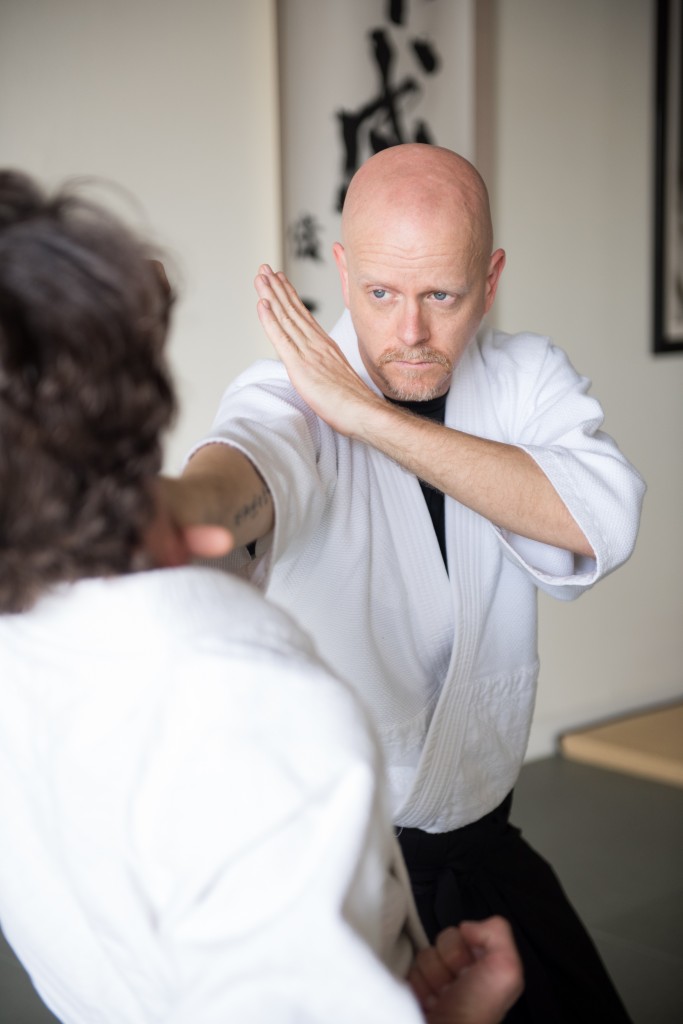 First: Look at your table showing the instructor sourced injury data. Are there any trends or patterns?
- Did 50% of your injuries come from people practicing nikyo?
- Did 70% of people that were injured have the same training partner when the injuries occurred?
You may not find any clear patterns in your data. If you do, you’re fortunate enough to have found something well defined to respond to.
Next: Calculate your average injury rate per 1,000 hours of training. The most important thing you’ll be able to compare the metric to is your own data from a prior period.
- How are injury rates trending?
- Are they increasing or decreasing over time?
You can then think about what might be the cause of changes in injury rates. Could new measures or training methods have reduced injury rates? Did a surge in new students overwhelm your instructors and result in an increase in injury rates for beginners?
Every dojo will have different dynamics here. We don’t presume to have the right answers for every martial arts academy. We believe that once you have the data and take the time to reflect on it, insights will emerge.
5. Respond
Once those insights do emerge from the analysis phase, it’s time to take action. Hopefully you’ll have some clear things to examine and test.
Here are a couple examples of things we discovered, and actions we’ve taken at Ikazuchi Dojo:
- We found that a root cause of a number of our injuries was the practice of randori (we practice a rather dynamic style of randori at Ikazuchi Dojo). As a response, we added an intensive small group training program for advanced practitioners that develops randori skills in a progressive, low risk manner. We also migrated towards a model where full speed randori is only practiced under the supervision of a very senior level instructor and other randori training would be done in a format that isolates specific training exercises that build skill across certain dimensions while removing high-risk components.
- We also discovered that some of our beginners and even intermediate / advanced practitioners were experiencing both sudden injuries and longer-term wear and tear injuries related to sub-optimal ukemi (falling) and movement patterns. As a response, we adjusted the way we lead new student orientations to place a greater emphasis on teaching proper movement patterns that build better balance, stability, and ukemi skill. We also pushed that curriculum out to our Aikido Fundamentals classes so senior students can gain exposure to, and develop fluency with, these new instructional methods and movement principles.
Both of these insights and responses resulted in a clear reduction in our injury rates. As an additional benefit, the shift in our training methods has measurably improved our students’ movement quality and randori skill.
Each dojo will have its own characteristics and approach to solving problems. The important thing is just to take some kind of action based on the insights you gain from your data.
6. Seek Your Flaws
Our system is far from perfect. We know there’s a lot we can do to improve in this area. Every time we go through a reporting cycle, we think about the flaws in our data gathering and analysis methods and try to improve them.
We hope you’ll find these guidelines useful and that they allow you to avoid some of the obstacles we encountered (and learned from) as we got our system up and running.
Once a system is set up, it really only takes a couple of hours per reporting cycle to compile and analyze the data. We find it to be a good exercise in operational discipline and believe the time and financial investment generates significant benefits for our members and for the future of our dojo.
Our thanks to Josh Gold for contributing this timely article. The original article is hosted at the Ikazuki Dojo website.







This is an excellent article and one that every dojo can benefit from: clothing the venerable traditions with the fresh garments of technology!
I grant that traditional budo isn’t especially mindful, at least not explicitly (omote) mindful, of training injuries. Wonder about the ura. Etiquette is an obvious risk management system, but I’m presently thinking about dojo design. Certainly we’ve all heard about students in the early postwar period pounding nails down in the uncovered wood floor, then training until the sores on their knees bled. If you have few resources and a lot of determination that sort of thing happens. What about dojos designed with a reasonable budget? My attention is drawn to the absence of hard edges and obstacles. In America there is almost always at least one mat edge, usually defined by something like 2x4s which hold the mat material and cover. Often there are columns. Do we see those in Japanese dojos?
I’ve already mentioned elsewhere an unfortunate knee injury from getting a foot caught in the junction between velcro-attached gymnastic mats. Here’s one that’s sort of funny. The old Piedmont Avenue school had a canvas mat cover. The canvas was new and had a texture… which wore the callouses off everybody’s feet.
In America we improvise. I’ve seen a diagram of an “ideal dojo” in a jiu jutsu manual. Bet that improvisation is less free form in Japan. Might that incorporate subtle safety features?
Very good article Josh. Thank You
Tim and Tom:
Thank you both for the feedback!
Josh
Has anyone done a study on the long term effects of training injuries?
I trained from 1984 to 2015 and I’ve recently been diagnosed with moderate to severe carpal tunnel syndrome which I believe were caused by osae waza.
I have neurological exam data if anyone is looking for data.