

 Josh Gold
“Sincere attacks including grabs and strikes are required to study the effective application of any technique…”
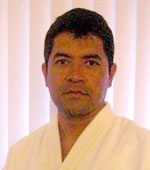 Today I will start by attacking you with a Yokomenuchi aimed to your right side, I will also use a Shomenuchi but I’ll let you know about it in advance, see you later at the dojo.
Best regards… Uke
I am a former Aikido practitioner and like many others I still enjoy reading articles in the matter also because it relates to the to the Koryu tradition I am currently studying. In the past I have visited a few Aikido Dojos in the USA and have trained under a few different schools. I believe that Aikido, for its very nature and philosophy, attracts and retains people who are mostly individuals of passive and tranquil disposition.
Let me clarify I am not generalizing; I don’t suppose to cover all the demographics of the Aikido community. In my opinion and based on my personal experiences I feel many practitioners of Aikido are drawn to it for a few different reasons. For instance, most practitioners, myself included, were attracted to its philosophy of harmony and peace and enjoy the flow and beauty of the techniques. Others practice Aikido as a hobby, character development, fitness, or a replacement for activities such as Yoga. In my opinion, these are great reasons and should be encouraged.
Talking to Aikido practitioners here and there over the years I’ve heard from some that they don’t look for solutions to defend themselves in physical conflicts from Aikido because they simply don’t care about the subject. They feel that because of their environment and their personality, the chances of being physically assaulted are rare. On the other hand, others specified that they don’t care about self-defense in Aikido because according to them they already have a background or skills in self-defense.
Some schools I’ve seen and practiced at have a very down-to-earth way of training; others go right past the extreme. As a matter of fact, at one school in particular the training was so rough that I ended up badly hurting one of my shoulders after being thrown, of course that was the opposite side of the balance. It was unfortunate as well to witness practitioners at other Dojos (including the instructors) executing and carrying out techniques very poorly and, sad to say, some of these were individuals that have achieved a Nidan rank or higher. Additionally, I found that these same individuals had confidence that they possessed the skills to be ready to protect themselves if attacked and they were very defiant about that fact. I found out that, for the most part, these practitioners have something in common: they have no other martial art training prior to Aikido and have never been exposed to, or witness, any type of violent attack or real life fight. These types of people I’ve just described are the ones who worry me because when it comes to practicing Aikido as self defense, I feel that these individuals have a false sense of security, feeling they would be able respond to a honest strike or physical attack in the real world when in reality, the individual could wind up seriously injured because of this false allure.
Almost since day one when I began studying Aikido back in the early nineties I have been hearing about the common known criticism to Aikido that it lacks realism and effectiveness to defend oneself. It is true that practicing techniques with “attacks without intention” creates a negative learned response and an unrealistic perception of the reality of self-defense. This is quite common in some Aikido Dojos, but I was more concerned about the fact that the same thing happens when we limit our practice only to “prearranged attacks”. Kata or drills as a method of training I know very well are necessary due to the fundamental nature of the art, but I felt that as one advances in the study, there was a lack of “additional training” needed in order to develop a realistic idea of an attack as well as the physical reflexes and those attributes required to respond to it.
Launching honest attacks in an environment (specific dojo) where the people you train with are used to counter and deliver “half-hearted” attacks is not very prudent; you most definitely will end up hurting someone. We all have to be at a certain level of progression, but even if you practice with a school which emphasizes in “honest attacks” you still can only go so far with your attack as so not to harm your partner, so I’ve always understood the reason for practicing with “prearranged attacks”.
Based on my limited experience I’ve always felt that strikes as attacks in Aikido were not studied as thoroughly as in striking based arts (with the exception of some schools, i.e. Yoseikan and Tenshin just to name a few). As a result, I started to explore and try out other ways of practice focusing on strikes as “unannounced attacks” and subsequently my study group at the time and I adapted “sparring” as part of training. However, we did not start with “full out” sparring, we only and specifically practiced our reaction to Shomen, Yokomen and mid-section thrusts and we only did this for what we called the “engagement” of an attack, meaning the parry and deflection of an attack and continuing as far as unbalancing uke, unless the technique was suitable for finishing up with a degree of safety (for instance Iriminage as opposed to something like Shihonage). Obviously, we didn’t communicate in advance what attack was going to launch although we did agree on using either a straight right or left punch, circular strikes (Yokomen type) and straight to the mid section to start. This practice necessitated the use of sparring gear. Some people might think that this will hinder the flow of the technique, but as I indicated before, it was just an addition to our regular practice.
Of course, this practice took place outside the dojo, and as you can imagine when we spoke about our additional training back at the dojo, some people reacted: “what? Well, Ueshiba Sensei never used sparring gear”, or “That sounds like competition, there is no such thing in Aikido.” Unfortunately to some Aikido practitioners (and I keep saying some), the concept of using any sort of “outside the box” type of training seems like blasphemy (for lack of a better term). To them, it is like going against the philosophy of Aikido. I, however, did not feel this was changing the curriculum or affecting the art, and I did not diverge from Ueshiba Sensei’s spiritual teachings. It was just what I considered an “add-on” to my regular training.
To me, Randori as a supplementary training method is a good way to free oneself from the practice of kata. Randori is not limited just to Aikido, but extends to Judo and other Japanese arts with a bit more contact and resistance whereas in Aikido its practice is more geared towards multiple attackers; however is not sparring.
Sincere attacks (grabs and strikes) are required to study the effective application of any technique, and furthermore when it comes to self-defense training an individual needs to maximize his/her reactions and develop competencies and traits. This type of “sparring” I described might be a small step towards that. To me, the transition was not too drastic because of my background in Hapkido, but this type of “cross over” training could be quite rough if you are not used to it. Nevertheless, it has productive results for anyone who has never had this type of training before. Perhaps the same sense of consternation that motivated me to join a Hapkido school in Colombia, South America back in the eighties during my teen years was the same bug that made me feel that something was missing in my Aikido practice.
There were some positive results from this practice such as the obvious development of reflexes and the mind set. Furthermore, it opened our minds to other new possibilities of training, but the most striking aspect for me was that within time I came to some realizations: first, I recognized that you can complement, for the most part, any art you choose and discover what works for you based on your own investigation and sincere experience to make it as effective as need it to be. This was a concept that I’ve read about long time ago, but it took time to internalize it. Aikido has a structure in which you can plot a course, but other arts might have a more feasible configuration or structure in which to apply that, but again it always comes down to you and what works for you as an individual.
Before this insight and during my exploration I happened to stumble upon an article that declared that Aikido nowadays differs significantly from that developed by the founder during the Iwama years. Further research into this subject lead me into the roots of Aikido and I eventually began studying Daito ryu Aikijujutsu. Today, I still apply this mindset to my personal training. I am not implying that one art is better than the other; it was thanks to Aikido that I took a journey that opened some new perspectives and paths. Perhaps I selected Daito ryu Aikijujutsu because, from a technical standpoint, it was the structure or framework that worked for me. I also believe that one can practice a koryu as a Budo, but that is something I cannot elaborate much about on simply because I feel we have to experience it to recognize it.
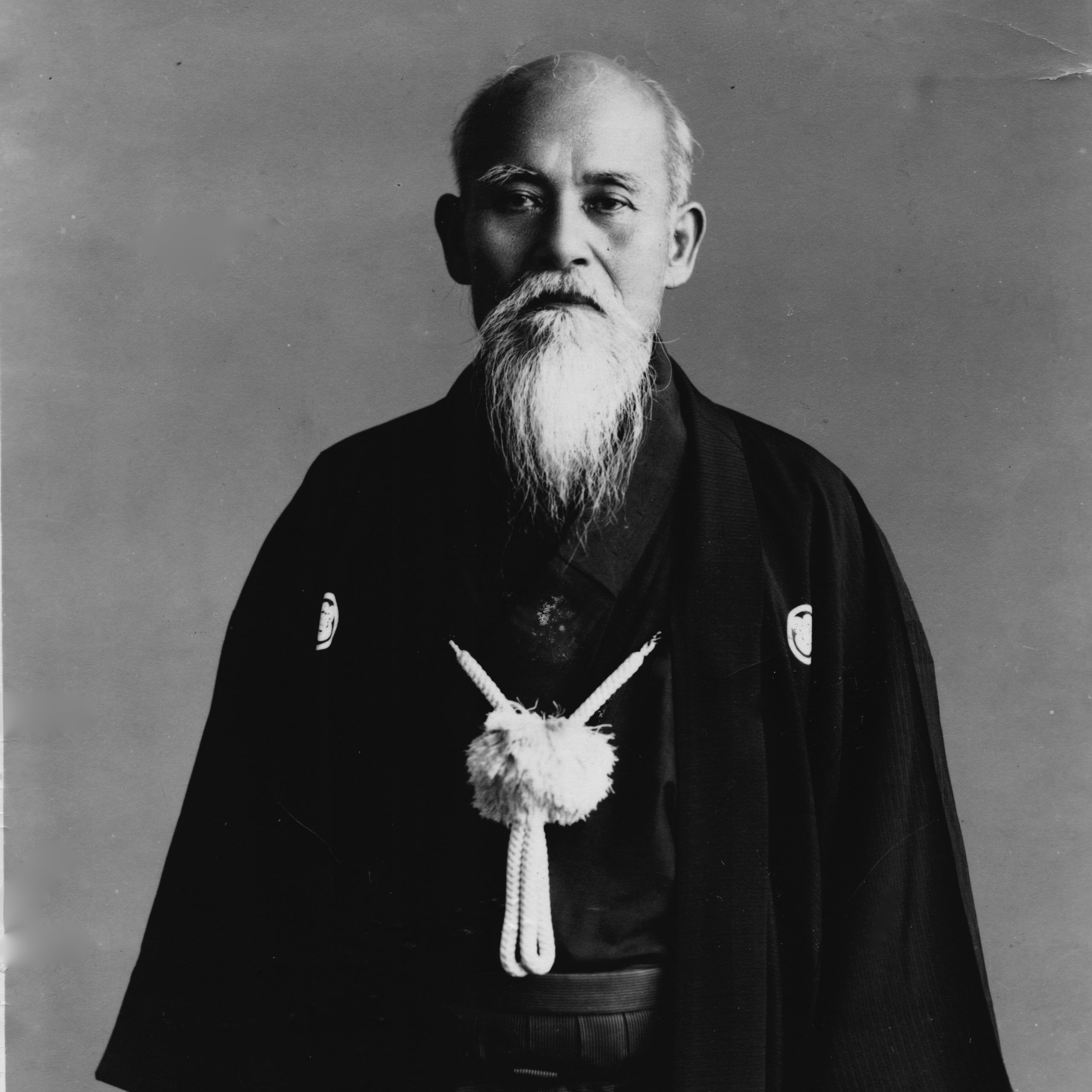
I do not feel Aikido is an “ineffective” martial art. It is up to you as in individual and how you practice that defines its effectiveness. Yet, Aikido contains a few complicating factors that could derail some people from the reality of self-defense. For instance, in regards to practicing joint locks, throws and take downs, the constant danger of getting hurt or hurting someone else draws a fine line between a safe practice and an effective practice; walking that line can be difficult. In some schools, the level of proficiency stagnates since individuals never progress from their early days of extra cautious training and these habits continue to prevail. Also, Aikido has a sophisticated foundation of philosophies and principles that are easily misinterpreted. To give an example, the misconception that if one is trying to make a “Gendai Budo” more “martial” or effective for self defense, then one is reverting to a Koryu and therefore defeating its purpose. The founder of Aikido declared, “To control aggression without inflicting injury is the Art of peace.” I love and admire that concept as well as the Aikido philosophy. Applying the same principle, I believe that if we fail to defend ourselves effectively we are not exercising the Aikido philosophy. Either way, the consequences can be catastrophic. So I think it is not difficult to be caught up in these dualities.
I was glad when I recently heard about some Aikido schools whose instructors had incorporated additional ways of training and had gone as far as practicing against feints as set ups for indirect attacks. Even in traditional Aikido, movements such as a feint to the face for distraction are used when countering an attack, and in reality most attackers use these types of deception moves, so we should train against them as well. I even remembered footage from a Tenshin Aikido seminar where counters against a leg tackle as attacks were practiced.
By no means have I presumed to be highly qualified to make observations or criticisms of the technical aspects of Aikido. As I mentioned before, we all went to Aikido for different reasons. Some of these reasons are very personal to some of us and I am simply glad I can share some of experiences and ideas with some people that might or might not find something in common in our never-ending struggle to find our own truth.
I believe that we must unearth our own way to the truth. Only by being unbound can we take action to continue evolving mentally, morally, and physically.





Doing aikido as a form of dance is a personal choice. Tai Chi can be taught as a martial art, but few seek it out for that purpose. I just hope for truth in advertising. Please, if you’re going to dance avoid using the words “martial art” or “self defense”. Being a fine dancer may not be a great thing to bring to a fight. Being in good shape, however, is always an advantage. I heard of a marathon runner who ran away from a fight in fine style. There are now, thanks to camera phones, all sorts of videos on Youtube of real street fights. I recommend checking some out.
I wish there was someway to draw some easily identifiable distinction in the Aikidoka in any given Dojo between, “I’m just here for the movement and to get out of the house for 90 minutes.” and “I want to learn to defend myself.”
The former can train together – not putting any thought into the structure of their attacks or the efficacy of their defense. While the others can focus on looking after themselves.
Training with partners who clearly have no interest in physical defense or reality are frustrating and detrimental to my training!