
 Josh Gold
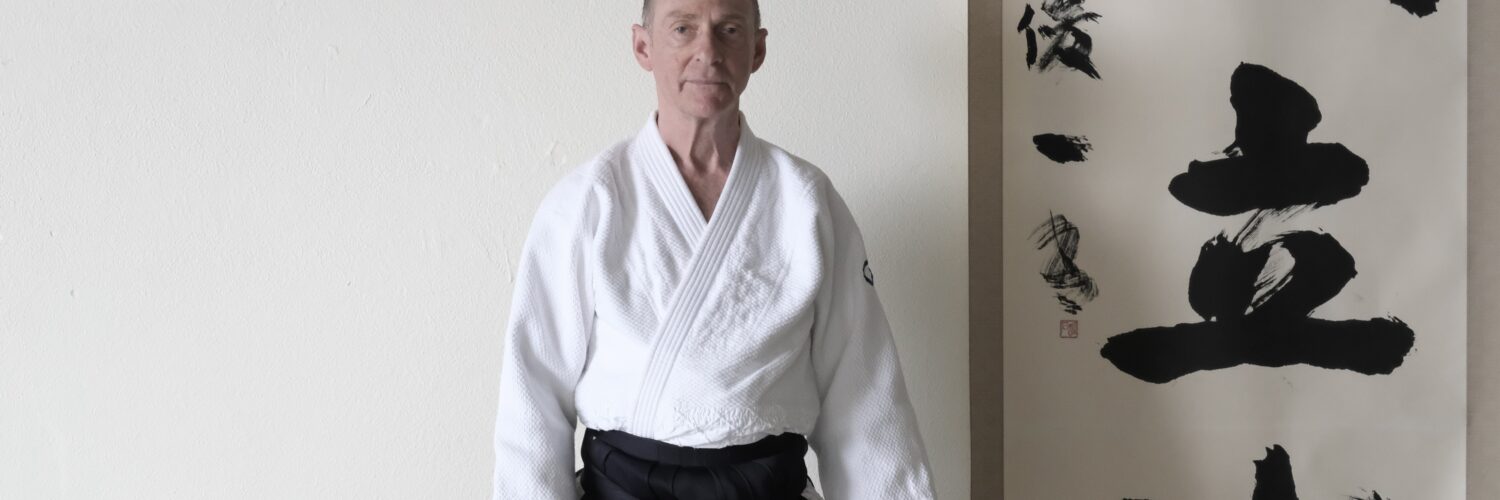
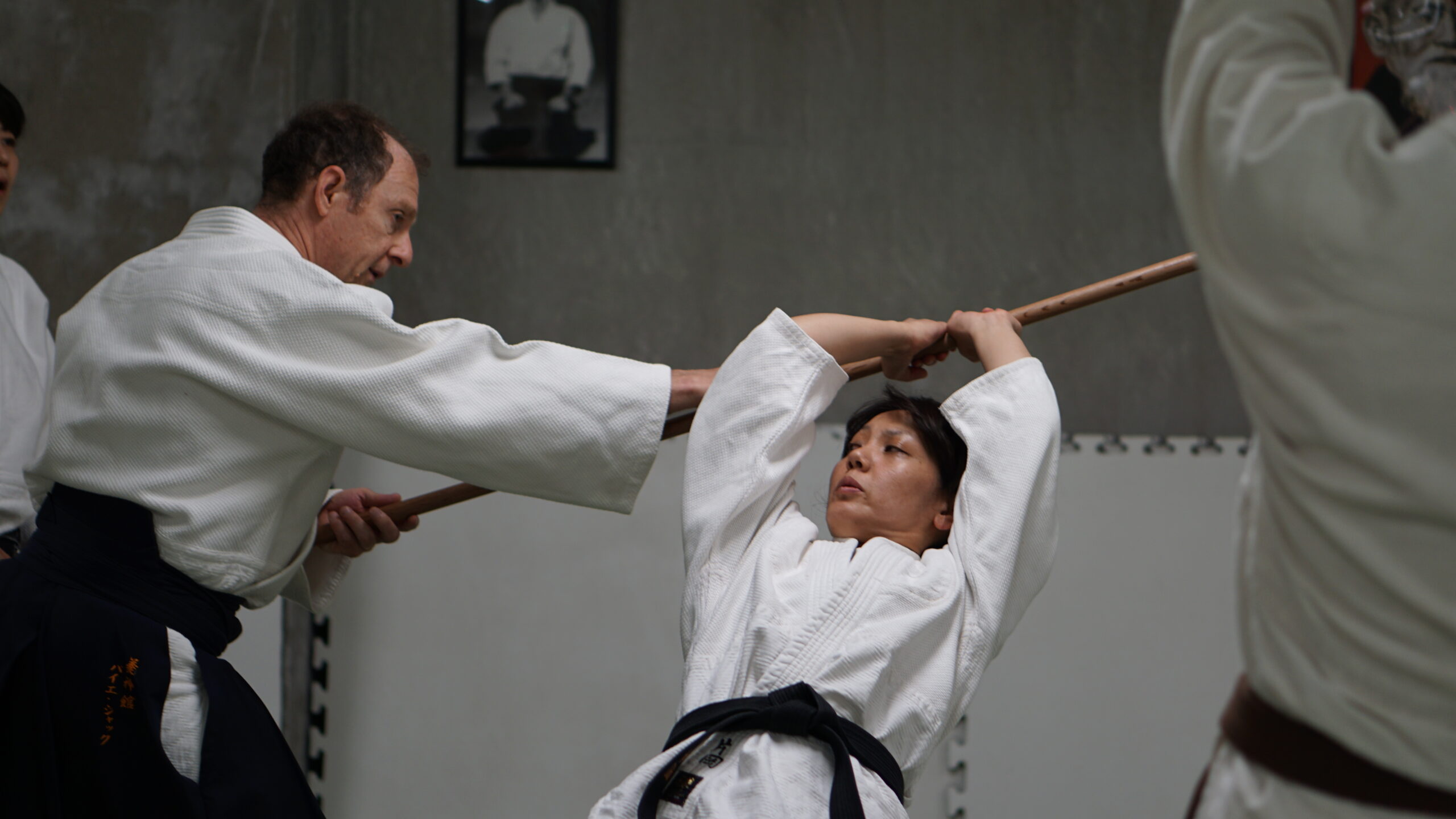
Jacques Payet Sensei, born in 1957, in Saint-Leu, Réunion, is a distinguished 8th Dan Yoshinkan Aikido instructor renowned for his dedication to the art. As the longest-serving non-Japanese uchi-deshi (live-in student) of Yoshinkan founder Gozo Shioda, Payet’s journey in Aikido is marked by profound commitment and cultural immersion. In 1980, driven by a desire to train under Shioda Sensei, he traveled to Japan without prior connections or knowledge of the language, eventually finding his way to the Yoshinkan dojo. There, he immersed himself in rigorous training, embodying the spirit of shugyo (austere practice).
After years of intensive study and teaching, including a period in the United States, Payet returned to Japan and established the Mugenjuku Dojo in Kyoto in 2008. The dojo, whose name translates to “School of Infinite Learning,” reflects his philosophy of continuous personal and martial development. Through Mugenjuku, Payet has introduced programs like the Kenshusei Course, aimed at cultivating both technical proficiency and character in practitioners. His contributions extend beyond instruction; he has translated significant Aikido texts and remains an influential figure in the global Aikido community.
Here, in part 1 of a 2 part interview, Jacques Payet shares insights from his remarkable journey, discussing the challenges of cross-cultural training, the evolution of Aikido, and his vision for the art’s future.
Josh Gold: You’re one of the leaders in the Yoshinkan Aikido community today. What’s the current state of Yoshinkan Aikido? And what are your hopes or concerns for its future—or even Aikido more broadly?
Jacques Payet: Well, it’s been over 30 years since Gozo Shioda passed away. After his death, Yoshinkan Aikido went through a number of changes. For the first 10 years or so, one of his close disciples took over, and there was strong support from the senior instructors. Leadership was in place, and things were stable. But as often happens when the founder is gone, problems arose.
There were internal conflicts about who should take over. Shioda’s son wanted to assume leadership, but many disagreed with that. As a result, things started to fracture. Over time, Yoshinkan broke apart, and most of the senior instructors became independent.
Today, the situation is such that the Tokyo Metropolitan Police essentially took over the Hombu dojo. Many of the current instructors are retired police officers who trained in Yoshinkan for decades. Now, they’ve moved into leadership roles. At the same time, many of the original senior instructors were pushed out or left to form their own organizations.
So the Japanese Hombu is now primarily staffed by retired police?
Yes, that’s right. But outside Japan, the situation is a bit better. Many groups are more innovative. They’ve formed what we call fellowships—people come together regardless of affiliation, just happy to train with each other. In 2023, we had a big event in Japan that brought many of these groups together.
Through this gathering, some of the Japanese instructors—people who hadn’t trained together in 20 years—came back onto the mat. It was a meaningful opportunity for them to reconnect and rediscover a shared passion for Yoshinkan. These were people who had been left out of the main organization but still deeply loved the art.
We saw it as a new beginning. We decided to organize a large international event every four or five years, and in between, smaller regional events. These will allow instructors and dojos to gather, support each other, and hopefully inspire Japanese instructors to do the same.
When things fracture like this, what kind of problems does that create?
The organization gets smaller. There’s no central leadership. The Hombu exists, but it’s shrinking. Each instructor teaches their own version, and there’s no unified standard anymore.
One of the strengths of Yoshinkan used to be its consistency. Wherever you went in the world, the basics—the kihon waza and kata—were taught the same way. But now, that consistency is fading. Some instructors are very good, but without oversight, the quality and direction can vary wildly.
In contrast, I think the Aikikai has handled this better. Even if the senior leaders don’t always agree, they still meet annually and organize joint events. That sense of unity and cooperation has helped them maintain a strong core, which we’ve lost in Yoshinkan.
Still, I see momentum from outside Japan. There are more passionate and committed practitioners overseas now than in Japan. I hope that younger generations will recognize this, come together, and lead the change. That’s my hope.
Aikikai Aikido seems to be growing in popularity in some parts of Europe—Eastern Europe, for example.
It’s the same with Yoshinkan. In Poland, Russia, Ukraine—it’s growing fast. I do seminars there and sometimes get over 200 people. The demographics are different too—lots of young people, and many women. That’s a big contrast to Japan, where most practitioners are older.
For those who aren’t very familiar with Yoshinkan, how would you describe its technical system, training methods, and overall culture? What makes it unique?
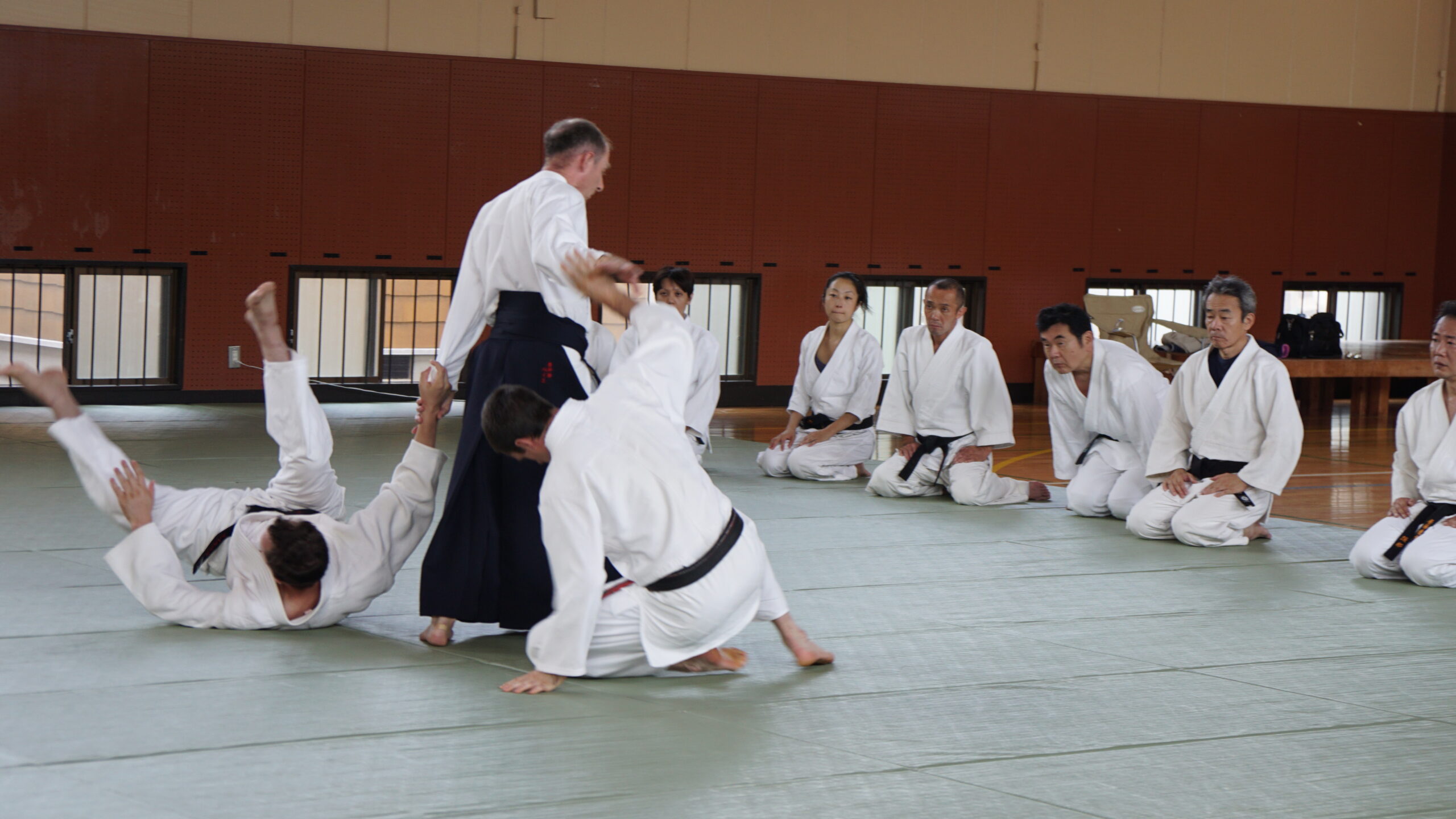
Shioda Sensei was trained before the war, during the transition from Daito-ryu to what became Aikido. We still use the Daito-ryu curriculum—terms like kajo, not kyo. Shioda focused on one particular aspect of Aikido that he liked: strong lines and explosive power. He built a system around that.
His approach emphasized precision. Instead of just making a circular motion, he believed in creating fixed points—alignment, stability, and absence of tension. Only when these are correct can you connect the dots and form effective movement. So even if you move quickly or powerfully, the technique remains stable from start to finish.
To build this, he developed a very structured curriculum: ichi, ni, san (1, 2, 3). That’s great for beginners—everything is clear and systematic. But the downside is it can become rigid. If teachers or students stay stuck in that structure, growth stalls. It takes an intelligent teacher to go beyond the basics and help students use that foundation as a stepping stone, not a limit.
I also heard that early on, many Yoshinkan practitioners were police officers. Did that shape the teaching style?
Yes, absolutely. The police and military influence was strong. To teach large groups, the instruction had to be simplified. So they’d often start with solo movements—individual forms. Only after that would they move on to partner training.
Shioda focused on one particular aspect of Aikido that he liked: strong lines and explosive power. He built a system around that.
And is that approach still used today? Or does it change depending on the environment?
It depends. There are different types of classes. The police classes are very strict and militaristic. From the 1990s, foreigners were allowed to join what was called the Instructor Course—but it was originally built for police. It wasn’t about mastering technique. It was about developing strong spirit. The goal was to endure hard training without complaint. It was more like a bootcamp—very severe and rigid. Some foreign practitioners were deeply influenced by that culture.
So for the police, the primary objective wasn’t necessarily technical execution—it was about developing a certain mindset?
Yes. Mental toughness. Whatever happens, you never give up.
What do you think were the unique elements of the training experience that helped cultivate that kind of mental resilience?
In the old days, people were maybe not as technically polished as today, but they were much stronger mentally. They were determined and had strong personalities. They didn’t care much about technical details—they just pushed through. Today, it’s the opposite: people are technically very good, but mentally weaker.
Back then, the attitude was: don’t complain, just do the work. You weren’t fed information. You were expected to work through frustration on your own. The teacher would show you, and then it was up to you to figure it out. It was a process of personal transformation. These days, the system is more supportive—students expect explanations, encouragement, and validation. Japan is also like that now.
So you believe mental toughness develops from struggling through the technical system on your own, and also from the ukemi—being able to take falls and hardship.
Yes, absolutely. But I believe in balance. You need both. If you go too far in either direction—too rigid or too soft—there’s an imbalance. You need both structure and flexibility.
I run an educational nonprofit called Budo Accelerator. We combine traditional martial arts training with leadership development for high school and college students. One thing I tell them is that when you go to college, for the most part, things are structured to make learning easy and efficient—Calculus A, then Calculus B, and so on.
But when you learn a martial art like Aikido, especially in a traditional setting, you walk into a complex system with people of all ability levels, and you’re expected to figure things out on your own, to a certain extent. That experience—learning through struggle—is valuable. It translates to other areas of life.
Exactly. For the police, the goal was to build that kind of mental toughness. So that when they were on the job, they wouldn’t lose control or get angry. They could maintain perspective and composure.
“In the old days, people were maybe not as technically polished as today, but they were much stronger mentally. They were determined and had strong personalities. They didn’t care much about technical details—they just pushed through.”
Do the police in Japan still train in Aikido today?
Yes, but it’s different now. Many of the top instructors left years ago, and the ones who took over were still quite young. Also, the police culture has changed. In the past, it was an honor to be selected for Aikido training. You had to be a black belt in karate, judo, or kendo to qualify. But now, it’s harder to find people willing to do it.
The police today often don’t want to spend a year doing what they see as outdated training. It’s easier to just focus on their regular duties. They’ve started including female instructors, but even so, it’s a struggle to find students. It’s no longer considered an elite track.
In the old days, people were maybe not as technically polished as today, but they were much stronger mentally. They were determined and had strong personalities. They didn’t care much about technical details—they just pushed through.
Interesting. From a technical perspective, would you say the Yoshinkan system sits somewhere between Daito-ryu and modern Aikikai Aikido?
It’s closer to Aikikai. We actually have fewer techniques than Aikikai. I’d say we have around 150 basic movements and techniques. We don’t do as many applied or advanced variations.
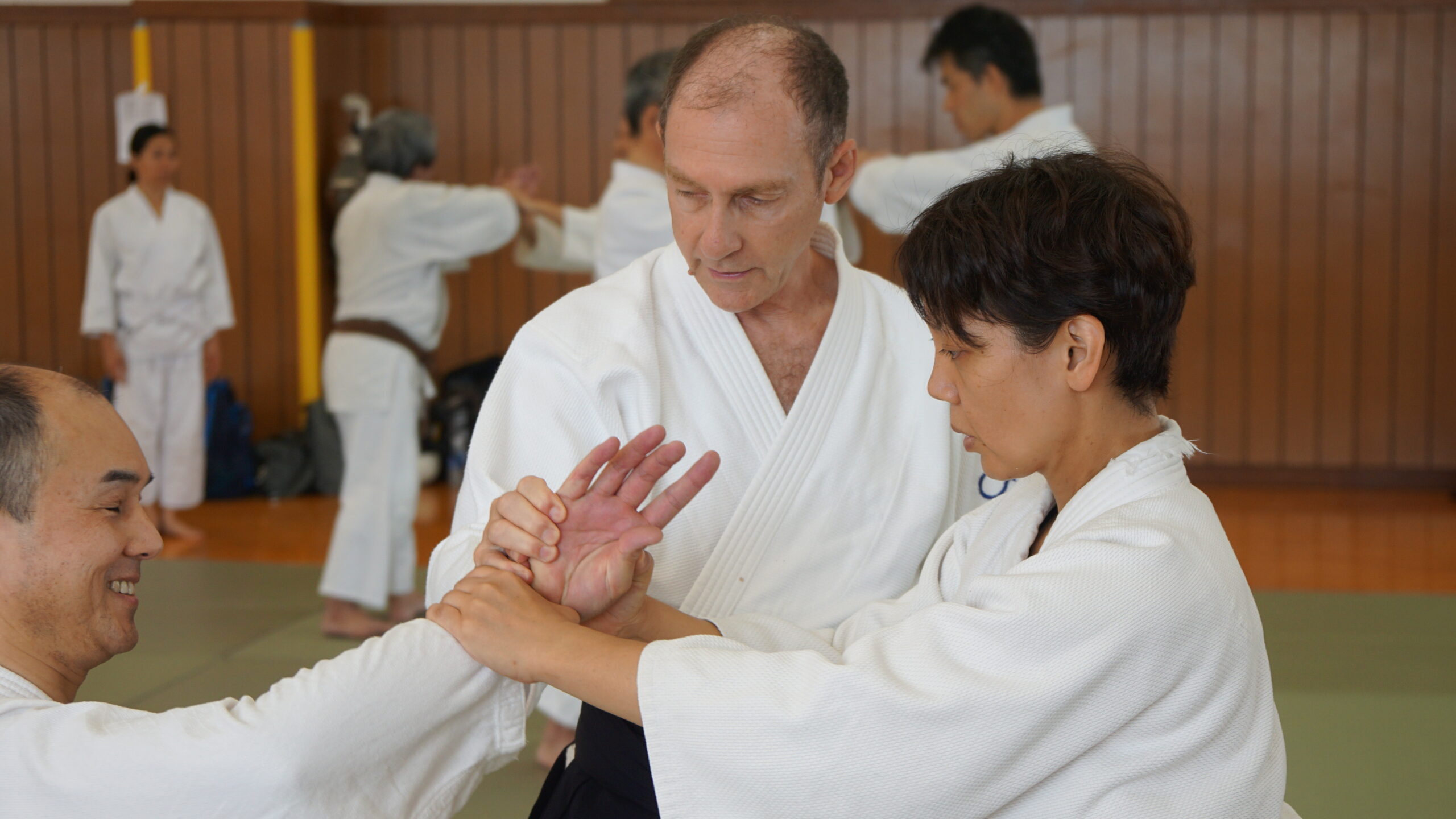
You spent a lot of time with Shioda Sensei. Many interviews have covered his martial arts history, but I’m curious—what was he like as a person? Did he have a sense of humor? Was he serious all the time? Did he have hobbies or interests outside of martial arts?
I met him at two different times in his life. The first was in 1980, when I was young and he was still very physically active. At that time, the atmosphere around him was very intense—almost like a military environment. There was electricity in the air. Everyone would immediately stand up straight when he walked into the room.
In Japan, especially back then, it wasn’t common to speak freely with someone like him. He would talk to you—you didn’t talk to him unless asked. If you wanted to say something, you’d go through your senior, who would go to his senior, and so on.
One of the most important parts of the training wasn’t on the mat—it was off the mat, assisting him personally. That was where you learned things like alertness, awareness, and anticipation. He was very spontaneous, and always in motion. If you were his uchi-deshi, you had to anticipate his needs—have his cigarettes ready, pour his drink at the right time, open the door before he reached it. You didn’t think about it—it had to become automatic. That was the training. It became part of your body.
At first, it’s not natural. You’re always late. But over time, it becomes instinctive. That kind of training changed me. And it happened after formal class. So you’d train for 90 minutes, be exhausted, and then do all this extra service without rest. But eventually, you stop feeling tired. Your body just moves. And you feel a kind of happiness in being able to do it.
That kind of discipline can really push you beyond your perceived limits.
Yes, it was extremely demanding—physically and mentally. Of course, the formal training was hard: six hours a day. But the time between classes, helping Sensei, was just as important. I consider myself lucky to have had that experience.
“One of the most important parts of the training wasn’t on the mat—it was off the mat, assisting him personally. That was where you learned things like alertness, awareness, and anticipation.”
Did he have a temper? Was he quick to anger?
Not usually. But there was one incident I remember very clearly. Everything around him had to be in harmony. If he was standing, everyone stood. If he crossed his legs, everyone did the same. If he drank, everyone drank. One of his top instructors once drank too much, got a bit loud, and broke that harmony.
Suddenly, Shioda Sensei snapped. It was like lightning. He gave a sharp kiai and yelled, “You’re ten years too early!” The instructor went white. It was shocking. Another time, his driver missed a red light, and Shioda was furious. But after that, everything would go back to normal, and he’d laugh like nothing happened. It was intense, but momentary.
In Part 2 of this interview (coming soon), Payet Sensei shares stories from his time as an uchi-deshi under Gozo Shioda, insights into training methods, and thoughts on what Aikido needs to thrive in today’s martial arts landscape. Stay tuned.
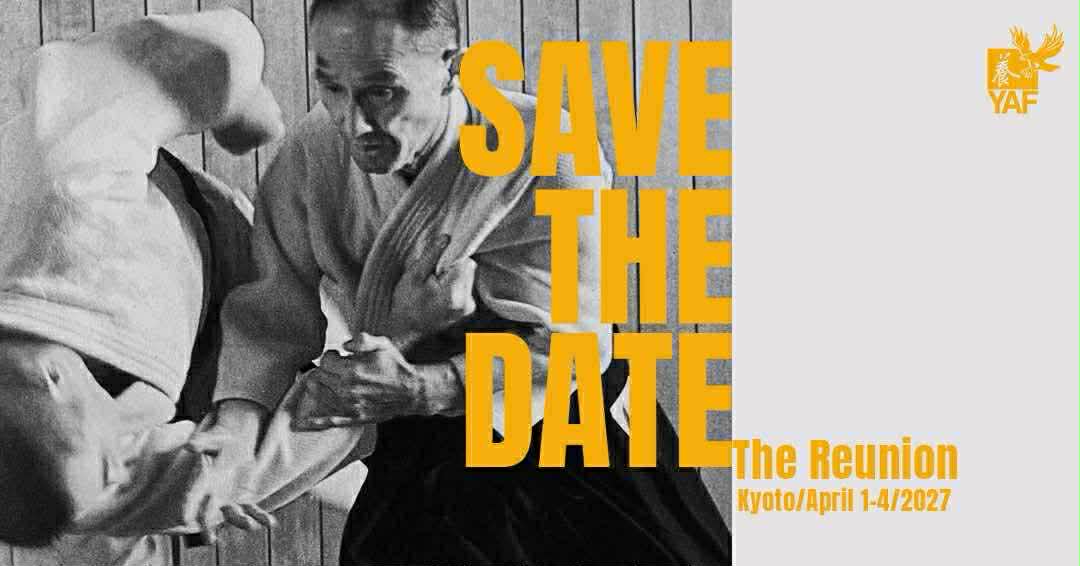
For those interested in Yoshinkan Aikido, the next Yoshinkan Aikido Fellowship event will be hosted by Mugen Juku Dojo at the Butokuden in Kyoto on the first weekend of April, 2027. The organizers will once again assemble as many of the Yoshinkan Uchi Deshi and senior instructors as they can for this international training and fellowship event. Registration information coming soon.





A very nice interview, thank you for it!
I wish you the best of luck in your future work at Aikido Journal, and I look forward to the second part!
Thanks for this! Interesting interview. For those who haven’t seen it, Minotauro Nogueira’s (Pride/UFC legend) exploration of Yoshinkan is very interesting. Payet Sensei features prominently: https://www.youtube.com/watch?v=oRqD3R_rlTE
It makes you realize how enormous Minotauro is, and how small Japanese dojos are! Great to see Minotauro’s respect for the art.
A story was told at the Iwama Dojo that Shioda Sensei approached Morihiro Saito requesting he become Shiodo’s successor to lead Yoshinkan. I wonder if Payet Sensei knows if this story is true.
Interesting, because I have heard exactly the contrary, That Saito Sensei joked about Shioda Sensei taking over his organization after him because he did not trust the Aikikai.