
 Josh Gold
“If you have ever experienced déjà vu or had an intuitive foresight that came true, or a kindred experience, you will, if reasonable, be driven to ask questions.”
 Magnetic resonance scanning experiments with the living human brain reveal that the brain already knows the decision you are going to make, fully six seconds before you become conscious of it!
This means that the man reading the machine knows what you have decided, before you do, (or have become conscious of it.)
It won’t be long before some major idiot will try to play “god” and try to find “military” potential for this knowledge and then add even more harm to the world than the damage that’s already been done. Hopefully not.
Conversely a positive approach could have equally, if not greater immensity of constructive potential.
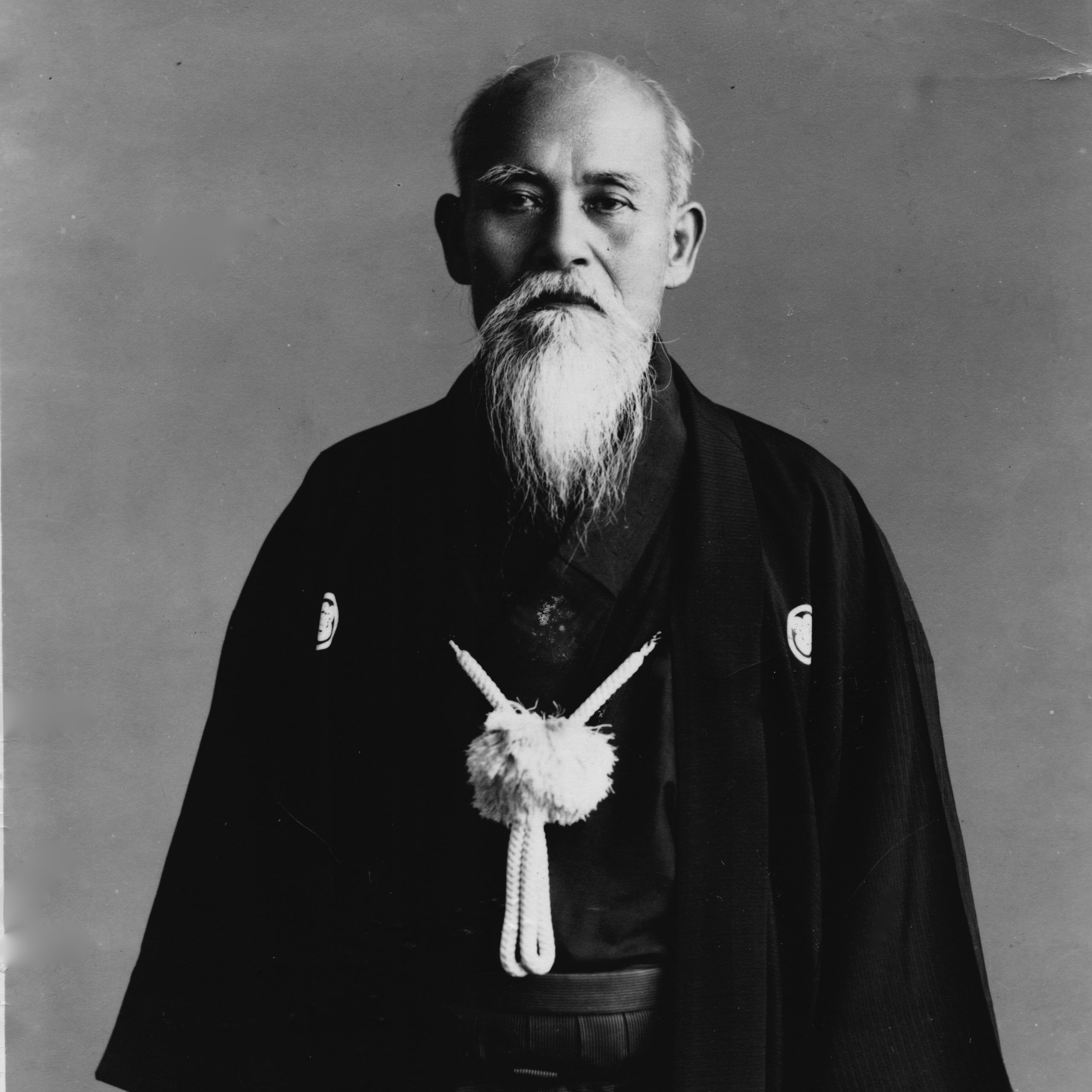
Precognition relies on predictability. This is computed from collected knowledge based on experience. Of note, some old warriors, such as Morihei Ueshiba and many of his predecessors, had this ability functioning well, and it enabled their survival in conditions of adversity.
Of interest, the primary attribute of this precognitive faculty is that it is directionally linked and motivated, immediately related to choosing a direction to move to.
Adjacent to the Amygdala is the all important Hippocampus, a horseshoe shaped sheet of neurons located within the temporal lobes and which importantly, functions to deal with memory learning and emotion as well as spatial orientation, navigation and consolidation of new memories. Emotion and memory being very closely related.. etc., (more here: The Triune Brain – Part 2 – How It All Works)
Interestingly, the Amygdala processes physical fear responses, such as faster heart rate, sweating, increased breathing and behaviors, like trying to escape the situation that is causing the fear.
It does not take much to discern that fight, flight, feeding and mating, all require moving to a chosen direction.
As this is a Budo forum, directionality and choice naturally refer to choice of fight/flight and action. More so the nuanced activities of Budo skills. i.e. “lead with the hips,” “enter,” “intercept,” etc.
Morihei Ueshiba had a peculiar interest in “the six directions” and other polytopic functions and nuances of functionality still not fully understood by scientists. Understandably, many listening but not hearing, interpreted what they could not understand of what he was attempting to convey, as either “poetic,” “mystical,” or “deranged,” and then forthwith either summarily dismissed it, or went off on their own tangents, many of these irrational, opinionated and unscientific.
All life is choice of direction or navigation. A good choice will result in thriving and surviving and a poor choice less so. Be this the rough and tumble of raw jungle survival, (Man vs Wild) or in matters of career, let alone simply crossing a traffic laden road in the now concrete jungle; the principle still stands.
Now if this six seconds thing is inbuilt, as it has been proven to be, it reveals that directional choice and precognition are interwoven. They have been interwoven for billions of years. The very first amoebas needed it to survive, to eat or be eaten, as did every life form that followed. Humans, being the latest short-lived experiment of nature (hopefully, unless aliens were also involved), it follows that we have inherited every evolutionary layer that somewhat works.
Even before that, before conscious choice emerged, random activity was, and continues to be, or appear to be directional in the three dimensional world.
Thought, is another thing. It may be either causal or effectual in nature, but pure thought neither has direction as such, nor has any need of a direction. Until it expresses through matter.
Too simple? Too obvious? Yes, most things are. Right under our noses. And thereby we blind ourselves to the obvious by taking it for granted.
Choice of direction is no little thing when confronted with the prospect of death, however.
When people and animals panic, they run. They don’t know where, but if they don’t flail aimlessly, they run. If they can.
Whether the emergency is a natural disaster where the threat comes from extreme activity of earth, fire, water or air; such as for example earthquakes, fires, floods or tornadoes; or human attack and defence, all strategy is a matter of logistics and topology. Moving mass, in this case our body being the vehicle of consciousness, and something in which we identify, value and define as our ‘selves.’ Naturally, then, we will be prompted to move in such a manner as to effect survival of that ‘self,’ as best as we know how at the time.
Often such emotive reactivity is counterintuitive and therefore counterproductive. Proper training can overcome this. For example, having no proper points of reference, the non-fighter will turn their back in fear and strive to move away from the perceived danger. Or stand and wait, hoping to ‘do something’ when it becomes too late. As we know, this is usually fatal. The practiced fighter will face the danger and move in towards the risk, as close as possible, and address the adversity scientifically, based on experience gained in practice drills, or in accord with lessons learned in previous real life success.
Preferably the best and most hoped for action will be before the event. Moving afterwards, if at all possible, would be too late.
In combat of any kind, this matter of directionality and strategy becomes more nuanced as well as directly focused in the immediacy of the moment.
Any wrestler, swordsman, horseman, archer or any other fighter will attest to this.
Topology is the study of spatial properties and relationships. So is wrestling, aikido, karate and any other budo or strategic skill.
On this basis, budoka, as also with professional protectors who actively practice to hone their skill-sets, are exercising the human attributes of body, mind, and pattern forecasting, or predictability, more than the average sedentary individual. By stimulating and vivifying parts of the brain and body and coordinating neuronal connectors just a little more than perhaps simpler exercise such as walking, running, pumping iron etc.. Given, however, that all physical activity involves choice of direction, balance, breath, correct position, relationship, stability, etc., everything contributes somewhat, but nothing as much as scenario based drills.
O.K. Where does predictability come in? How does this refer to the fact that our unconscious (or superconscious?) attribute knows the direction we have chosen fully six seconds before we think that we have decided; or indeed become conscious of it?
I have no idea. If you have ever experienced déjà vu or had an intuitive foresight that came true, or a kindred experience, you will, if reasonable, be driven to ask questions.
There is a BBC documentary made by professor Dr. Marcus du Sautoy, (University of Oxford) named: “Finding My Mind.” Whilst on the surface the doco appears seemingly casual, it touches some rather deep and salient points of experience, which have been questions in human minds since the dawn of time. Or of humanity.
Each culture, over aeons, has striven to comprehend these natural phenomena to the best of their understanding at the time. Most often they dressed this potential science of mind/(soul?) in the cultural window-dressing of the time. Consequently, the subject of precognition, even for those having it, tended to stray into superstitious thinking rather than a clear understanding.
History (past experience) teaches the future, by revealing future potentials. From the past, we learn patterns. Patterns are a reflection of a pre-emptive, or perhaps the pre-existing universal language of patterns. This is revealed in the fact that history tends to repeat. The greatest indicator of future behaviors is past behavior.
Knowing this, instead of blindly blundering repetitively, we can choose to modify ourselves to embrace discovery. This requires a personal discipline, such as any of the valid budo arts that serve to tackle the past/present, heaven/ earth issues; and thereby choose to awaken the mind to its full potentials in all directions.
Refining the patterns of past behaviour through the experience of drills and striving to refine and attune to greater efficiency and function, thereby harmony, is the essence of all budo, and more so, the refined aiki that can become possible.
This may mean breaking from the mold and fearlessly discovering, or attempting the new. It is a pioneering work without beginning or end.
The creativity that follows can seem threatening to small, limited, frightened minds that cling to old, dead and obsolete paradigms. They may attack you.
You will need to learn a way to soothe your opponents instead of destroying them. But also remain safe, until they learn.
This requires the heart and skill of a warrior, but also the determination and attention of a bodhisattva.
The current findings of scientists are beginning to confirm the assertions and practices of pre-diluvian yogis and sages. Knowledge brings power. Power carries the burden of responsibility.
Whether we are interested in the mysteries of existence or not, those who are training to overcome their limitations, will awaken to dimensions not previously thought possible, or indeed experienced by those who do not regularly embrace a way of life that actively coordinates mind and body directional awareness.
As Morihei Ueshiba admonished, “It’s not necessary to do long hours of misogi and meditation (as he did). Simply train and some measure of awakening will come anyhow.”
Perhaps with it may sometimes come a closing of that six second gap and clearer cognition of events sooner, and therefore safer in emergency.
And perhaps also, an extraordinary navigation of ordinary life as well.
Surely, that’s got to be worth something.
Nev Sagiba






To highlight a couple of pearls: “You will need to learn a way to soothe your opponents instead of destroying them. But also remain safe, until they learn.” I think the word “soothe” is perfect here. That’s exactly what the “ai” in aikido can do when applied correctly. “This requires the heart and skill of a warrior, but also the determination and attention of a bodhisattva.” I’d say that is exactly right. The bodhisattva part is what allows one to think beyond attack and defense and let the “ai” emerge. Of course one needs the skills as well in order to execute. The combination of warrior plus bodhisattva is what I think of as “mage” (see Ursula Le Guin’s Wizard of Earthsea). “Whether we are interested in the mysteries of existence or not, those who are training to overcome their limitations, will awaken to dimensions not previously thought possible, or indeed experienced by those who do not regularly embrace a way of life that actively coordinates mind and body directional awareness.” Completely concur. You can say that this new opening of seeing is the “secret”.
Indeed … the most common comment is,”.. My gut was telling me one thing and my head was telling me another.”
And now .. science is in agreement that there is another part of the human mind that makes decisions well before our conscious mind is aware of our decision?
Yep .. somewhere between that waking/ thinking mind and the other thoughts that go on under the waking Mind’s radar .. is the connection that you seek that is well ahead of your reflexes and your thinking decisions.
…you’ve all seen the cartoon where one guy is telling another, “just when i thought i was getting a good feeling for gut level decisions my doctors told me it was just an ulcer”…? have you also seen the fMRI study that showed a dead salmon to have a positive feeling about a story it was read (http://neuroskeptic.blogspot.com/2009/09/fmri-gets-slap-in-face-with-dead-fish.html )? we’ve been down this road before. it started with phrenology, moved on to eugenics, then led to pre-frontal lobotomy and electro-convulsive “therapy”. do i deny that it’s possible to effect appropriate physical action without verbalizing it in our brain? heck no. from a semi-metaphysical point of view, the verbalizing part of the brain might be considered the mind and the decision is made by that elusive “self” the zen folks are on about. probably all martial arts training has to do with first imprinting ballistic movements (techniques, kata), then training that self-thing to unleash them. anybody who has to “think about it” will naturally be behind the times.
…After a couple or three years of reflection here’s another thought – body language. In every encounter which i have dealt with elegantly I’ve read body language and responded “outside the script”.
Script? Yes. There is a script to most interactions, animal as well as human. The general form is initiative – response. The sooner you sense the other guy’s initiative, the more your outside-the-box response will derail it. We train in outside-the-box stuff all the time. A subset of initiative – response is speed, time and distance, but, at least imo, these lie within a context of body language. Six seconds might be a pretty good estimate of the time necessary to set up an initiative – response situation. Check it out in the dojo with a typical strike attack in motion, not the time to deliver the attack, but the time necessary to frame the posture.
For that matter, in the dojo, nage will be doing the same thing. In a “real situation” you really need to get beyond that. Musashi said his everyday stance was his fighting stance and his fighting stance was his everyday stance. Boyd implies something similar in his observe-orient-decide-act cycle. The more natural your situation at the outset, the less wasted time, motion and energy in going through the cycle. Dojo training starts with act and works backwards so that after a while your orient-decide-act becomes a set of ballistic movements. Dojo training by its nature doesn’t do great on the observe part of the cycle. That’s homework.
The Triune Brain (Parts 1-3) which Nev links to above. Highly recommended.
Actually 4 parts. Gotta love the 4f’s (midbrain function).
Really great reading, liked it a lot. Yet, O-Sensei said just train and some measure of awakening will occur. I do believe that O-Sensei gave us Aikido as a path (way, ladder) to a better self. If we train sincerely in the ways of Aikido, focusing on a relaxed calm centred self, our lives will automatically be enriched even without looking for the deeper meaning.
Too often Aikidoka rush past the basics to be where the great Aikido teachers are. This achievement takes years of serious training and thought, and cannot be rushed. Look around you and you can clearly see the ones who talk the talk but have no substance.
Train sincerely in Aikido, and all else will naturally occur over time.
More here:
http://www.youtube.com/watch v=N6S9OidmNZM
http://www.mpg.de/english/illustrationsDocumentation/documentation/pressReleases/2008/pressRelease20080414
http://exploringthemind.com/the-mind/brain-scans-can-reveal-your-decisions-7-seconds-before-you-decide
You Tube relevant section of the documentary:
http://www.youtube.com/watch?v=N6S9OidmNZM
Outa da ballpark yet again … Another homerun!
I am going to reply to this after only reading, and only intending to read, the first paragraph of this blog. An MRI cannot accomplish that, cannot even come close to accomplishing that, and no brain-scan technology, whether MRI, CAT, PET, EEG or other, will ever be able to predict a person’s thought. The brain, an incredible complexity of physical neural (brain cell) connections, employing fundamental yet effective inter-communications, and the invisible mind which it supports, were already 10,000 light years ahead of any computer there ever will be, even in the earliest civilizations of the Nile, the Chinese Huang and Yangzte Rivers, Mesopotamia, and the Indus River civilizations; what’s more, the Neanderthal, Cro-Magnon, and even many animals, e.g. the primates, were so beyond Magnetic Resonance Imaging before the wheel or the run-on sentence were even invented.
Ah, I misunderstood. I think what you say could indeed be the truth.
Recommended reading: Terry Dobson Sensei’s “Giving in to Get Your Way.” It is a good read overall, and in the early pages there is a proverb that defines one second in the face of eternity.
Precognitives are the people who realize the thought a moment before the rest, say five seconds instead of six. If such psychic ability indeed exists, only a rare few have the protected surroundings that make them able to tap into such an ability. A psychic mind would make a person highly vulnerable. This goes for telepathy and clairvoyance as well, which close out the triangle of potential psychic thought.
For mentioning the ‘six seconds thing (“Now if this six seconds thing is inbuilt, as it has been proven to be”) so much, it is important to note that:
1. This is a prediction of 60% or so (more, if you take less seconds, and less, if you take more seconds, there is nothing magical about 6.
http://whyevolutionistrue.wordpress.com/2011/12/27/the-no-free-will-experiment/
2. Preconscious is a whole other world than precognitive. precognition refers to things that cannot be explained by neuroscience and are ‘psychic’. This effect is nothing like it.
http://en.wikipedia.org/wiki/Precognition
http://en.wikipedia.org/wiki/Consciousness
2. Our consciousness is the least part of ourselves (magnitude-wise, not importance..). The world is so full of information that it would be impossible to integrate all of it in the conscious part. Consciousness is like a higher-level representation. Tapping into pre-consciouss sources, you could relate easily intuition.
You only run into problems if you restrict to yourself, your ‘me’ to your conscious part.
Too simple? Too obvious? Yes.
http://www.youtube.com/watch?v=iMDTcMD6pOw
P.S.: This is not in contrast to using predictability and nuances and practice to fine-tune in training, just how it’s pseudo-connected to underexplained, and blown-up science results.