
 Josh Gold
Dues At The Kobukan Dojo
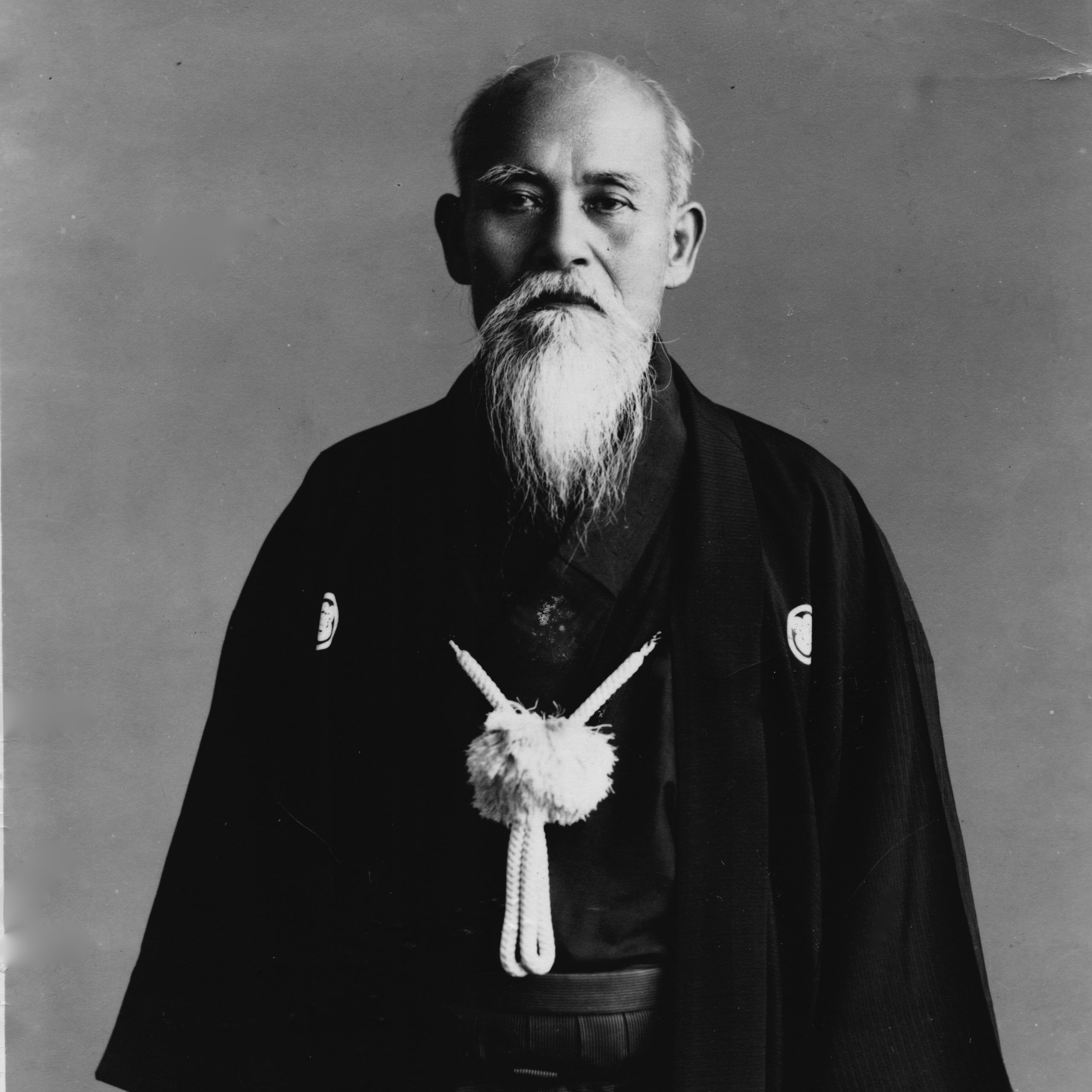
The starting salary for a university graduate at that time was 35 Yen. The monthly fee at the Ueshiba dojo was 30 Yen. This was around 1933. The monthly fee at the Kodokan in those days was 3 Yen. There were only rich students at the dojo. Those who were poor could not come. Although Ueshiba Sensei, of course, wasn’t poorly off, he wasn’t leading a rich life either. He had to feed people like we uchideshi. The quantity of food we ate was far more than the normal amount. For example, we didn’t feel full unless we had three plates of curry rice. Yukawa had about five plates. Even when we ate something expensive like a bowl of eel and rice, we would have about two servings.
Hisa Takuma And The Asahi Newspaper
The Asahi Newspaper Company in Osaka sometimes published articles on the art because a Mr. Takuma Hisa was employed there. Mr. Hisa was a Sumo wrestler in the old days. He was responsible for the fact that the Asahi Newspaper wrote about O-Sensei. This resulted in his name being spread. This is also why a lot of high-ranking navy people began to study. But when Ueshiba Sensei began to talk about budo as love after the war, Mr. Hisa changed completely. What he had in mind was traditional bujutsu (martial arts). I suppose it was Mr. Hisa who played the biggest role in the spreading of aikido in the early stage. Young people today don’t even know the name of Takuma Hisa or what he did.
Kenji Tomiki
Another person who accompanied Ueshiba Sensei often and took ukemi for him was Kenji Tomiki. Tomiki Sensei was very big and had a 5th dan in Judo. The fact that Sensei threw around a large man like him increased his reputation. But young people today don’t know about Tomiki either. He was an instructor of the Waseda University Judo Club.
Tadashi Abe
There was a man named Tadashi Abe who passed away recently. I had the following encounter with him when I visited the Iwama dojo to greet O-Sensei after my return to Japan when the war ended. O-Sensei was pleased to know that I had come back safely and welcomed me warmly. I stayed there over night. That night an evil-looking man with a monk-like hairstyle came to the room where I was staying and asked permission to come in. When I gave him permission this man came in.
“My name is Tadashi Abe. Sensei, could I ask you a direct question?”. I told him to ask me anything. He asked if I was really studying aiki jujutsu seriously. At that time the art was not yet called aikido. When I replied I was, he said:
“Are you really? I have heard about you, Sensei, for a long time. I heard that you have had experience in actual fighting situations. I think it is strange that a person like you feels satisfied with an art like aiki jujutsu.” When I asked why he thought so he said that Ueshiba Sensei or Mr. Morhiro Saito would not be able to stand against him in a match even for three minutes because he would defeat them with one blow.
“You’re quite boastful, aren’t you?”, I replied. “You feel confident that you can defeat Ueshiba Sensei?”, I added. He said that he thought it would be easy for him to defeat Sensei and added:
“Although I have been observing Ueshiba Sensei for a long time, I don’t feel like practicing an art like aiki jujutsu. I feel confident that I can defeat him with one boxing punch. I hear that you emphasize actual fighting. Is that true?”
I replied as follows:
“I have been in many street-fights but I wouldn’t include them in the category of actual fighting. I have also drawn a sword and stormed the enemy camp.”
Then he asked me whether or not aikido was really useful for fighting. When I replied that aikido was very useful not only for fights but also in times of war, he said my answer didn’t convince him. So I suggested that he attack me and stood there telling him to come anyway he wanted. He asked me to adopt a ready stance. I told him:
“Don’t say unnecessary things. There is no way for someone to defeat his enemy if he tells him what to do. Attack me as you like!”
Abe still mumbled: “Sensei, can I really strike you? Strange… You have openings everywhere…” Then he took a stance and suddenly came straight in. I dodged the blow and kicked him with my leg. He groaned and fell. I applied a resuscitation technique and massaged him.
“How can a person like you who faints when he catches a little kick last in a fight?”
“Sensei, does aikido also have kicking techniques?”
“You fool! What do you mean by such a question? We use kicking techniques or anything else. I even used artillery. Martial arts, guns and artillery are all aikido. What do you think aikido is? Do you think it involves only the twisting of hands? It is a means of war… an act of war! Aikido is a fight with real swords. We use the word ‘aiki’ because through it we can feel the mind of the enemy who comes to attack and are thus able to respond immediately. Look at Sumo. After the command is given (“Miatte! Miatte!), they stand up and go at each other in a flash. That’s the same as aiki. When a person suddenly faces his enemy in an mental state free from all ideas and thoughts and is instantly able to deal with him, we call that aiki. In the old days it was called ‘aiki no jutsu’. Therefore, artillery or anything else becomes aiki.” “Is that so… I think I understand.” “If you still don’t understand, come to me again.” After that he was afraid of me and bowed to me from far off. When I went to Europe he asked me to take him as well.
Teaching In Europe
I had some interesting experiences in Europe as well. Since we practice things like wrist twists some people wondered if this kind of training really comes in handy in actual fighting and came to ask me questions. I gave the following explanation:
“While practicing you can learn the proper way of moving your body and how to use power rationally and also through aiki you become able to respond immediately the moment your enemy silently approaches to attack. Therefore, you can deal with anyone.”
One of the students asked me: “Can I bring a gun then? If I use a gun, Sensei, what will you do?”
My reply was that I would then bring a rifle.
“A rifle? I will bring a rifle too then.”
Then I continued: “Well, all right I’ll get hold of a machine gun and if you bring a machine gun too, then I will bring artillery. How is that?”
The student told me that the arrangement was not fair for fighting and insisted that we should fight using the same equipment.
I gave the following explanation: “That is an idea which comes from sports. Killing people is not based on this kind of idea. Japan was defeated by America because the latter dropped an atomic bomb on her. Who complains saying that America broke the rules? The world of victory and defeat involves your doing something which other people will never think of or doing something which will take the enemy by surprise. Because your thinking is based on sports you say that this is not fair but there is no way that actual fighting can be fair.”
Feeling Pity Towards One’s Enemy
There is a saying in Japanese, “So-jo no jin” (mistaken benevolence towards one’s enemy.) This comes from an incident involving feeling pity towards one’s enemy. The event took place about 1,000 years ago. There was a nation known as “Sou”. The king of Sou having heard of the impending invasion of his nation set out to meet his adversary with a large army. Upon encountering the enemy there was a huge river separating them but the enemy proceeded to cross it without any hesitation. The king’s staff officer suggested that they should attack the enemy while he was in the water so as to insure a certain victory.
However, the king is said to have responded:
“That would not be fair. It would be disgraceful to attack the enemy while they are in trouble. That is not the kind of war a great king like me should engage in. We will wait till they come out of the river and redeploy the troops and then fight.”
So he waited for his enemy. Then he launched his attack when they were ready. But the enemy had the river behind them this time. They knew that they would all be killed if they were pushed back into the water. Thus, they fought for their lives. The result was that the king was defeated and the nation of Sou was overthrown. If the king had attacked the enemy while they were still in the water he could have defeated them. However, he waited for them in order to have a fair war. This is sporting-like thinking which holds that everyone should stand on the same line. The enemy couldn’t retreat because they had the river behind. Because their lives were on the line they became strong. Since they had the river at their backs this incident came to be called “Haisui no Jin” (The War with the Water Back) and is used to mean that something is exceptionally strong.
Pros And Cons Of The Hereditary System
As far as Kodokan Judo is concerned, the present Kano family believes that Judo belongs to them. However, in the case of Jikishinkage-ryu sword, the hereditary system has never been used. They choose the best person in the dojo as the successor. Budo is after all a competition. Also, the Yagyu School had two styles -Edo Yagyu and the Yagyu of Naoya Owari. Both claimed to be the blood successor (soke).
Although Ueshiba Sensei studied with Sokaku Takeda, what he actually did was quite different from what he learned. Many of his own inventions were added to the art. The case is the same with Jigoro Kano Sensei. Although Kano Sensei learned several old jujutsu forms, some of which he himself succeeded to, he discarded all of these arts and invented Judo. The soke or blood successor’s role is to maintain a tradition. But those who practice an art do not always do so with the intent of pursuing it exclusively. They may have practiced other arts as well. The study of one art may lead them to the practice of another. For this reason they can take the good points of all arts.
For example, there was a swordsman named “Isenokami”. He called his art “Shinkage-ryu”. He named this art by combining the word “kami” (also read “shin”) from “Shinto-ryu” and the word “kage” from the art “Kage-ryu” which he learned from a teacher named “Aisuiko”.
Of course there is no doubt that the person establishing the head family is great and strong, but by the second or third generation it is sometimes the case that the successor’s technical ability is weak and the essence of the school is compromised. Certainly some successors have been people who are noteworthy in terms of personality. When a person leaves a particular school and establishes his own art he emphasizes his strong points. For example, I emphasize sutemi (sacrifice techniques). There are no sutemi techniques at the Ueshiba Dojo. These techniques were devised as a result of the influence of Gyokushin School from which I received a certificate in 1925.
Within this context, if you do something other than what the soke does it means you are not practicing correctly. However, the person who created the Shinkage School after having studied Katori Shinto ryu was more skilled than his teacher at that time. When a student becomes better than his teacher he doesn’t follow him anymore. If his teacher is still better than him, however, he will follow him to the end. The soke system has its good and bad aspects. It surely has a good side. When we talk about moral matters we Japanese have a traditional family system and we are influenced by it. It is natural for us to think that the eldest male son succeeds the family. However, I think that since this system is being preserved through the Emperor and his family there is no need for us to do the same. The soke system seems to me to have more demerits than merits. When an organization becomes larger people in the center eventually become a bureaucracy. Even people who have served in minor positions suddenly become proud of their status and come to hold various titles. They tend to control people using their positions. If you throw a stone into a pond you see strong waves near the entry point but the waves become weaker as they become distant from the center. When an organization becomes larger superficial elements tend to enter.
Neglect Of Jigoro Kano
The case is the same with the Judo world at present. People today have never seen Jigoro Kano Sensei or have even heard of him. What is more they don’t read his books. Kano Sensei wrote a number of great books. There are many people who don’t know anything about “Seiryoku Zenyo Jitakyo-ei” (efficient use of spiritual power and mutual development). They think that Judo is just throwing people. At that time people practiced in order to win in actual encounters and sought after strength. Our way of thinking then is completely different from the ideas people have today. The old ideas are attacked by people who claim that times are different. This is false.
All Living Things Resist Capture
Practicing aikido as we see it today sutemi techniques are not necessary. If you make a certain movement your partner falls for you. I wonder if this kind of thing is really possible. I don’t believe such techniques will actually work in a real fighting situation. I don’t think they are natural. This is a kind of hypnotism. But you won’t be able to hypnotize a Judoka in this way. They won’t fall for you like that. If your opponent is a shodan in Judo, he will escape from your pin and get up. In aikido practice you are not allowed to resist, are you? But if you can’t resist it means you are not alive. If you are alive you will naturally resist. Rabbits do the same, don’t they? They immediately run away if you try to catch them. Loach (an eel-like creature) do the same thing. Any living thing resists capture and runs away. Human beings, especially, resist strongly. This is a part of our nature. It’s an instinct… a self-preservation instinct. It is unnatural to prevent someone from resisting.
Yoseikan Kata
In my dojo we practice a kata called the “Hyori no kata” (inside-outside form). For example, even if you are pinned with an ikkajo technique, if you bend your arm immediately, your partner can no longer hold with the pin. We learned these kinds of techniques from Ueshiba Sensei. At that time, there was a form of “ura”. So in my dojo we practice techniques where, as soon as you pin your partner, he applies a counter technique. We also have the “Ken-tai itchi no kata” (a form involving unification of sword and body).
Although it is said that aikido developed from sword techniques, there is no explanation as to what sword techniques become which aikido techniques. However, fortunately, I have practiced Kendo and Katori Shinto-ryu. Viewing aikido based on this experience, I can understand which sword form becomes which jujutsu technique. Therefore, I created this ken-tai itchi no kata in order to show that sword techniques and unarmed techniques are the same. For instance, when someone executes a frontal head (men) attack in Kendo, you enter forcibly as you raise your sword. This is what we call “nukido” (cutting through the trunk). This becomes shihonage.
However, kotegaeshi doesn’t come from Kendo. You find this technique in all jujutsu schools. The name “kotegaeshi” is used in the Gyokushin School that I studied this technique and was called “konoha gaeshi” (leaf turning). Thus, there are many similar techniques.
Since I had a Judo background, I had an objective eye while practicing aikido. Also, I received a certificate from the Gyokushin School before starting aikido so I had already done techniques like kotegaeshi there. So when I saw Ueshiba Sensei do a technique I could immediately understand what kind of technique he was showing. This is why Ueshiba Sensei said to me: “I can’t show any techniques in front of you because you learn too quickly.” I didn’t tell him I had already done similar techniques. In addition, I already had a second dan in Kendo. Therefore I was quite different from those who had practiced only Judo. The situation was the same when I studied Katori Shinto-ryu.
Reports To Kano Sensei
Jigoro Kano Sensei told me to visit him and report the results of my training once a month, but you can’t see improvements in budo over such a short time. This is only possible after several years of training. But it was my duty to do so and I would go to visit him explaining how I studied such and such techniques in such and such a dojo. My report wasn’t Kano Sensei’s real purpose though. He wanted to talk to me about the essence of Judo. The reason we studied kobudo (traditional martial arts) was because Kano Sensei wanted to prevent Judo from becoming a sport. Consequently, he would always talk about how wrong it is to make budo into sports. He also talked about a lot of dynamics. He talked a lot about geometry and physics. For example, power acts on weak parts. If you are grabbed this way and try to pull your hand back, you cannot escape. However, if you twist your hand a little you can. You have to apply power to weak areas not strong ones. I didn’t learn all these things only in the Ueshiba dojo but in other dojos as well. I combined them. Thus, these techniques are no longer only part of the Ueshiba School. I used to call what I practice aikido but since some people complained that what I was doing was not proper, I decided to change the name.





Add comment