
 Josh Gold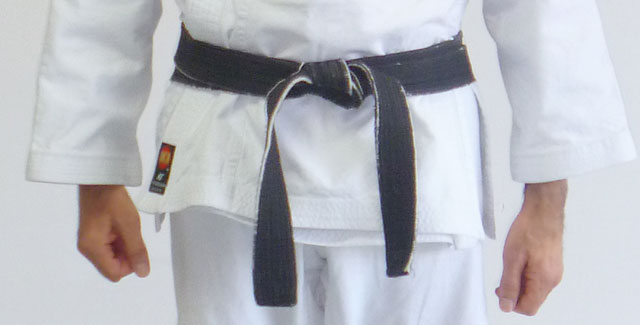
“In Aikido as in every martial discipline, there are individuals who are clearly competent and those whose backgrounds and lineage cannot withstand even cursory scrutiny.”
 This editorial was written back in 1982, long before the Internet age. The proposals suggested here would be far easier to implement given today’s available technologies. The problem is the lack of availability of this information to the public. I think an online registry with all the information available to the public would be the best. I would also post videos of all exams online. Then everyone could see everything that transpired and have a clear vision of the skills of the person promoted.
One of the challenges we constantly face in the publication of this magazine is how to maintain respect for the principles of Aikido while doing justice to our role as purveyors of information and opinions. For example, in the interviews we conduct and in some of the materials which come into our hands rather strong criticisms are sometimes expressed which we feel are not appropriate for the pages of AIKI NEWS. Our approach has been to reflect the fact in print that disagreements between individuals or organizations exist rather than to probe into the labyrinth of unpleasant details characterizing such differences. Where legitimate issues of concern to all do exist we frequently offer our thoughts and views and, even if critical, endeavor to express them in a manner intended to produce a constructive outcome. In Aikido as well as in life, we have discovered that “packaging” is every bit as important as “content”. With these introductory remarks in mind I would like to broach a topic which is a matter of concern to nearly everyone involved in the practice of martial arts with an eye towards an improvement of the status quo.
The subject? Dan rankings. There are few areas which elicit as much emotion and comment as the topic of the recognition of the ability and service of practitioners through the awarding of ranks. In Aikido as in every martial discipline, there are individuals who are clearly competent and those whose backgrounds and lineage cannot withstand even cursory scrutiny.
Persons purporting to be qualified to teach martial arts almost invariably seek to provide some sort of proof of the legitimacy of their status. Typically, they will identify their teacher(s) and indicate the number of years they have trained as well as the names of the arts they have studied. Often ranking certificates will be prominently displayed in their schools or places of practice. In contrast, there are also individuals in the position of instructing others whose martial arts backgrounds are quite varied and who have trained for brief periods with many different teachers. As such they possess no certificates and can point to no specific instructor as the source of their particular method. Another reason for difficulty in explaining one’s past experience might be a personality clash between teacher and student which in effect has cut off that particular person from the school in question. In this category of ‘traditionless” individuals, you will at times find rather competent martial artists with unique and valid methods as well as out and out charlatans. What is fascinating is the seemingly universal need to justify one’s present standing even by going to the extreme of weaving a false past. At least a half dozen names immediately spring to mind, several of them with successful dojos and scores of students, the latter training in blissful ignorance of the fact that the individuals in whom they have placed their trust and confidence have been untruthful to them.
To my mind, this is the crux of the problem and, in line with my initial comments, I prefer to emphasize specific steps which could be taken to make such activity difficult to engage in and perpetuate. Realistically, I don’t expect the suggestions below to be adopted by any of the existing martial arts organizations but anyone involved in the future creation of such entities which award ranks might consider the inclusion of some of these proposals.
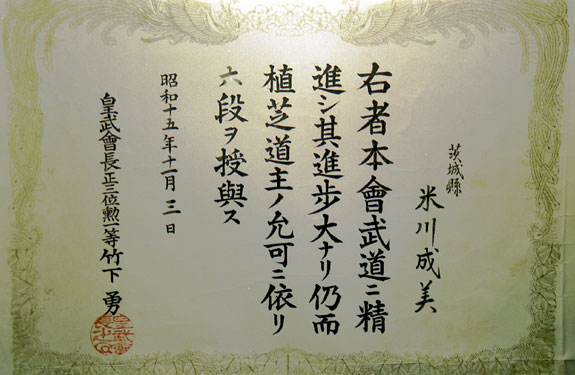
A giant step toward the elimination of abuses of dan rankings would be the design of a new type certificate containing supplementary information. What additional information ought to be included? To start with, a list of any previous ranks received together with the date and issuing authority of the promotion(s). Also, worthy of inclusion on the certificate would be an indication of whether or not the promotion is a “merit” rank or an “honorary” rank to distinguish between those who are being elevated based on ability and those non- or occasional practitioners who advance primarily due to their activities in support of the art. Here is an idea of how the information might look on the certificate of promotion:
“John Doe is hereby awarded the (honorary) rank of 3rd Dan, etc.”
Date: September 15, 1985
Issuing Authority: Japan Aikido Federation
“Previous Ranks Issued”
2nd Dan
Rank Date: January 4,1982
Issuing Authority: Japan Aikido Federation
1st Dan
Rank Date: June 8, 1979
Issuing Authority: Japan Aikido Federation, etc.
Consider the advantages of such an approach and the problems eliminated. For example, anyone being promoted at an unusally rapid pace due to political or other reasons would immediately stand out. By the same token, persons “skipping” ranks (a common practice in the early years of post-war Aikido) would be noticeable. Anyone who had switched organizations in the past would have that fact noted since the issuing authority listed under the “previous ranking” category would be different. Also, a common abuse partly eliminated through the presentation of this information would be the surprisingly frequent tendency to arbitrarily “add” years to one’s training career, presumably to lend greater credibility to one’s status.
One further step that an organization wishing to restore integrity to dan rankings might take would be to make rankings available to the general public on request. The other day we were at the Kodokan (World Judo Headquarters) in Tokyo and were elated to discover that we could obtain detailed information concerning the dan promotions of the teacher we were researching. Besides, most organizations announce rankings in their official publications at the time they are awarded, so this information is made public to begin with. What I am proposing is merely an extension of that practice and in line with the present policy of the Kodokan.
One final point worthy of mention is the importance of issuing a translation of the promotion certificate (assuming the original is in Japanese) together with the original either in English or perhaps in French for foreign recipients. It goes without saying that all of the merits gained by including the above information would be lost if people were not able to read the diploma.
Hopefully, these ideas will prove useful at some point in time to organizations adopting them and such institutions will gain increased respect due to the built-in integrity of their dan awarding system.
—————————————————–
Watch these videos for insights into solving the
technical problems that hold back your progress!








Hear! Hear! It’s amazing that this hasn’t been occurring for years.
It would seem to me in the interest of Hombu that it “protect its brand” in some way similar to what you suggest.
Beyond that there are a couple contentious issues. The first is whether the given dan rankings accurately reflect ability. It seems fairly obvious, to me anyway, that they reflect that only in part. Above a basic level it seems to me they equally reflect adherence to a particular teacher who has sufficient rank to make the promotion. Thus, there are some with modest ability but high loyalty who probably achieve fairly advanced dan ranking and others with modest rank who may be pretty able indeed.
The other is related to “paying the rent”. Unfortunately fluff of various kinds is effective at attracting customers. “…
As with the nut and the flower, the nut has become less important…” and that was Musashi in the 17th century. At least with the competitive arts, while the trophies in the window are garish, they do reflect wins (unless the school sells those too).
I tell folks that for me a Dan rank is like you license at the DMV since a motor vehicle too is deadly. It is not how good you are but that you are still adequate. Each Dan test that I take involves very young, fast, skillful youths and I still need to succeed in the test with them. I have to be adequate when I take ukemi and like the test at the DMV if I pass it shows that I am still adequate. With age and experience we develop the way to be efficient and effective. That helps as age diminishes what you may have thought you had in your youth. For me it is an achievement to test and be adequate. Note: with age the DMV does not require that you prove that you are adequate as often. As such, by now, I am about a 7th degree at the DMV these days.
There is no way to stop the fakes (the false teachers) but they can easily be identified.
Observe them when they don’t know that they are being observed and you’ll know!
Patrick Augé
I personally admit to a questionable background. I started Aikido with a gym class under Paul Sylvain many years ago as a college student. However, I could not afford to attend the dojo on a regular basis when the class ended. I joined a school several years later in Connecticut. The instructor learned Aikido from Korean instructors that claimed lineage from a martial arts university in Korea. This instructor had several honorary degrees, not merit degrees, for his given rank. After a few years I attended Aikido seminars at other dojos. Then I moved to an area without a school nearby. So I started teaching. I still attend seminars when I can and learn via practice and study via on-line sources. It is a difficult way to learn, but I have been training now for over 25 years. Several years ago, I discussed joining either the Ki Society or USAF-East. Both said I could receive a rank of shodan if acceptable by the hierarchy. Our school decided to stay independent. So I cannot obtain the lineage you describe. If there was a method to test individuals like myself, that could be acceptable. However, the reason to obtain this rating is not a pressing matter. I have a small school. I do not hide my background and my students continue to study. I do not have problems interacting with Aikidoka that visit. I teach methods from a variety of Aikido styles. I question if having a legitimate lineage is a valid measure of competency. I believe I am competent, without the lineage to prove it.
This is a great topic..i think it depends what you value…the certificate..the status..the experience or the skill…Stanley you have written often about the history of aikido and other martial arts..so let’s just revisit where the concept of a black belt came from…and then truly analyse the status, disciplines and responsibilities of a true sensei….where i train no one wears a black belt or hakama and no one is referred to as sensei…but everyone knows who is sharing their skill and experience ..without the need for status.. given and received for the best of reasons.. now surely if the question of authenticity is up for question, unless an objective method of evaluation is put in place..then who can judge ……….a martial science can be objectively measured…a martial art is simply subjective…however, in my experience, deep down the individual student intuitively knows… and they will follow where their own motivation lies… and will search for either…the certificate…the status..the experience or the skill…and whatever suits them as an individual…because nowadays our lives are not put on the line through warfare and violence…and often the reason for adopting a martial art is more to do with conquering an individual issue than conquering someone else..perhaps we could get back to a place where there is no formal heirarchy…but what would that do to the industry that encompasses the martial arts franchises… what ever happened to us all being humble students….i would ask these simple questions…how many senseis use their martial art experience in a day to day martial situation..how many of ueshiba’s contemporaries were actual samurai and how many aikidoka actually follow the seven virtues associated with the folding of the hakama…
I lie your article and totally agree Perhaps the easiest way would be the best. Go to the source is usually the best answer when a query or question requires or demands an answer. All Hombu has to do is open to all a database which contains all the details of every person they have ranked around the world. Then, if some people claim to be what they are not, they can easily be checked against this database.
I have trained since the 1970’s , with many teachers around the world, since I first started my Aikido journey.
My Shodan, Nidan, Sandan, and Yondan rankings are officially registered with Hombu in Japan. Potential students around the world should have free access to this Hombu database, to prove without any doubt that their etcher/s are of the rank that they say they are. I am quite surprised that this does not already exist, as it would have made it more difficult to “cheat the system”.
I personally know of an Aikido teacher in Melbourne Australia who is officially ranked Nidan (2nd Dan) at Hombu, yet he promotes himself as a Rokudan (6th Dan). Sadly, his students have no idea.
Hi Sensei Stanley Pranin,
About your suggestion to include dates of previous certificates. I like that. I suspect at least the two or three previous certificates ought to be included. As such, Shodan ought to have Ikkyu and Nikyu certificates at least listed. Beyond Three could claim too much real-estate on the Certificate.
a.j.b.
In our Western understanding, a rank is considered as the level we achieved with the possible outcome of reaching our level of incompetence.
In Japanese Budô, a rank is a covenant between teacher and student by which the teacher says to the student: “This is the level that I expect you to achieve” and the student by receiving the rank agrees to continue his shugyô with his whole mind and body.
Years ago I asked Mochizuki Sensei about the meaning of the Menkyo Kaiden he had received from Ueshiba Sensei. His answer was that it certified that he had received all the essential teachings for him to continue his study and develop his Budô.
The Budô world isn’t immune from frauds and dan/menkyo-tori-mushi (rank and certificate catching insects). Some are obvious to the average martial arts practitioner, others are more difficult to identify as their technical skills and acting may be impressive. I have seen so many of them in my over five decades of Budô study. They spend a few weeks of summer vacation touring Japanese schools until they hit the jackpot and come back with some grand title. I knew a European gentleman who just did that. He spent very little time in Japan, but he had done his research and used all the information, connections and leverage available to obtain a certificate making him the equal of Kondo Sensei who had spent years studying with Takeda Tokimune Sensei. Nobody has questioned that, due to his credible technical skills.
The belt does not make the Budôka. If we reflect on that, we start looking at other aspects of the individual. How does he live, how does he behave when he assumes nobody is watching? Observation is an essential part of our training. Thus we can better understand our and others’ motivation behind their intentions.
Patrick Augé
We currently have such a system here in New Zealand http://www.nzmai.org.nz/
Richard Campbell
I’m sure Aikido Journal readers would be very interested in learning more about your ranking system and how it has fared compared with the more common grading systems out there.
I believe that holding a rank and being part of a dojo is a responsibility to ourselves and to others. In the philosophy of Sempai and Kohai, we strive to lead and to support each other while honing ourselves and evolving as Budoka. But we cannot evolve in a vacuum. We need each other. To me, a rank is an indication of where one fits inside the dojo and delineates the duties, responsibilities and expectations of this person within this ecosystem. In our quest to develop our art, it is important to keep our standards high and maintain the quality of our craft and of our culture. Deterioration of the art occurs when these standards are lowered for the sake of convenience or as it pertains to this discussion, making it easy to make or keep a rank. We have a tradition whereby if someone leaves our dojo, they give up their rank. If they come back, they must put on a white belt. We sometimes joke that the purpose of the belt is to hold your gi together. It is, of course, more than that, but the point is that we should not get so consumed about climbing the dan ladder as being the sole purpose of our study. It is the result.
Stan, I believe you have a collection of peoples’ names and their Aikido ranks from the 1970’s through maybe the early 1980’s.
I believe you “authenticated” their certificates of promotions. I remember sending you copies of my certificates. What is the current status of that work? With Peace and Love. Ace
Status: on hold…
Stan,
I have been studying under Sensei Skoyles of the family dojo Nakayama KoAikidoKai for almost twenty years now. I hold an ichiban and niban menkyo for rankings in our dojo but these hold no wieght in the international Aikikai. I have attended seminars at the Albequerque Dojo and the Little Tokyo dojo in east LA when Furuya Sensei was alive, I have been instructed by Yamada sensei for a few lessons at this time as well. My rankings do not count when I visit other dojos and I do not wear my Hakama when doing so. I will also not pay $6,000.00 to $10,000.00 to become ranked when I have already put in the time. I respect what you are saying but would like to know how you will then recognize those of us who study and are competent in the art of Aikido but do not wish to pay huge amounts for a ranking after their name?
By the way I love the zone theory lessons you have provided and have found that we have been practicing most of what you reveal in the lessons. I have also incorporated what we have not used as of yet.
As for a reason I stay at this family dojo – we study by way of the sword and combine swordwork (including live sword) with hand to hand for a better understanding of why these methods work from the first day in our dojo. I cannot find that anywhere else.
Thank you
David Francis
Thank you, David, for the excellent post. As to rankings, I personally do not pay much attention because of the extent to which politics govern the entire process. You would be welcome in my dojo wearing what you normally wear.
Well, my golden belt in Advance Aikido Techniques and my red-lion belt in kendo as well as my emerald green snake-skin belt in advanced silly-buggers means I outrank you all! (Australian humour here)
Thanks Stanley, I notice this is not only an aikido problem at all. At one point in my training we shared a dojo with one such person who has then created their own style. He was ruthless and kept holding the students. They are enviably good – the students. The teacher was something else.
Cheers
How about no belts?
After all, we do need to hold up our pants!
wear pants that fit