
 Josh Gold
Taiso, the father of Horikawa Sensei, received a teaching license (kyoju dairi) in 1913 and Horikawa Sensei studied jujutsu with him. Horikawa Sensei started his training of Daito-ryu on May 12, 1914 while in his 21st year. He officially became an elementary school teacher in 1917 and later was on the staff of various elementary schools in northern Hokkaido. Sokaku Sensei visited the school Horikawa Sensei was working at and remained there for several days transmitting to him the secrets of Daito-ryu.
He received three scrolls of the inner mysteries (okugi) from Sokaku Sensei in 1931 at age 37. They were: the Hiden mokuroku, transmission scroll of secret arts in January; the Hiden Okugi Mokuroku, transmission scroll of mysteries of the art in June; and the Hiden Aiki Okugi Mokuroku, a transmission scroll of Aiki mysteries in October. In September of 1937 he completed the 84 techniques of Daito-ryu Nito-ryu Hiden (jo, chu, ge).
He also received the “Eisei Meijin” award for his long, distinguished service in the martial arts. Horikawa Sensei established the Kodokai in 1950 and became its president. In spite of his advanced age he remained hale and hearty while teaching Aiki Jujutsu in Sapporo, Muroran, Takigawa, Yubetsu and Kitami.
First Meeting with Horikawa Sensei
It was in 1965 that I first met Horikawa Sensei when he was traveling about Hokkaido teaching. The place was the Hokubukan in Muroran City.
I was teaching Judo there and heard that a Daito-ryu master was coming. I observed Horikawa Sensei’s instruction out of idle curiosity. I was expecting a fierce, muscular budo master and so the appearance of an old man only about 4 feet, 11 inches tall surprised me. My curiosity was excited and I felt that he was someone extraordinary.
There in the Hokubukan more than ten students holding ranks of up to 4th dan of Horikawa Sensei who had been studying under him for ten years were practicing. Seeing the sharp effect of his techniques with Aiki which were different from those of Judo, I, who had been feeling the limits of my physical power, found them ideal. His technique was so brilliant that I was tempted to imitate it immediately. I can understand the reason why Sokaku Sensei himself said the following: “I never show the techniques in the presence of others since they are very easy to learn.” (From an interview with Takeda Sensei in 1931).
Private Instruction
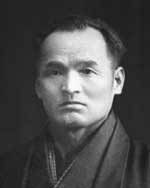
Horikawa Sensei is said to have asked Sokaku Sensei for instruction inviting him to stay in his small teacher’s lodging house thus consuming much of his small salary. Following Horikawa Sensei’s example, I asked him to give me private instruction and invited him to my house when he came to Muroran to teach once a month. Horikawa Sensei would munch sweets and smilingly reminisce all about himself and Sokaku Sensei. “Since Sokaku Sensei couldn’t read at all, he never read newspapers. He liked sweet things and whenever he came to see me I prepared sweet bean jelly for him.” This was one of Horikawa Sensei’s recollections about Sokaku Sensei.
For practice he had me perform suwaridori techniques repeatedly in each training session. Since I was young this practice alone didn’t satisfy me enough and my desire to have a larger dojo grew. However, even after I opened a dojo, Horikawa Sensei still emphasized the importance of suwaridori and repeatedly said that these techniques were the basis of all techniques.
Even when vigorous young men would attack Sensei during repeated practice of the same kata he threw them as if by magic by freely turning his body in small motions according to the amount of power and the direction of the opponent. By around 1975 when I had my own dojo Sensei had quite weak legs and needed a stick and his wife’s shoulder when he walked. However, once he stood in the dojo wearing a keikogi (training uniform) he suddenly looked like a huge rock. It was truly impressive.
Horikawa Sensei attached importance to teaching on a one-to-one personal basis and always explained to us the essence of Daito-ryu Aiki Jujutsu in between periods of instruction. He repeatedly told us about the history of the art, the techniques and their number, their rational nature and also about Sokaku Takeda Sensei. I used to laugh at the persistency of his ways. Even my wife and children who were always near him learned the things he repeated by heart thinking that all elderly people behaved in a similar manner. However, I am deeply convinced that Daito-ryu Aiki Jujutsu is not an art which has been transmitted through any writings or technical books but through repeated study of its techniques and history in a trust built between teacher and student.
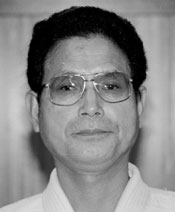
In this age of mass media communications Aiki Jujutsu has managed to survive. What Horikawa Sensei inherited from Sokaku Sensei and attempted to transmit to us, that is, “the cultivation of mind and techniques through personal relationships and mutual trust” is, I believe, a secret of budo we will have to hand down. As a sincere educator who performed good deeds as well as a great budo master, Horikawa Sensei never left Hokkaido and lived in a world surrounded by close, trusted individuals. I believe I am not the only one concerned that this modest master is becoming an increasingly fading existence in this age of excessive information output.
Aiki Jujutsu has come into the spotlight and many documents concerning the art have begun to appear. However, I, as one of Horikawa Sensei’s students who was taken by the hand and loved by him, very often feel righteous indignation at the fact that Horikawa Sensei is becoming overshadowed due to errors in personal histories written about him and lineages written by various martial artists. I believe the reason Daito-ryu Jujutsu has come to the public’s attention is because the mentality and techniques Horikawa Sensei emphasized have meaning for people today.







Add comment