
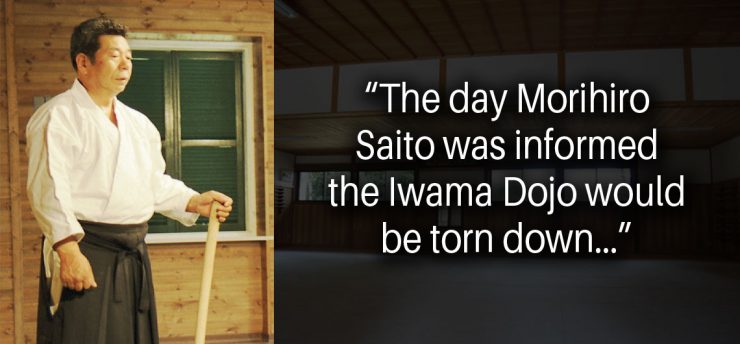
 Josh Gold
I am prompted to write this article by a comment appearing recently on the Aikido Journal Facebook page about the the decision of Hitohiro Saito Sensei, son of Morihiro Saito, to depart from the Aikikai in 2004. The writer expresses the view that the Saito family acted inappropriately by creating an alternative grading system to that of the Aikikai that culminated in Hitohiro Saito’s resignation from the headquarters organization.
While I find the split heart breaking one must place some of the blame on the creation of an “Iwama ryu”. Ryu in Japan has a very specific meaning and its use in this situation would rightly be seen as a very public insult and rebuke to the Aikikai. Furthermore, I think one could argue to this end that Mr. Pranin ought to have explored the subject of an an Iwama ryu which was the first real split between the two sides and the Aikikai’s request for the term to be dropped and the word “aikido” reintroduced. This was only natural given that the Aikikai is the governing body for aikido.” [Edited quote]
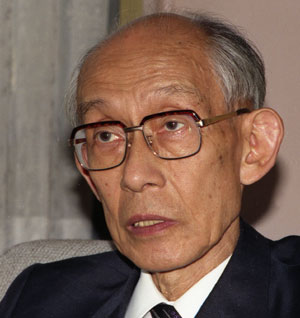
I was closely involved with Saito Sensei as these events were unfolding starting about 1988 as I traveled with him extensively as his interpreter at international seminars. I was also in regular contact with Doshu Kisshomaru Ueshiba during this time frame, so I am not unfamiliar with the Aikikai’s viewpoint.
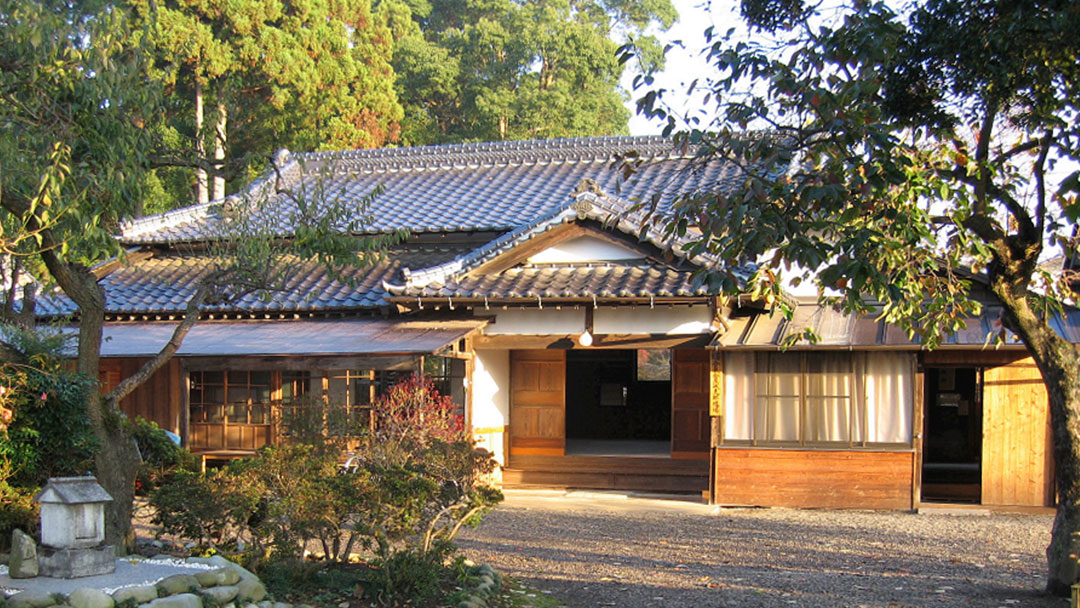
Basically, one needs to understand that Saito Sensei was informed by the Second Doshu Kisshomaru Ueshiba that the Ueshiba family was planning to sell the land on which the Iwama dojo and O-Sensei’s attached country house stood. This was due to the high taxes on the Iwama property that had become a burden to the Ueshiba family. After being sold, the Iwama Dojo and Ueshiba home would be torn down to make way for property development. This is the period in time when property values in Japan were in the bubble phase and just before the crash of 1989.
Stanley Pranin’s “Zone Theory of Aikido”
offers a comprehensive alternative approach to aikido focusing on soft
application and strategic positioning…






Thank you, Stan. It is all to easy for people to hold an opinion despite not being possession of all the facts.
Well stated Stanley! You would surely know as you are a first hand witness. There is way too many “omissions” by the Aikikai; just look at the issue with lineage. Where are the greats, including Saito? A mere blurb for all his and others contributions? That guy needed to hear the full story. We in the aikido community will always owe you a debt of gratitude for keeping our history alive! Peace!
I think what you do for Aikido is amazing! Please keep posting articles and let me know if you’re ever in the UK.
Thank you for sharing the “behind-the-scene” information, Pranin Sensei. As always, there is a context to everything. We just move forward.
Thanks, Stan. There are often many contributing factors to any decision or event. I am grateful that the connection between the Ibaraki dojo and Aikikai headquarters is strong today and that practitioners can still train at both dojo’s.
The end result in 2004 was that Hitohiro Saito Sensei resigned from the Aikikai which had taken back the Iwama Dojo and made it into a branch school under Hiroshi Isoyama and Shigemi Inagaki senseis. The Aikikai has ceased to mention the name of Morihiro Saito in the dojo and the dojo website.
Hitohiro Sensei is practicing out of his home dojo nearby and travels frequently abroad to conduct seminars. He operates his own organization.
Hi Stan. Wonderful article. Thanks.
This next request is probably a bit touchy. Are you able to give some insight into the story behind the split off of Hitohiro from the Aikikai?
My thought is that it may go way back to when they were kids. My thought is that when little Moriteru came up to visit with his grandpa, little Hitohiro was treated like he was part of the hired help and derided, bossed around by Moriteru cause his grandpa was the boss. No doubt, kids will do that. If the meeting after Saito Sensei’s funeral ended up with a similar spirit of “I’m-now-the-boss, and you will do whatever I tell you to do” came into play I could see some really intense feelings of disrespect and anger coming into play right at the same time.
Could that be part of the story too, or am I way overboard?
Dear Stan,
having practiced Aikido for 25 years I shudder to think how little I would have known about Aikido if it weren’t for your efforts, and therefore how little I would have understood! Both in regard to context, history and many greats who dedicated their lives to our art, and in regard to techniques themselves.
In my view, technical skill and ceaseless reflection go hand in hand, and your contribution to Aikido is on a level with that of the art’s greatest shihans. Indeed, if Saito Sensei is somewhere looking down on this world and its goings-on, he must be smiling with pride and joy at your uncompromising dedication, and the fact that not least through your efforts is his legacy safe, known and accessible to all posterity!
Please continue giving us a true history instead of a select hagiography!! And bless you for it!!
All the best…
Thank you so much Christian! I appreciate it more than words can say.
That Inagaki Sensei is at the Iwama-Hombu dojo is interesting. I met him in the ’70s when he was traveling with Saito Sensei as one of Saito’s senior students. Strong and no-nonsense. This is a “very Japanese” to me. I’m glad that I no longer feel it useful or necessary to do dojo politics.
Hi Stan
As an aside to this story I would like to add the following:
You will recall that we were hosting Saito Sensei several times in Switzerland during that period.
To raise additional money for the New Dojo we invented a feature called “special keiko”. During the seminars several classes were offered in addition to the regular schedule. There was an extra fee charged for those classes that participants had to pay on the spot and that was submitted to Sensei immediately and apart from the regular pay he would receive at the end of the seminar.
Sensei took great care to make those classes truly special and would teach advanced weapons or kaishi-waza. To facilitate that he limited attendance to black-belts or 1st kyu and above. Spectators were not allowed.
Soon the original idea of a spontaneous additional effort with a specific purpose of the fee involved got lost as “special keikos” started to appear as a scheduled part of many seminars in Iwama circles…
Kind regards – and keep up the good work!
Roland.
Hi Stan,
I wonder if you can tell us what has happened to the dojo Morihiro Saito built, is it not being used or is Hitohira Sensei using it, I was just interested.
Thanks Andy B
I really don’t know how it’s being used these days. Can sometime who has studied with Hitohiro Saito Sensei recently chime in?
Last I heard it was used as sleeping quarters for women uchi-deshi.