
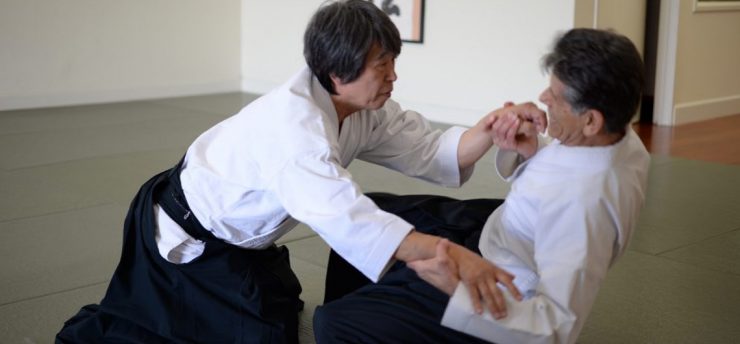
 Josh Gold
Aikido is a deep and complex art. While some techniques can be learned quickly, the art takes decades to master. With our ability to grow within our art over a lifetime, how can we best prepare our bodies to ensure high-performing movement capacity over the long term? One strategy is to employ a practice like yoga to build and preserve mobility, joint strength, and stability.
During a QA session with Ikazuchi Dojo’s team of instructors, Stan Pranin Sensei shares some of his thinking on the subject. As founder of Aikido Journal and an aikido practitioner with over 50 years experience, he brings a unique perspective to the topic.
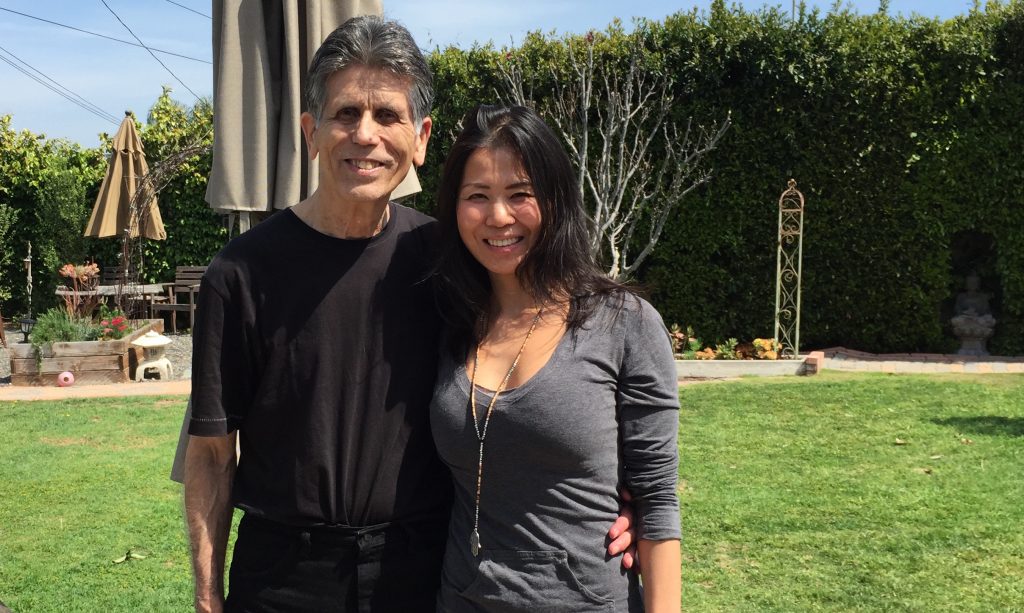
Anne: Pranin Sensei, you mentioned that you use yoga as a way to maintain your body condition and improve your movement capability. When were you first introduced to it?
Stan: I was introduced to yoga at about 17 or 18, but I didn’t continue at that time. But what I did do is to take elements of yoga and make them part of my aikido and personal warm-ups. I was always doing some stretching, yoga type stuff throughout my Aikido career. But I started going regularly to classes about five years ago. I don’t go to structured classes at the moment, but I do a lot more on my own now.
Anne:: What changes have you noticed over the past five years when you’ve added a consistent layer of yoga practice into your training?
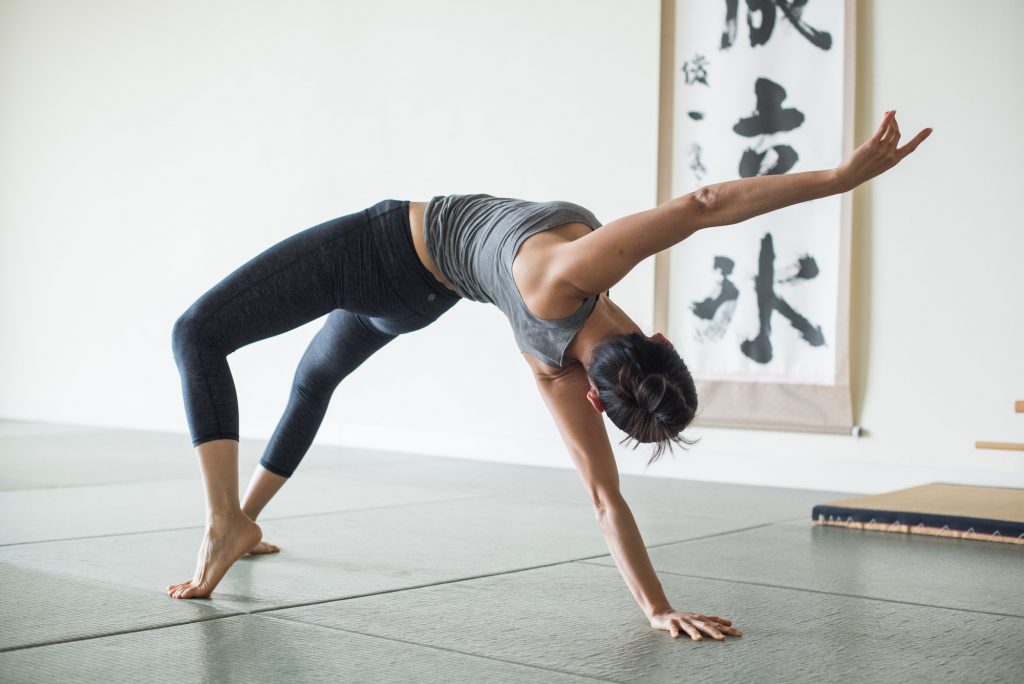
Stan: I’m able to control my back pain, I have complete control over it now. When I was young I tended to have rounded shoulders. I’ve been working on a computer since about 1979. I work long hours, so we’re talking 10 or 12 hours a day, usually seven days a week. I’m in a chair all the time!
Josh: Like most people.
 Stan: Yes. In Japan I had back incidents, and a couple of cases where I couldn’t walk for days. I was crawling, and using a jo as a walking stick in my 40s! I thought, “Well, now it’s all downhill. My wife at the time was telling me “You can’t do those exercises anymore, you’ll hurt yourself.” Then I found that when I stretched, and did more than usual, it started to improve. But I just thought I’d slow down the decline as long as possible, so that maybe I could continue to do Aikido at a reasonable level for a while. I just drank the Kool-Aid! I mean I accepted the popular wisdom that I would grow old like everybody around me. Everybody grows old.
Then, in the last few years, I noticed that my peers in Aikido started disappearing, or getting injured, or dying. I can show you a picture, there’s about 25 of us, from 1965. Most of the people are dead; a few are alive. None of them practice anymore. I’m the only one. I was 20 at the time. But it gets lonely. So here I am. I’ve got a whole lot of work to do if I want to get all of my research material out there. I have to be healthy, or I won’t accomplish my mission. I have all these documents collected. I don’t want to fail to finish the job. I don’t want to leave that way.
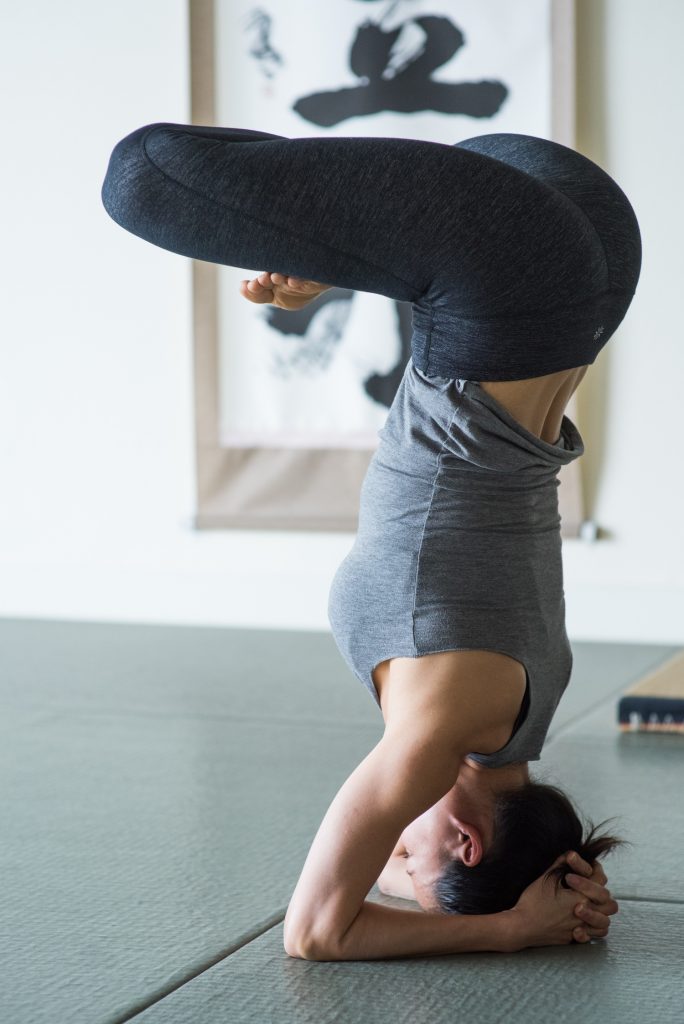
So I started yoga. I didn’t want the pain, so I just said, “Okay, I’m going to start practicing yoga consistently. I started getting better and better, and stronger and stronger, and the pain decreased. But most importantly I learned the tools to allow me to adjust my condition at will. By doing certain exercises when I have pain, I get better and better. In a couple of days I’m fine and pain free. But if I don’t do them, the pain starts to return.
That’s where I’m at now. I don’t always do a really thorough job. But if I do my 25 minute routine by myself on the mat I’m in good shape, no pain. I can even do high falls. I don’t often, but I can…
You can also take a look at Suganuma Sensei. He’s now 74 years old and has amazing movements. He practices yoga and also really uses his aikido warm-ups to focus on cultivating range of motion. View Suganama Sensei’s warm-up here.
Josh: I had the opportunity to throw you a little bit over the course of the weekend. When you fall, it’s like you could be 30 years old. Really supple, and very responsive. It’s amazing that you’re 70 and you still have that kind of body conditioning.
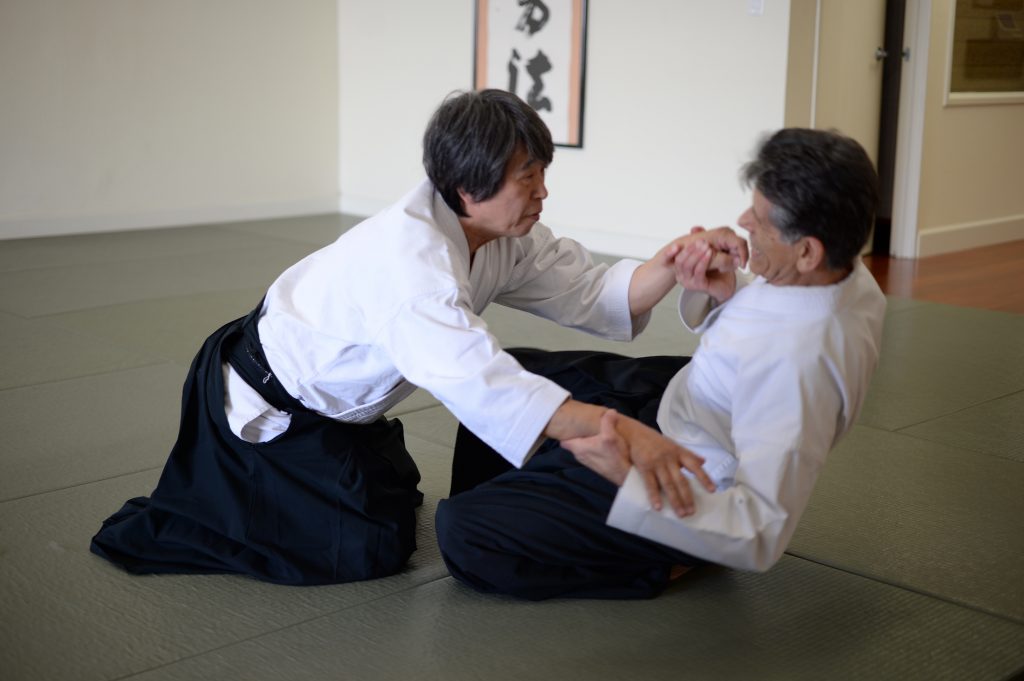
I think for those who want to do Aikido long term, this kind of approach is critically important. Because if you get to the point where you’ve been doing Aikido for over 50 years, and are able to accrue five decades of knowledge and insights, it would be a shame to not have a body that can execute the movements.
Stan: Exactly! It’s like going into a prison. I mean, what do I do if I can’t move?
Josh: Right. I think in the martial arts, as one continues to build their competency and domain expertise decade after decade, you don’t want to get to the point where you can continue to make these insights, connections, and innovations, but can’t actually bring them to life because your body can’t function well enough to do so.
Stan: Another thing to consider is this. Some people remain pretty sharp when they’re old, even if their body is not in good condition. But there are a lot more who also start to lose their mental capacity. If you want an extra 10 or 20 years, and you want to be able to pass along knowledge; take care of yourself. If you entrust your health to a doctor who spends seven minutes with you, and answers every problem with a pill, you’ve got a problem. You’ve got to take ownership of your own health.
If you’re not using raw physical power when you’re doing Aikido, you can practice a lot more and it’s really enjoyable. The funny part is it’s also far more powerful! At 70, I know it’s counterintuitive, but I often find myself really needing to throttle back sometimes.
Now I’m focused quite a bit on yoga and also on nutrition. My diet was pretty good before, but it has been super tight in the last few years. I know I can make it tighter. I just want to see what’s possible. I don’t want to just be teaching. I want to take falls. I never want to give up Aikido.
Ikazuchi Dojo offers yoga classes with a focus on improving mobility, increasing functional strength, and enhancing balance in the areas most relevant to aikido practitioners.
This article is published here and is reproduced with the kind permission of Josh Gold of Ikazuchi Dojo.





Maintain your body. If you’re ever in a situation it’s the only one you have. The best plan in the world and the most complete technical knowledge is like having the owners’ and overhaul manuals for your car. Good, but not going to help you in the middle of the desert when the car stops.
The other thing is that your aikido will change with your body. It has to. There is a “performance envelope”. Yes, you can do a few things “outside the envelope” and maybe get away with them, but you will be “living” within the envelope. That’s just who and where you are. So get comfortable with it.
Not only is stretching good to prolong one’s Aikido “career” but such persistence can also help one cope with chronic disease. I suffer from systemic lupus erythematosis, a genetic autoimmune disease related to MS, but, although limited, I can still teach and serve as uke for my students. Am I a good and graceful uke? Hardly.
One bonus from continuing to practice Aikido and Ki exercises, even when stuck in bed, is that at 71 years of age I have the reaction time of a 23 year old, according to a well known Internet test. That would emphatically not be the case had I given up when first temporarily crippled by the SLE.
One suggestion to all that was not mentioned (unless I missed it) is to keep WALKING as long as you live. If you have to use a cane, walk. If you have to use crutches, walk. If you have to crawl … not sure about that one. But walking, no matter how short the walk must be, is crucial. It may not seem like much when one is young but it is something that has allowed me to continue in Budo for six decades and in Aikido for five. Just put one foot after the other.
I do these also but I also think that weight training is important to keep muscle tone and mass.
I’m a Shiatsu Therapist and TCM practitioner.
I’ve been practicing aikido and yoga for almost two decades. Teaching yoga for over ten years.
I think the aikido community can really do itself a service by changing its perception of the warm up routine.
There can be a more sophisticated and practical sequence of exercises designed to improve strength and flexibility beyond just warming up.
One needs to consciously evaluate the tension or limitations that exist especially in the hips and work on the appropriate stretches to alleviate the stagnation.
A competent yoga instructor will know how to evaluate your posture and guide a class through a variety of poses to not just restore natural movement but to enhance it.
Hip strength and flexibility is essential to have a pain free lower back and to decrease the likelihood of knee injuries. The two most common long term ailments I’ve seen in the dojo.
Learn to stretch the front, back, inside and outside aspects of the hip joint. Compare your left and right sides, and in time bringing balance to the pelvis.
All the tumbling we do is hard on the body especially if we’re stiff, but it’s also what makes aikido practice so much fun.
Take your time.
Don’t rush.
Relax.
Learn to stretch and breathe consciously.
The “warm up” is just as valuable as your ability to throw and take falls.
The poster who mentioned regular walking was spot on. I have also done some zen shiatsu which I found to be excellent. However, if one cultivates a soft body as used for aiki in daito ryu, one shouldn’t need yoga or anything else, really. This aiki practice is wonderful for long term health, as proven by many daito ryu practicioners of the soft aiki, such as aeigo okamoto, kodo horikawa, yukiyoshi sagawa et al.
Wonderful article and comments. I whole heartedly agree with:
Walking yes !! – I park far from stores at shopping centers where there are always lots of empty spaces, leave the close spots ( and elevators and escalators) for old, sick, or lazy folks. At airports – I am the “over the hill hippy” with the backpack – rolling suitcases are for the old and sick
Yoga yes !! – I do Chinese standing yoga (Qigong) several times a week and before most aiki classes – for flexibility, strengthen posture and lower body, and open breathing
Weight training yes !! – Once a week I do a long and wonderful gym workout focusing of “functional strength” training with special focus on breathing and integrated body movement
Ukemi Ukemi Ukemi !! – Years ago I trained for a hour with a famous Hombu Dojo Shihan and was amazed how stiff he was ?? Then I realized I should not be surprised – he had been teaching for the past 20 years, but not training. When high ranking “teachers” stop training (taking ukemi) the power of aikido to keep you young ends
I hope in 5 years to reach the youthful age of 70 – and have the same bragging rights as Stan !
Welcome to the club Stan! Maybe I am fortunate to be able to take ‘ukemi’ and high falls in moderatation at 72. However I have trained flexibility daily since I was 40. I have developed from the ‘five tibetans, tai chi, qui qong and to the Tamura style Aikitoso my own daily 30 minute routines.
While training with Tamura Sensei in the Provence 1988 – 1994 I learned his Aiktoso which he always dedicated the first 15 minutes of his class to. He stressed the importance of ukemi and always lead the class through this routine.
Peter, Thank you very much for your comments. Can you direct us to a video of Nobuyoshi Tamura Sensei’s stretching routine?
Good morning Pranin Sensei:
Thank you very much for highlighting this important aspect of our Shugyo, ascetic discipline. As a student of Yoseikan Aikido for over 35 years with a knee and a hip replacement I realize the value of flexible movement.
We all have set-backs but we must spend extra time to increase our flexibility as we age or we will increase our time being sickly and less mobile. We have a yoga teacher visit our dojo annually to give us a refresher course and her yoga is a part of our warm-ups at every class; children, youth and adult. Your emphasis and that of other like minded teachers will allow us to train much longer and allow us a greater quality of life in the golden years. I never thought of this in my 20s 30s 40s and 50s. Mochizuki Sensei said: “The purpose of martial arts is to forge our minds in order to overcome life’s challenges” add to that my words and not Sensei’s, we must start to forge our minds when we are young so they are strong when we need the wisdom and discipline to continue our mission as you so wisely said.
Thank you for this reminder,
Joseph Capogreco