
 Josh Gold
“A nuboko adorned with jewels was used by Izanami and Izanagi
while standing on the Ame no Ukihashi to ‘stir’ the sea!”
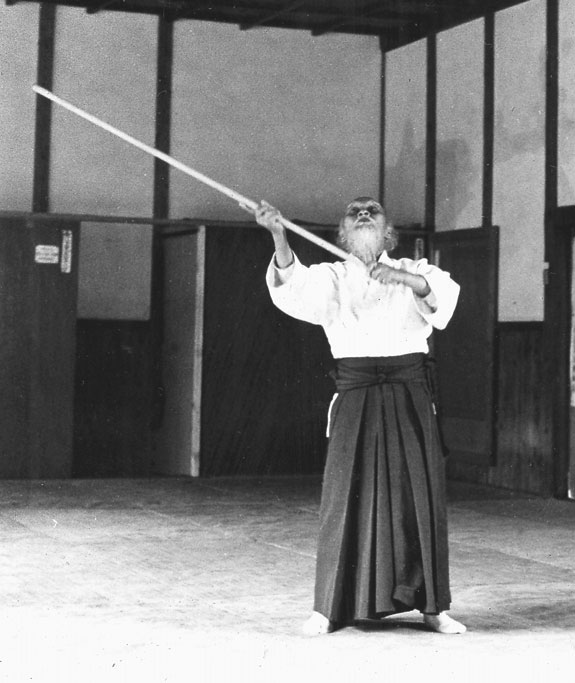
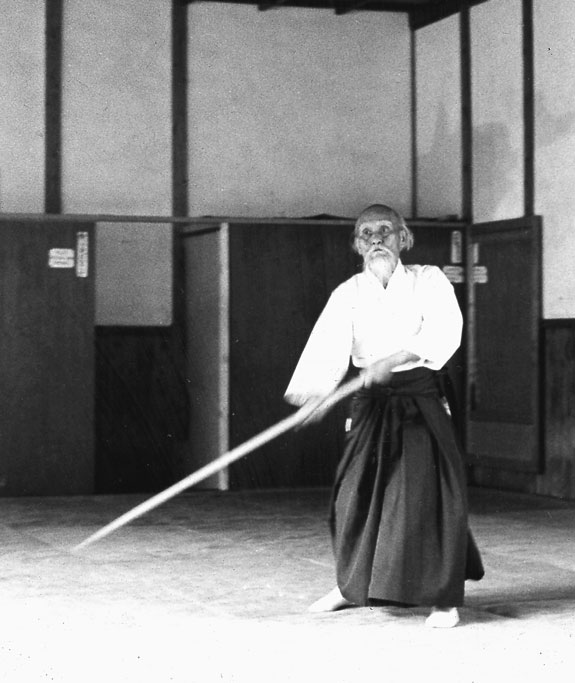
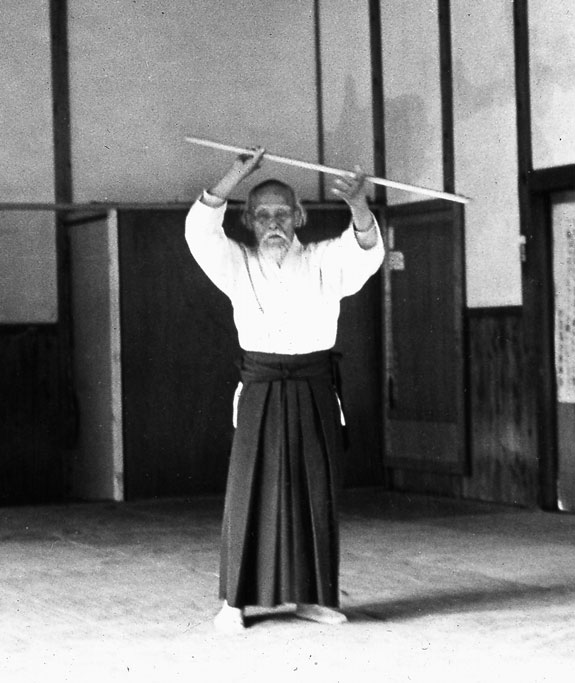
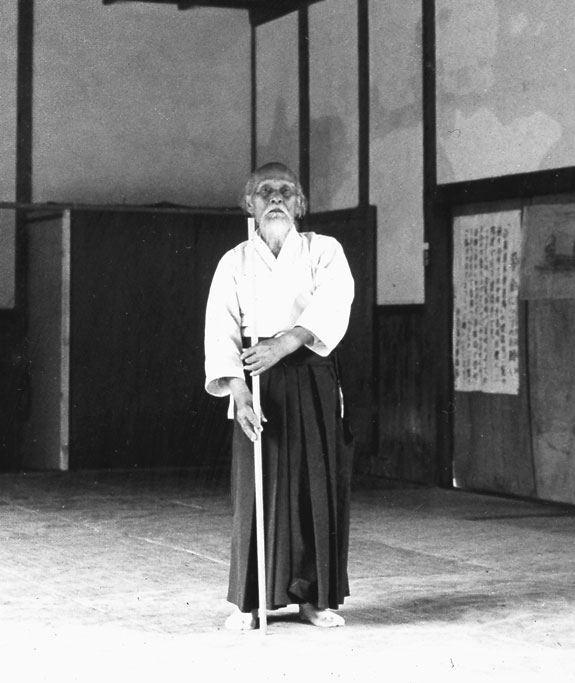
This series of photos shows Morihei Ueshiba O-Sensei performing misogi jo movements inside the old Aikikai Hombu Dojo, c. 1965. If you look closely, you will see that he is actually using two separate weapons. One is the familiar jo — a stick a little over four feet long — and the other a pointed weapon of similar length called the “nuboko.” Mention of this nuboko, literally the “swamp spear,” will be new to many aikidoka. Its name comes right out of the Kojiki, the so-called “Record of Ancient Matters,” that contains the mythological creation stories of Japan.
Izanami and Izanagi, charged with creating the first land, stood on the “Ame no Ukihashi” (the floating bridge of heaven). This bridge connects heaven and earth. O-Sensei used this term often in his speech. It represents the sacred place where one performs purification practices, and absorbs the energy of heaven. Aikido itself is misogi and a means to achieve enlightenment.
A nuboko adorned with jewels was used by Izanami and Izanagi while standing on the Ame no Ukihashi to “stir” the sea, and the drops of salt water that fell from its tip formed the first land mass of the Japanese islands. So goes the legend.
Briefly then, this type of misogi practice performed by O-Sensei reflects his Shinto beliefs, the lens through which the Founder viewed the world, and his mission in creating and spreading aikido.
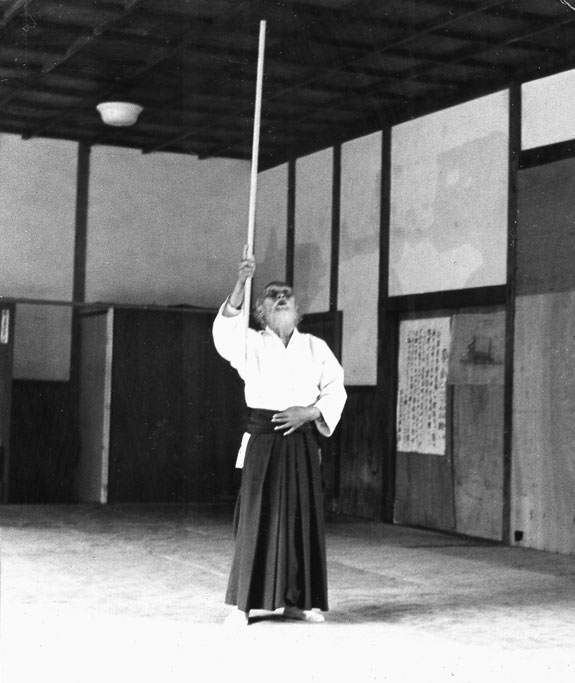
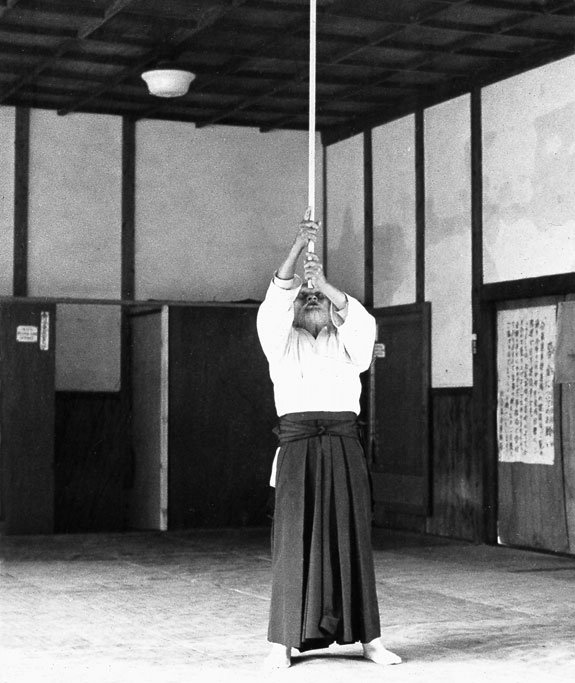
—————————–
BEST VIDEO RESOURCE OF AIKIDO FOUNDER MORIHEI UESHIBA AVAILABLE…
_______________________________________
Click here to discover the secrets of the highest
level of aikido to accelerate your progress!
The Morihei Ueshiba Founder’s Course is O-Sensei’s video legacy starting in 1935 and covering a span of 34 years until just before his passing in 1969. Besides the more than 30 films of the Founder, the course includes three rare audio interviews of O-Sensei with complete subtitles. These are wonderfully intimate conversations with the Founder that convey his bright personality, playfulness and sincerity. In addition, the course includes a series of video documentaries by Stanley Pranin on the life of the Founder and the spread of his art worldwide.






I have a question concerning this period of time, may be you can help me. I read somewhere that the present building of Aikikai Hombu Dojo was opened for the public only in 1968, and the photos of this sequence date from circa 1965. Probably they are some of the last pictures taken on the old dojo. The question is where did the members of Aikikai held practice during the construction of the new building? Since the old dojo was only one floor, probably they had to demolish it before starting the new building. This took around 3 years, so where did they held practice during all this time? Do you know? have a hint?
This is a good question. The old dojo and Ueshiba family home were part of the same structure. I believe that there was room enough on the property to start the new dojo building which is three floors. I don’t know if they had to demolish part of the house also in the process. But training continued in the old dojo until the new dojo was finished. Then they tore down the old dojo and house and built the new Ueshiba home where Moriteru Doshu currently lives adjacent to the new dojo.
I would like someone who knows the story or who is training at the Hombu Dojo to research this so we can get the story straight. It’s funny I never thought to ask Doshu about this even though I interviewed him many times.
Thank you very much for the answer, Stan. Some years ago I was just about to ask Fujita Masatake Sensei about it, but somebody interrupted our talking and I could not get back to him. I expected to ask him on his next visit, but unfortunately he got ill and never came back to Brazil. If you learn something about it, please let me know. Thanks a lot.
Did Morihiro Sensei performed misogi no jo?
No, but he would explain that Morihei Ueshiba did it regularly.
Hi,
Where did O Sensei learn this misogi no jo form?
Is it in a traditional Shinto ceremonial form or is it improvised ?
Keith