
 Josh Gold
Greetings from Aikido Journal.
I hope you’ve been finding something worthwhile in the articles we’ve been bringing back out of the archive. There’s a great deal in there, including interviews, technical writing, and history that had been inaccessible for years. We’re steadily working our way through the remaining articles. More will be on the way soon.
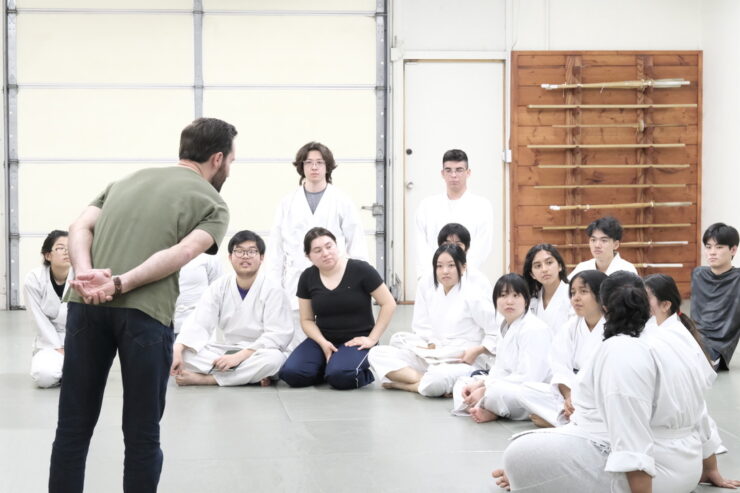
As most of you know, in addition to serving as Executive Editor of Aikido Journal, I’m also the co-founder and CEO of Budo Accelerator, a nonprofit with a very clear focus: to help young martial artists carry what they build in the dojo into the rest of their lives. We’ve been running programs in Southern California, and are about to go national. I wanted to share an update with the aikido community on what we’ve been up to and what’s ahead.
I’ve practiced aikido for 35 years. Over the course of those years, I’ve trained with many young martial artists. I often come across teenagers who stay centered while someone bigger is trying to throw them, or kick and punch them (within the mutually agreed-upon bounds of the practice), but cannot hold the same composure in a room with an adult who outranks them in social status, position within an organization, or just plain power. I’ve also met young people who build a network of friends, mentors, and connections on the mat, but never realized that they could translate that skill into the professional world.
Martial arts schools develop people by forging discipline, respect, courage, and integrity. Teachers have been doing this important work for a long time, and most do it well. What’s largely been missing is the bridge from the mat into the rest of one’s life.
We have been building that bridge in Southern California for over five years. One of our students trained aikido and studied game design at UC Irvine. At one of our speaker events, she met the head of a game studio. That became an internship, and then a full-time job. She’s a producer at Take-Two Interactive now. As she put it: “The program didn’t just teach me leadership; it opened the door to my career.”
Hers is one story of many.
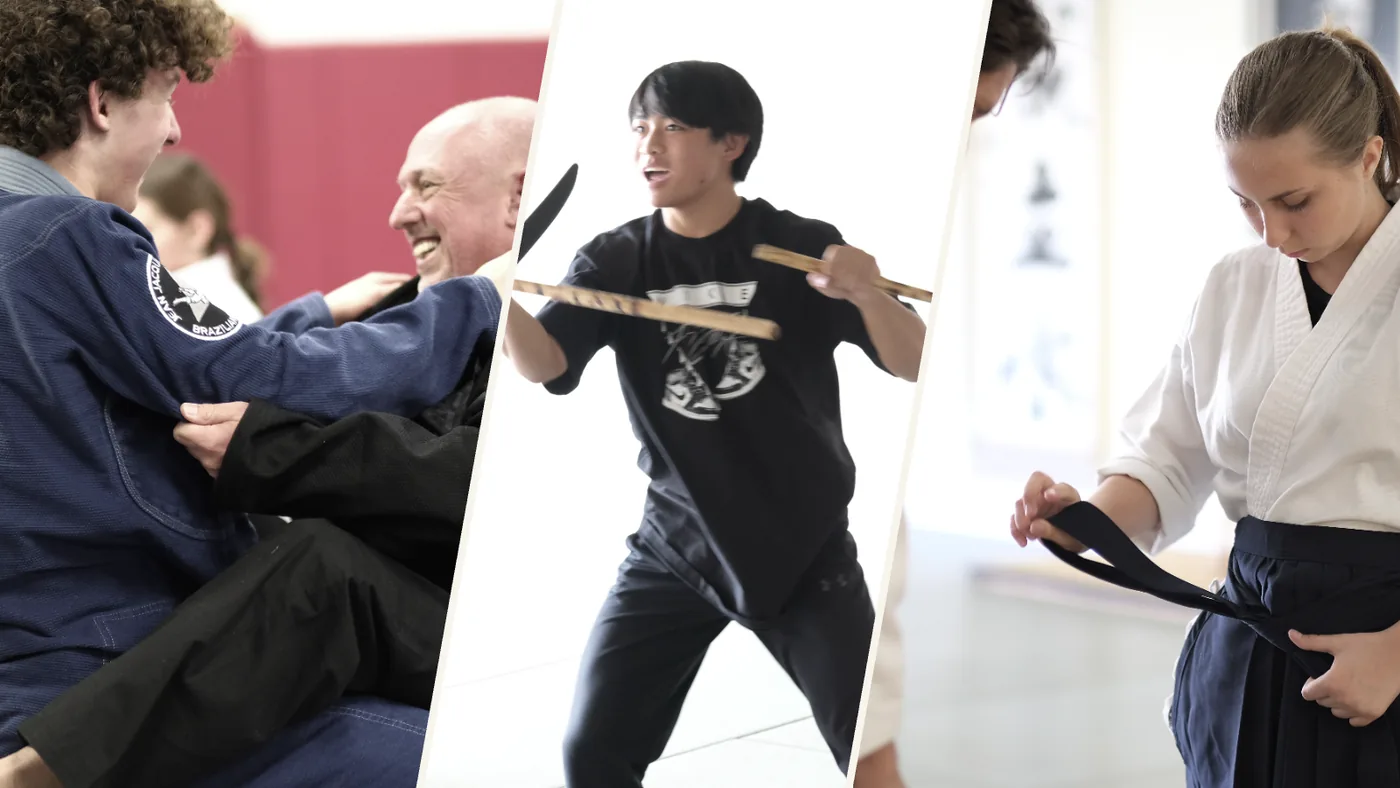
We’ve taken what produced those results and rebuilt it as a year-round program for high school and college students who practice martial arts. They keep training with their own teacher, in whatever art they already train. If a student doesn’t train yet, we help them find a good school near them. Each week we give them one leadership idea to work with, something to watch for or try with it on the mat and in daily life, and somewhere to say what came of it, in writing or on video. They share that with a community of other young martial artists across the country and across arts, which is something no single school can give a student on its own.
Most martial arts teachers have always known the training does more than teach technique. But a dojo is closer to a temple than a classroom, and the hours on the mat belong to the art and to the people who train it. That immersion is the point, which is why the class itself is not the venue for teaching the rest of it. That work belongs off the mat. That is what we built.
Coming soon
On September 24, our first cohort begins: about fifty students at UC Irvine. They’ll earn academic credit for taking the program, and will help us test and improve it before it opens more widely. In the first quarter of 2027, the program opens nationally, to any young martial artist at any school, with scholarships for students who need them.
Dojos have been asking when they can bring this to their own students. We are close to being able to say yes.
A lot of people got us here: our students and alumni who built the curriculum and community with us, the teachers who gave us their time, and the supporters who funded five years of our existence. Thank you.
I hope you’ll follow along, and if the bridge from the mat to the rest of life is something you’ve thought about, we’d love to hear your perspective. You can reach us directly at [email protected]. If you teach and your teens have been thinning out over the years, write back and tell me what you have seen. If your mat is full, but you know there are kids a few blocks away who’ll never walk through your door because they can’t afford it, please tell me about that. And if you run a great program for 16- to 22-year-olds, I want to know what makes it work. That one is worth answering in public — leave it in the comments and other teachers will see it too.
And if you know, or are, a student who belongs in the first national cohort, we’d love to connect.
Best regards,
Josh


 Antonio Aloia




Add comment