
 Josh Gold
The following article was prepared with the kind assistance of Tomas Reiche of the USA.
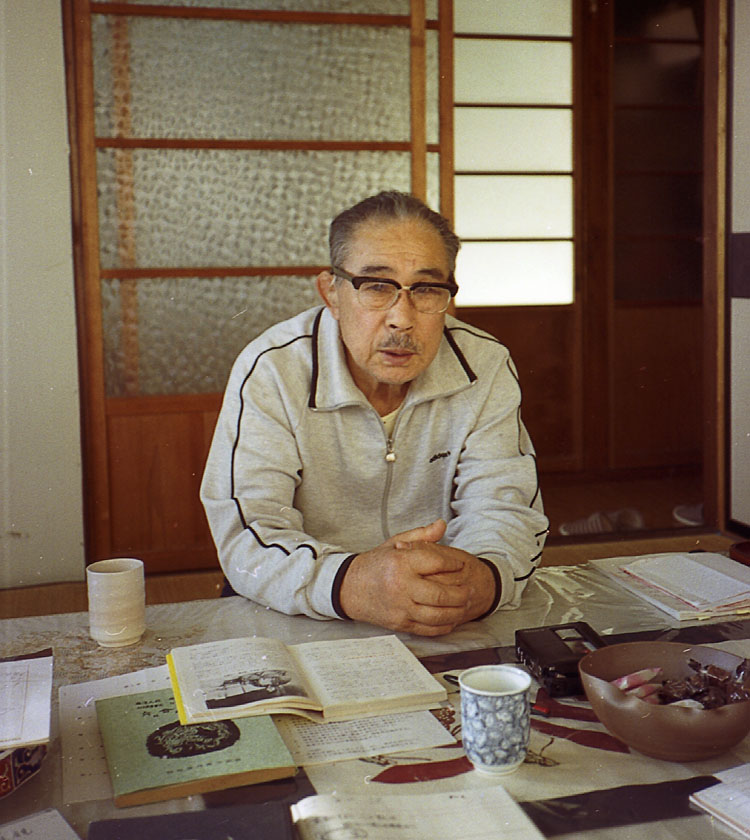
“A culture is born in a given nation. However, once it has developed and become internationalized, it suddenly vanishes as if by magic from that nation and never again returns.” (Passage translated from the Japanese) This is a statement of Dr. Arnold Toynbee, a British historian and philosopher.
I imagine that numerous aspects of Japanese culture have influenced the world. Certainly one of them is the book entitled *Theory of the Way of the Japanese Warrior* or *Bushido* written in America during the first half of the Taisho Period (1912-1925) by Dr. Inazo Nitobe (1862-1933), an educator and specialist in agricultural administration. His book has been translated into the major languages and has been a perennial bestseller. I personally saw the impact of this book when I visited Europe 37 years ago in 1951.
Since the news of the suicides of Japanese military officers such as Mr. Anan, the Minister of War, was fresh in people’s memories, it seemed to have given many abroad the impression that *seppuku* (suicide by disembowelment) was an everyday event in Japan. On more than a few occasions I was asked the proper way of performing “harakiri” by martial art practitioners since I was teaching iai and *kumitachi* (paired sword practices) in addition to Judo. Fortunately, I had been taught by my teachers various ways of performing *harakiri* – using a long sword, a short sword, horizontally, making a cross or a simplified cross and about the depth of the cut. In any event, the morality of the Japanese warriors was highly regarded in relation to European chivalry.
Although the warrior ethic disappeared in Japan some time ago, the martial arts that coexisted with the system of ethics have become internationalized as “budo”. In France alone, there has been an increase of one hundred thousand martial art practitioners during the last ten years. On a world-wide scale more than a million new people have begun training of the martial arts in the last decade. However, the number of Japanese instructors has decreased to approximately one in ten, most of the teachers being of the country in question. In addition, Korea has placed great emphasis on the training of martial art instructors at national expense and is actively exporting them outside of Korea, thus accelerating the decrease in the number of Japanese teachers. However, Japanese and Koreans are trained in sport variations of martial arts, which do not have a philosophical basis. Even the older instructors, and the few who have practiced authentic martial arts are mostly individuals who are good in the techniques of throwing and kicking.
That is why I have long been stressing the differences between bujutsu (martial techniques) and budo (martial ways), the relationship between sports and judo and bushido, and an aspect of the philosophy of coexistence of the individual with surrounding society. I know that it was a general tendency for students and the general public including myself to regard philosophical arguments as just dull preaching when Jigoro Kano Sensei was still alive. Even some renowned martial artists called him a boastful teacher. Therefore, although I am not entitled to say, “Young people today don’t understand…” since I used to serve Jigoro Kano Sensei very closely, the teachings I received during that period have been etched in my thinking.
Recently there have been discussions between the United States and the Soviet Union. Regardless of whether the reasons for such talks are economic or concern over the threat of atomic power, it seems to me that all of those who consider themselves to be martial artists should immediately understand and grasp the concepts that every form of exclusionism is a crime and that there is only one way for humankind to survive in the future, that is, through coexistence. That is why I urge the establishment of the philosophy of coexistence, for the sake of the preservation of mankind. Jigoro Kano Sensei once said that martial artists should all be social educators on the street.
#### Minoru Mochizuki Profile
Having begun Judo training at age 5, he enrolled in the Kodokan Dojo in 1925. A favorite of Jigoro Kano, Founder of Judo, he also studied with Morihei Ueshiba from 1930. He was the first to teach Aikido abroad travelling to France in 1951. He created a composite martial art called Yoseikan Budo with elements of Judo, Aikido, Karate and Iaido. He presently teaches in Shizuoka City while often travelling overseas.






Add comment