
 Josh Gold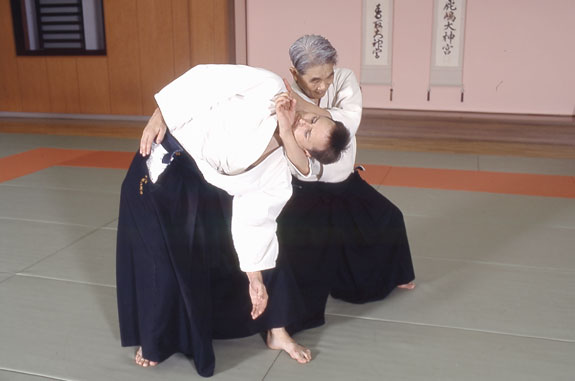
The young are often moved to action by heroic images. Like their heroes, they long to become strong and just. As they are young and inexperienced, the path most immediately obvious to them is that followed by their heroes before them. Uncritical imitation is the first step in the quest of the young to become like their heroes.
From time in memoriam, the warrior-soldier is the most likely candidate for a culture’s heroes in that most nations have armies and engage in warfare. In our modern world, where the actual battles now take place in third-world proxy nations, the martial artist has risen to the warrior-soldier level in the eyes of our young due mainly to the impact of the mass media.
Turning back the clock to war-ravaged Japan of 1945, the image of the martial artist would overnight supplant the soldier/hero who had gone down to defeat in the devastating conflict just ended. The choice for the 18-year-old Shoji Nishio would be to continue his training in judo in order to develop his body and become strong like his martial heroes.
Born in 1927 in Aomori Prefecture, Nishio made his way to Tokyo as a teenager to work just prior to the outbreak of the war. He soon took up judo at a local dojo in order to improve his frail physical condition. When the war ended, training in martial arts was severely limited by the occupation forces and the famous Kodokan Judo headquarters had all but ceased operations.
Gradually, as troops repatriated to Japan after the war, activity at the Kodokan picked up and Nishio was able to resume his judo training. An enthusiastic, hard trainer, he steadily rose through the ranks eventually receiving a 4th dan. However, Nishio found himself dissatisfied with judo because of the compromises made to the art’s techniques to accomodate competition.
As a supplement to his judo training, Nishio took up karate in the late 1940s under the famous Yasuhiro Konishi (1893-1983), founder of Shindo Jinen Ryu. Nishio practiced karate for several years through 1952, but also found this art limited for similar reasons. There was a strong initiative afoot to modify the traditional techniques of Okinawan karate to bring this art into conformity with modern budo forms—primarily judo and kendo—which had been converted into sports.
By the mid-1950s, aikido was undergoing steady growth as many branch dojos, and university and company clubs sprang up all over Japan. Nishio began teaching more and more on the outside and frequenting the Hombu Dojo less and less. He was employed at the Japanese Mint during the day and taught aikido at night at various locations in Tokyo and its suburbs. Nishio’s network of dojos practiced methods that were widely seen as a deviation from the standard curriculum of Hombu that was based primarily on the approaches of Kisshomaru Ueshiba and Koichi Tohei. He did, however, maintain close ties with the headquarters organization and regularly participated in large aikido demonstrations and social events. The founder Ueshiba and his son would often appear as guests at the functions of Nishio-affiliated dojos.
When Nishio retired from his job with the government mint in 1980, he was an aikido 8th dan, iaido 7th dan, judo 6th dan, and karate 5th dan. This signaled a new era as he was free to devote full time to aikido instruction. His activities were not only limited to Japan, but he also made frequent trips to Scandanavia, the USA, and various European countries, in particular, France. Nishio maintained an active teaching schedule including regular trips abroad for some 20 years. Declining health gradually caused him to curtail his activities in the last years of his life.
Nishio Aikido
Technical
Nishio’s technical legacy is totally unique. Although Morihiro Saito’s aikido also included the use of the sword and staff, what Saito did was to preserve and formalize the founder’s weapons techniques with little modification. Nishio, instead, mastered the basics of several of the modern weapons systems from which he drew many elements in addition to his prior experience in judo and karate.
What then emerged as Nishio Aikido is an amalgamation of elements drawn from judo, karate, iaido, and jojutsu built on the aikido technical framework and philosophy. To supplement his martially-oriented taijutsu or empty-handed techniques, Nishio also developed an elaborate series of sword, staff, and iaido variations.
What are the basics of his system? “In my dojo I teach how to grab, how to stand up, how to swing the sword, the tsuki and oblique stance (hanmen) and yokomen. Proper grabbing, proper swinging and striking are transformed into atemi instantly.”
The highly-principled concepts of aikido take on a physical dimension in Nishio’s aikido. For example, one should adopt a natural stance when confronted by an adversary. “If you stand naturally you can enter immediately when it appears that your opponent is about to move. When your opponent moves you have already won.”
Applied in a social context, the natural stance might be akin to maintaining silence in a verbal exchange until your conversation partner expresses what he wants to say as opposed to arguing with him. Not having defined one’s position allows one to listen to and consider another’s intent and desires before acting. “Human beings should not fight. They should instead love each other, help each other, and complement each other. By doing so, they create a humane world.”
Another important concept is the matching of breathing in unison with the opponent. “We don’t disrupt the opponent’s breathing because, in the aikido way, the opponent changes his breathing and we adjust our breathing accordingly.” Breathing is the key component of the process of unification with an opponent and corresponds to the breathing employed when using the sword which serves as the basis for Nishio’s atemi.
While atemi or “preemptive strikes” have fallen into disuse in mainstream styles of aikido, Nishio saw their employment as essential to the success of aikido techniques: “I regard atemi as the soul of Japanese martial arts. Atemi temporarily neutralize the opponent’s fighting ability and allow him to correct his attitude and return to his previous condition.”
Aikido is a “budo,” a “martial way,” and therefore inextricably rooted in “jujutsu” or “martial technique.” Yet when I look at the aikido world today, I see very little “budo-ness” being expressed in technique, and I wonder if people haven’t begun to forget these important roots…”
Aikido—Yurusu Budo is a comprehensive look at Nishio Aikido and present the key principles of his art through the presentation of gyakuhanmi, aihanmi katatedori, sodedori, katadori menuchi, shomenuchi, and yokomenuchi techniques. Both empty-handed versions as well as techniques using the sword and staff are covered.
Conclusion
In the annals of aikido, there are perhaps ten or so teachers who have commanded universal respect for their high level of skill and major contributions to the spread of aikido. Among this elite list of exceptional figures who have left an indelible impression on today’s aikido, Shoji Nishio stands out as one of the foremost technical innovators and strongest proponents of the founder’s philosophy.





Great article… Thanks