
 Josh Gold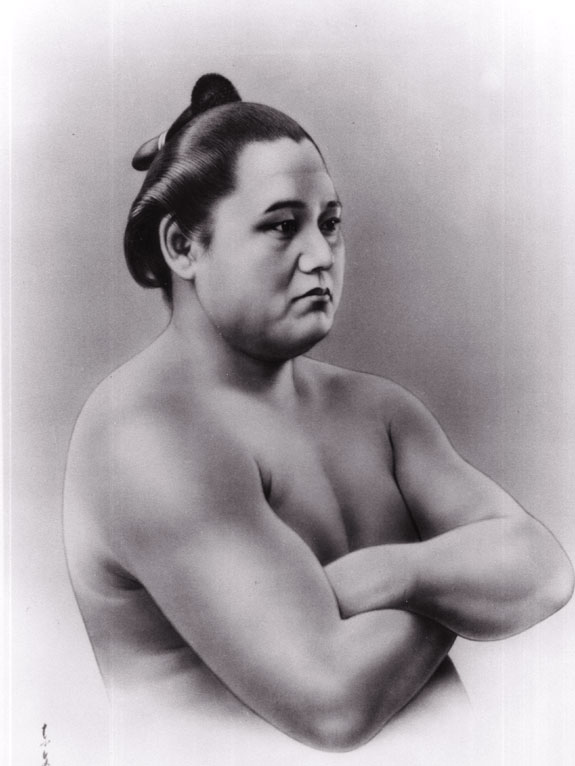
From Aiki News #66 (February 1985)
The following is a chapter summary printed with the kind permission of Mr. Kisshomaru Ueshiba, Aikido Doshu based on the original Japanese text which was published in 1977.
Manchukuo was founded in 1932, and though I don’t wish to discuss the politics of it here, the Founder had both a direct and an indirect relationship with Manchukuo. He was an advisor to the Manchukuo Martial Art Society and to the Shinbuden Budo Training Center, as well as a martial arts advisor at Kenkoku University. The number of his acquaintances among the military, government and people of Manchukuo becomes quite large if we include everyone related to the spread of aikido there.
Manchuria and Mongolia were emotion-filled places for the Founder. He was called a “soldier kamisama (deity)” when he went there during the Russo-Japan War (1904-5) and, later, he survived the ill-fated expedition there with Master Onisaburo Deguchi of the Omoto Religion. Thus his feelings toward this area must have been quite different from most Japanese in Manchuria.
Demonstrations in Manchukuo
In April of 1942, a martial arts demonstration was held there to commemorate the tenth anniversary of the “Founding of the Nation.” The demonstration took place in the great dojo of the Shinbuden, and “Emperor” Puyi (“The Last Emperor”), the Prime Minister, and other military and government dignitaries as well as famous civilians attended as guests. Only the greatest Japanese experts and masters of the day were invited to demonstrate. Of course the Founder was among them. A high level of skill was exhibited, and the Founder attracted the interest of all. This was partly because not very many people had actually seen his art despite the Founder’s fame. Emperor Pu-yi is said to have been the first to stand to give his applause.
This was the third demonstration that the Founder gave in Manchukuo. The first was in 1939, the second was in the following year at commemorative events celebrating Japan’s “2,600 year Anniversary.” It was at the first demonstration that the Founder met former professional Sumo wrester, Tenryu.
After the offical event, the Founder was requested to demonstrate in a dojo located in the Central Bank. Mr. Yoichiro Inoue served as his partner. However, some of the assembled martial artists doubted the authenticity of the Founder’s graceful presentation. The Founder sensed this and suggested that someone from the crowd challenge him.
Encounter With Tenryu
Everybody felt that Tenryu would be good. Ex-professional Sumo wrestler Mr. Saburo Wakuta, better known by his Sumo name “Tenryu” got up in front of the Founder. Young Tenryu had been drummed out of the sport in the early 1930’s after attempting to reform the antiquated system. By 1938, the “rebels” finally conceded defeat and Tenryu went to Manchukuo where his innate abilities enabled him to become the Managing Director of the Manchukuo Martial Arts Association. The Founder recognized him when he stood up, “Hmm, so you are the famous Tenryu!”
Let me quote from the “Aikido Newspaper” of November and December 1964, in which Tenryu wrote about their 1942 match.
(Partially quoted) …I thought to myself, “This old man isn’t much of anything.” As you know he is a small-built person. However, as soon as I casually took hold of his arm. I could sense from my experience in Sumo that this man was really something. It felt as if I had grabbed an iron bar. I wanted to acknowledge defeat right away, despite the fact that everybody was watching. Then Sensei said, “You go ahead and do anything you want with my hand. You can twist it, push it or wrench it. I am not putting any strength in it.” So I again went to grab it with all my might. Sensei then instantaneously evaded and before I realized it I said, “I’m beaten. Till now I had harbored a little doubt about your ability but your kokyu and the power you just showed have made me realize everything. Please allow me to become your student.‘ Sensei then replied, ‘I appreciate a person like you asking in such a frank way. I will allow you to be my student.
In his memoirs, Tenryu wrote more:
In those days I was a bit too proud and nonchalant but my ego shrank when I faced the inexplicably strong, secret martial arts technique of Moritaka Ueshiba Sensei. He was already past sixty and I faced him with some confidence in my ability at empty-handed technique. However, the moment Sensei’s hand touched my arm, my whole body was paralyzed, and I asked for permission to join the Kobukan dojo in Ushigome Wakamatsu-cho.
Tenryu Becomes O-Sensei’s Student
Starting the day after I arrived (in December of 1939) I practiced my hardest, both morning and evening, hoping to finish the regular six-month program in about two months. The training tormented me so much that practicing Sumo seemed to be no comparison. The sixth day after I joined I fainted in the dojo. However, after about three weeks, Sensei praised me for my outstanding improvement.
The Founder always recalled the wrestler with great nostalgia saying that he was such a nice man. He even took Tenryu to practice at different places, a very unusual honor even for many long-time live-in students. It showed great trust and how much the Founder liked Tenryu.
Training on Kurama Mountain
The Founder once took Tenryu to the famous Mt. Kurama in Kyoto. Tenryu related in his memoirs how the Founder helped him realize a “secret teaching” of aiki:
Sensei said, “Let’s get up at three tomorrow morning and climb Mt. Kurama.” At some stone steps Sensei said, “Tenryu, now is the time to be kind to old people you should push me up from the back.” Imnediately Sensei leaned back against my hands and I started to push him up. About half way up we took a break. I was already dripping with sweat and panting for breath. Sensei said, “You are still not there yet. Well, from here on up it is steeper. Try again, and this time think a little more about breathing.” I was startled. I thought I became tired because I had been pushing Sensei. This time I climbed the way he told me and I did not feel the “steeper” steps, or pant for breath or sweat.
Every time Sensei said something it was true. Every word was a teaching of the Way. He gave me a little hint and when I reached the next step, said “Fine.” All of this I felt I understood with my body.
The next morning, again at three, we went there with two wooden swords. It was pitch dark and I couldn’t see very much but I attacked him frantically. Each time I was thrown on the fallen leaves. I could not see Sensei but Sensei seemed to be able to see me. However, by the third night, I started to see Sensei’s movement and I was able to attack him easily. I rejoiced. At dawn Sensei said with a smile, “Good. That’s enough. Your training is finished.” So I got permission to return to Manchukuo feeling as though I had been reborn and purified.
Kenkoku University
Another especially important relationship of the Founder was with Kenkoku University. The late Mr. Kenji Tomiki, whom I referred to in the previous chapter, was a professor at the university and instructed aikido for the last few years before the end of the war. Mr. Shigenobu Okumura, a shihan at the Hombu Dojo, and Mr. Shintaro Hayashi, once a bureau director in the Ministry of International Trade and Industry, are among the distinguished men to come from that club. The Founder instructed there a few times while he was in Manchukuo. Mr. Hayashi spoke about those occasions:
“Sensei’s teaching stated, ‘Always put yourself in a natural stance with one hundred percent freedom.’ This is still engraved on my heart where it serves as a basis for my way of life.”
(Translated and summarized by Larry and Seiko Bieri)






Wonderful!