
 Josh Gold
At the end of 1963, Hozansha Publishing Company put out a book in English titled Aikido by Kisshomaru Ueshiba that had a major impact on the tiny aikido population practicing in America. This book was a compilation of material appearing in the early Japanese-language Aikido and Aikido Giho by the same author. In addition to the several dozen techniques presented, this book had a few pages devoted to the history of aikido. This initial glimpse of the life of Morihei Ueshiba’s impressed me deeply and I remember reading the text over and over again. Another important section of the book was a 4 1/2 page section titled “Memoir of the Master.” This consisted of a series of maxims attributed to Morihei Ueshiba that encapsulate his moral and spiritual vision and the purpose of aikido.
Although the translated English of the text is imperfect, these paragraphs are profoundly inspiring for their moral depth and original thinking, particularly when viewed from a Western standpoint. The idea of a martial art, normally associated with fighting and violence, being conceived as a tool for peace struck a responsive chord in me for it set forth a series of ethical principles that has served as a guide for me ever since.
A couple of examples of O-Sensei’s words provide an idea of the idealistic content of “Memoir of the Master”:
“True budo is the loving protection of all beings with a spirit of reconciliation…”
“True budo is a work of love. It is a work of giving life to all beings, and not killing or struggling with each other…”
If you read through these aphorisms carefully you will realize that the founder is offering a veiled criticism of the destructive use of budo during Japan’s militaristic era. It would become apparent to me much later that the language used in “Memoir” had been edited to eliminate references to Shinto and Japan’s imperial past and “universalize” the vocabulary for consumption by a postwar readership. Many aikido schools printed up little booklets containing these paragraphs for distribution among their members. In those days, most of the aikidoka in the USA and other English-speaking countries were reading “Memoir of the Master.”
Of course I thoroughly enjoyed aikido training, but the added dimension of a strong spiritual foundation that aikido offered was deeply satisfying to me in a moral sense.
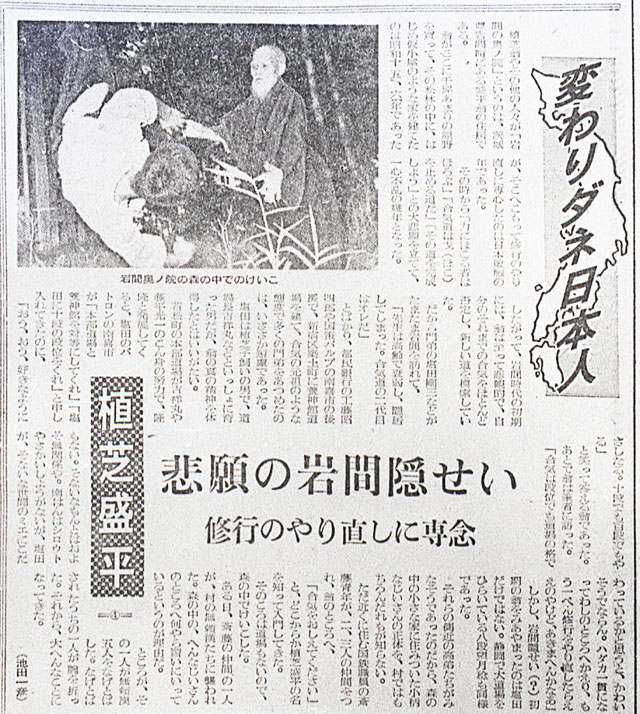
Several years later, another incident occurred that presaged the future course of events that would lead me into the field of publishing on aikido-related topics. In the fall of 1968, I had become a doctoral student at the University of California at Berkeley. At that time. a psychology professor and aikido practitioner, Dr. Robert Frager and I taught the university aikido club jointly. Bob had spent about two years in Japan in the early 1960s and received instruction directly from O-Sensei.
Somewhere along the way, he had picked up photocopies of several articles from a series of biographical newspaper articles on the life of the founder written in Japanese. The title of this series was “Kawaridane Nihonjin” (Exceptional Japanese) and these articles were authored by a certain Kazuhiko Ikeda. These articles were extremely important because they contained the most detailed information on O-Sensei’s life available up to that point. This was before the publication of the first Morihei biography. It was clear to me from reading the texts that, even though written in journalistic style, the writer had talked extensively with O-Sensei and certainly his son Kisshomaru as well.
Bob had these articles translated into English but there were many errors in the translated texts so I decided to have a go at it myself. My Japanese wasn’t advanced enough at that stage to do the job alone, so over a period of time, I worked with a succession of Japanese friends who helped me render the texts into English. Later I located the missing articles of the series in the National Diet Library in Tokyo on my first trip to Japan in 1969. It took me until about 1972 to get everything translated, but those 17 articles about Morihei Ueshiba were the seed that eventually bloomed into my little newsletter “Aiki News” which first appeared in April 1974.
Relocating to Japan
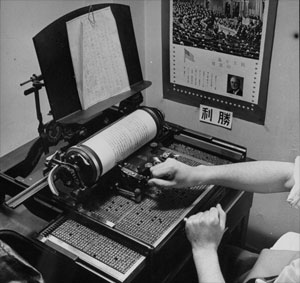
Starting in the late 1970s I began systematically interviewing the early aikido pioneers who studied with the founder before and soon after the war. Issues of Aiki News were centered around these interviews. Each number contained an interview, an editorial, and a technical series until the early 80s when, little by little, we started adding more content.
Ikuko Kimura, today the Editor-in-chief of Dou joined my staff about 1982 and has worked continuously since that time being the person most responsible for the present form of the transformed Aiki News.
From magazines to books and events
The mid-1980s were important times for Aiki News because we began we began publishing books on aikido and sponsoring events such as the Friendship Demonstrations held between 1985-1988. Through such activities we were gradually able to enlarge our sphere of influence in the aikido world and produce a constant stream of information on the life and work of Morihei Ueshiba to an international audience.
Relevance of history
Throughout my professional career there have been from time to time people who have voiced a criticism of our emphasis on research into the founder Morihei Ueshiba and related historical subjects. Their thinking goes something like this: why do you spend a disproportionate amount of time researching O-Sensei and his early students when all of these people are long dead and belong to the past? Aikido is a dynamic art that has spread all over the world and there are many masters today who are more worthy of attention. Why don’t you spend your time focusing on them and what is happening today?
My response to this line of thinking goes as follows: to be sure, the founder and his contemporaries are long gone, but they lived their primes during a tumultuous era of Japan when those training in the martial arts faced the looming specter of war. These people who stared death in the face, even as civilians, with the endless bombing raids of World War II, lived to tell us their first hand experiences of the horrors of warfare and its devastating consequences. Those who live their lives under such conditions had a different view of the world and they approached their study of the martial arts with a sense of purpose born of necessity.
In contrast, the modern generation have, for the most part, lived during peaceful times. Their aikido has been influenced by the ubiquitous sports mentality where martial arts either tend to be regarded as competitive activities for the young or as leisure activities for the general population. Neither setting produces the same seriousness of intent or focus of earlier generations exposed to physical danger.
Also, as I have repeatedly pointed out in previous articles, aikido was “defanged” after the war due to a backlash in Japanese society against any institution or activity associated with the nation’s military past. A softer, even casual mentality came to become accepted as the norm for aikido practice. While such an approach to training may develop physical fitness and provide pleasant social interaction, it doesn’t not develop serious martial artists. It is for these reasons that I have been so strongly drawn to the founder, his contemporaries, and the turbulent times in which they lived.
There is another observation I would like to make for those who fail to see the relevance of history. Consider this: any information that reaches us is, in a fundamental sense, already part of the past. We regard something that took place a few days ago or even a few years ago as “contemporary,” and events that have taken place decades, centuries or millennia ago as “historical.” However, I would submit that the distinction is arbitrary and that what really matters is the quality and usability of the information we process rather than its chronological age.
For example, a news report about a recent event might be inaccurate and misleading and be of little value. In contrast, an historical account of a happening that occurred long ago might be skillfully written and eminently usable in the sense that it gives the reader deep insight into the minds of men, their actions and their institutions. If the content speaks to universal principles of human action, it is always of relevance regardless of age. If not, it is just meaningless noise.
Of course, none of this implies that it is not worthwhile to document outstanding contemporary practitioners of the art and we have and will continue to do so. But neither does it imply that we should neglect and relegate the founder and aikido’s early luminaries to the wastebin of history. Somewhere in between lies the balance.
Where do we go from here?
Personally, much of my field work in Japan has been completed as I have spent more than 30 years retracing the footsteps of Morihei Ueshiba. At the present time I am in the midst of organizing the mountain of material I have collected over the years looking for new insights and perspectives that will help to better explain the epic work of O-Sensei in the creation of aikido.
As we are now in an Internet age, most of my personal output is in electronic form through the Aikido Journal website as opposed to printed media. The ease and rapidity with which it is possible to reach out to a worldwide audience through the Internet has created a true revolution in our times. It is my intention to continue availing myself of this wonderful new tool and continue to tell this eternal story.
This article appeared in Japanese in “Dou Magazine” about 2005 and was never published in English.
_______________________________________
The Morihei Ueshiba Founder’s Course is O-Sensei’s video legacy starting in 1935 and covering a span of 34 years until just before his passing in 1969. Besides the more than 30 films of the Founder, the course includes three rare audio interviews of O-Sensei with complete subtitles. These are wonderfully intimate conversations with the Founder that convey his bright personality, playfulness and sincerity. In addition, the course includes a series of video documentaries by Stanley Pranin on the life of the Founder and the spread of his art worldwide.
Click here to see Morihei Ueshiba in action!






What you have stated in the part “Relevance of history” rings so true. A part that I keep reminding myself and had become a topic of many discussions with other practitioners.
An honest, intelligent, and insightful reminiscence, Stan. I will make a point of re-reading it on a regular basis. Many thanks for your long involvement in elucidating an extraordinary man and his extraordinary art! — Rick Triplett
Thanks very much for your feedback, Rick!