
 Josh Gold
“The quickness in Aikido is beyond seizing the initiative.
It is ‘katsuhayabi‘, a speed that transcends space and time.”
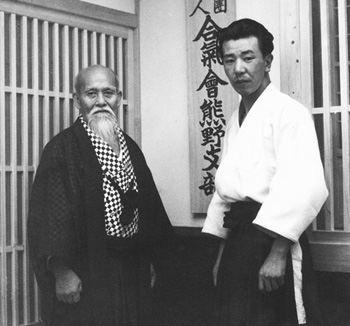
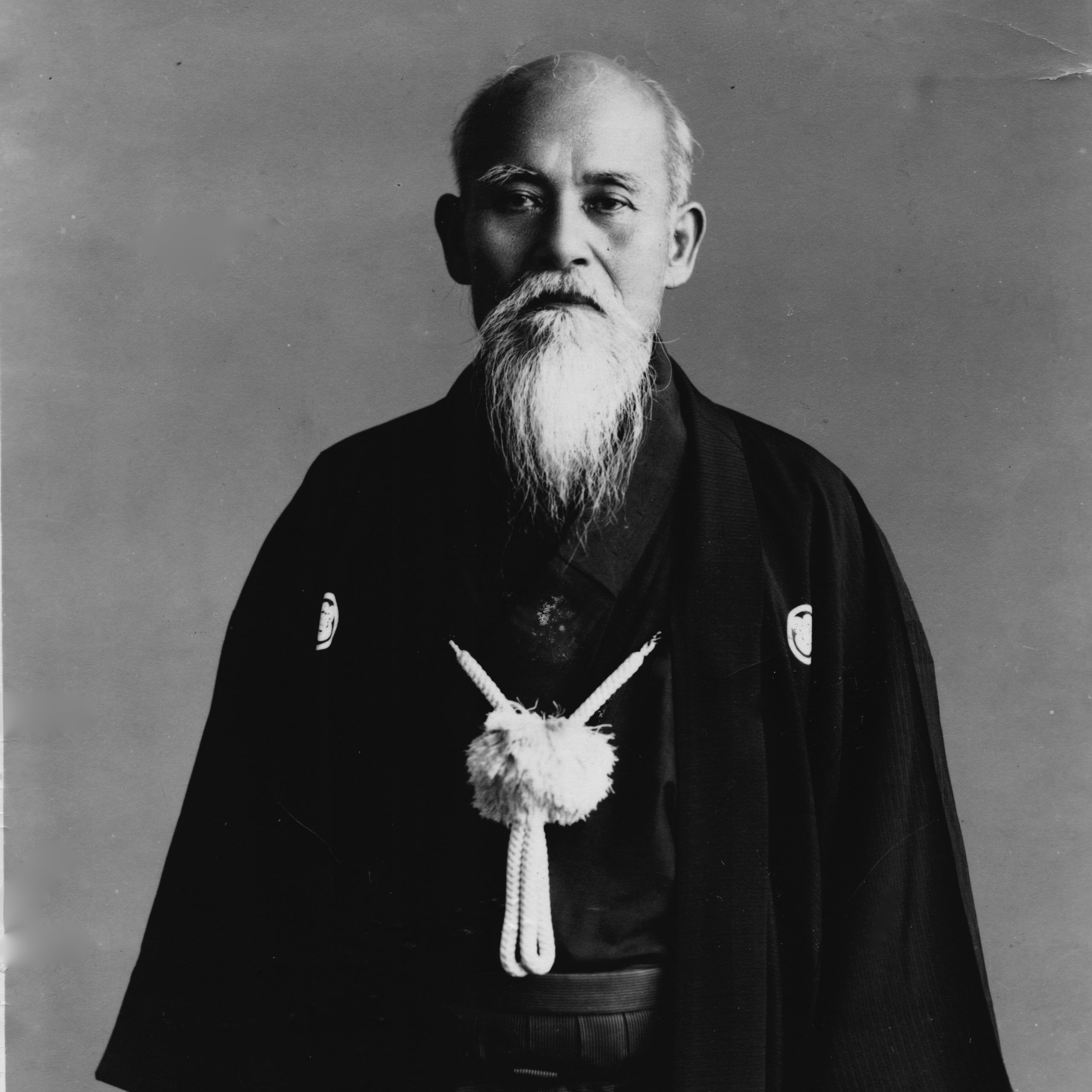
I frequently mention the problem that all of us who practice face in attempting to understand the thinking and techniques of Aikido Founder Morihei Ueshiba. O-Sensei’s speech was full of metaphors and drew heavily from the Kojiki and Nihon Shoki, ancient books containing collections of Japanese creation myths. The Founder was also heavily influenced by the preachings and writings of Onisaburo Deguchi, the spiritual leader of the Omoto religion.
When postwar Japanese heard the Founder’s odd way of speaking, they understood little and tended to reject the content of his lectures and his method of expression as the gibberish of an old man. It was an era in which many Japanese remained disillusioned with anything that recalled the prewar mentality and militarism that led to the destruction of the nation in World War II.
The Aikikai — the dojo Morihei Ueshiba founded — struggled with this problem and decided to heavily edit O-Sensei’s speeches and delete vocabulary and allusions to mythical tales that would not be understood by modern Japanese. Furthermore, few of the postwar instructors were equipped to deal with this esoteric aspect of the Founder’s teachings of aikido. They were educated in a later era and had little knowledge of these subjects.
However, one in particular, Michio Hikitsuchi, was himself a Shinto priest and well-versed in the language and literary allusions that O-Sensei employed when the philosophy of aikido. Morever, Hikitsuchi Sensei was a devoted student of Morihei Ueshiba and hailed from Wakayama Preference not far from the Founder’s hometown of Tanabe.
As evidence of the closeness of the association between the two, Morihei personally awarded a 10th dan ranking to Hikitsuchi shortly before passing away in 1969.
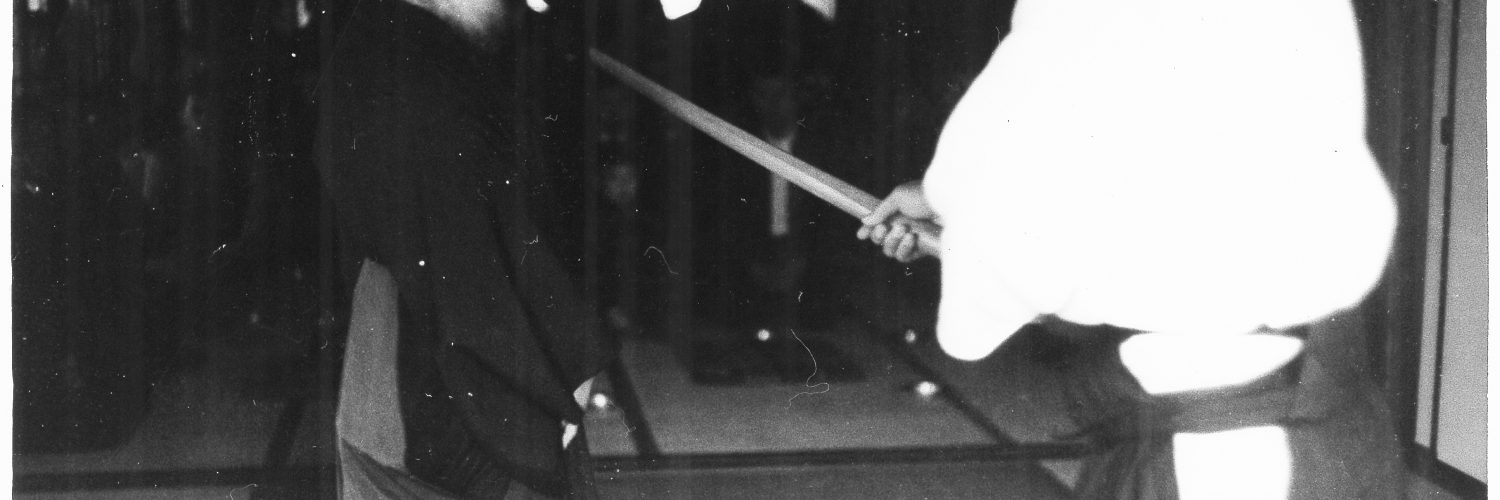
Michio Hikitsuchi was one of aikido’s finest technicians and had also undergone extensive training in other martial arts. He was a weapons’ expert as well excelling in the use of the sword and long staff.
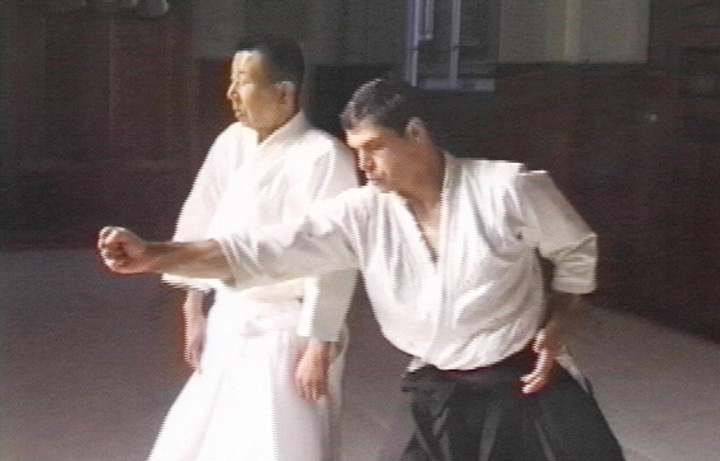
Hikitsuchi Sensei was one of the few who took O-Sensei’s philosophical views seriously and was capable of faithfully interpreting the Founder’s ideas to the modern generation of practitioners of aikido. He mentions the key concepts and principles described by the Founder in words that are universally understandable, even to foreign practitioners unfamiliar with the Japanese culture.
The Aikikai — the dojo Morihei Ueshiba founded — struggled with this problem and decided to heavily edit O-Sensei’s speeches and delete vocabulary and allusions to mythical tales that would not be understood by modern Japanese. Furthermore, few of the postwar instructors were equipped to deal with this esoteric aspect of the Founder’s teachings of aikido. They were educated in a later era and had little knowledge of these subjects.
Here are excerpts from Hikitsuchi Sensei’s explanations of two esoteric terms used by Morihei Ueshiba: “katsuhayabi” and “Masakatsu Agatsu” that are likely to be unfamiliar to most practitioners today:
The quickness we talk about in Aikido is beyond that of seizing the initiative.
In Aikido, we call it katsuhayabi, a speed that transcends space and time.
At the moment the other person stands up, I have already absorbed his entire ki into myself.
The Founder O-Sensei said that in Aikido one must be able to absorb, to sense the entirety of the other person’s being, from the top of their head to the tips of their toes, in the instant he stands up.
It is so fast that when the other person thinks of striking, he finds himself already struck. At the instant he thinks of defeating me, he is already defeated.
That’s what quickness means in Aikido. And that is why matches are forbidden.
There are no rules in Aikido. Aikido is not a sport. Aikido is budo.
Masakatsu means true victory over the fate that has been given you, to unerringly resolve your destiny and carry out your God-given mission in life.
Even when we set out to do this correctly, a person’s heart can change in various ways.
We might be swayed by another person’s enticement, which may lead us in a bad direction.
Agatsu is to defeat the bad, to correctly triumph over the fate that has been given you.
In the beginning, these advanced concepts may puzzle beginners of the art. However, with the passage of time as one’s knowledge and experience improve, I believe you will find that these esoteric terms will take on great meaning and point the way to breakthroughs in understanding the subtlety and depth of aikido.






Add comment