
 Josh Gold
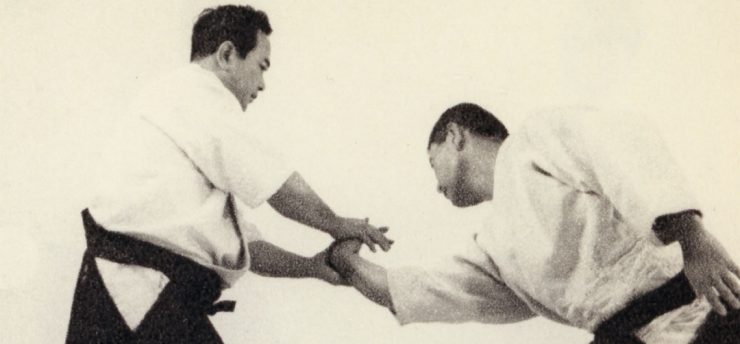
“Some criticize the spectacular high falls from
kotegaeshi seen in demonstrations”
At first glance, kotegaeshi — aikido’s wrist twist throw — might seem among the simpler of the art’s basics. Actually, it requires quite sophisticated skill because at the moment of applying kotegaeshi, you are connected to your partner only at the wrist.
Because of the tenuous connection with your partner, strategic positioning becomes very important. It is extremely difficult to apply kotegaeshi against a resisting opponent when standing in front of him.
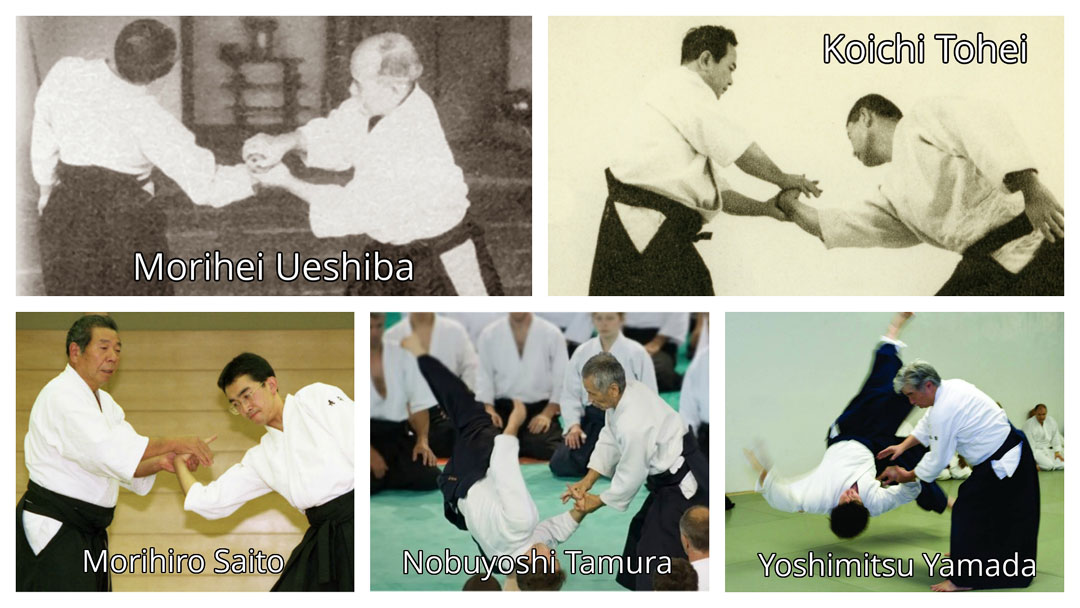
When demonstrating kotegaeshi for beginners, Morihiro Saito Sensei recommends starting practice with a munadori or chest grab attack. This simplifies the setting to allow practitioners to focus on blending with their partner by positioning themselves to the side at a 90-degree angle. Watch this video as Saito Sensei walks you through the basics.
Notice a couple of points that Saito Sensei raises that may differ from what you are practicing now. First, he recommends that you be in a position to apply an atemi to forestall your opponent’s advance. The atemi strike weakens uke’s attack, and when applied vigorously, may induce a flinch reflex. It become much easier to proceed to a throw under these conditions.
Another point Saito Sensei addresses that may be new to you is that you should imagine yourself bending uke’s arm at the elbow rather than attempting to forcibly twist his wrist. The reason for doing this is to take advantage of the precariousness of your partner’s balance by moving to his diagonal rear. In other words, the throw is achieved by disturbing uke’s balance diagonally backward rather than by applying a painful pressure to uke’s wrist which he might be strong or skilled enough to resist.
Kotegaeshi applied at more advanced levels, for example, in a demonstration context has also elicited a great deal of controversy. Everyone likes to make a strong impression during demonstrations, and the kotegaeshi throw offers an excellent opportunity to set up a spectacular throw. Usually what happens is that at the moment the throw is applied, uke turns inward toward nage and then executes a jumping high fall. It is something like a cartwheel effect where uke is flipped all the way over.
While impressive, this practice is often criticized because uke needs a lot of skill to take this sort of fall. Also, if his position is such that he can “jump” into the fall, then one might suspect that he is still in control of his body. There might, for example, be an opportunity for uke to counterattack nage at the moment he is poised to jump into the high fall. This notwithstanding, most kotegaeshi techniques shown in demonstration settings involve these breathtaking high falls.


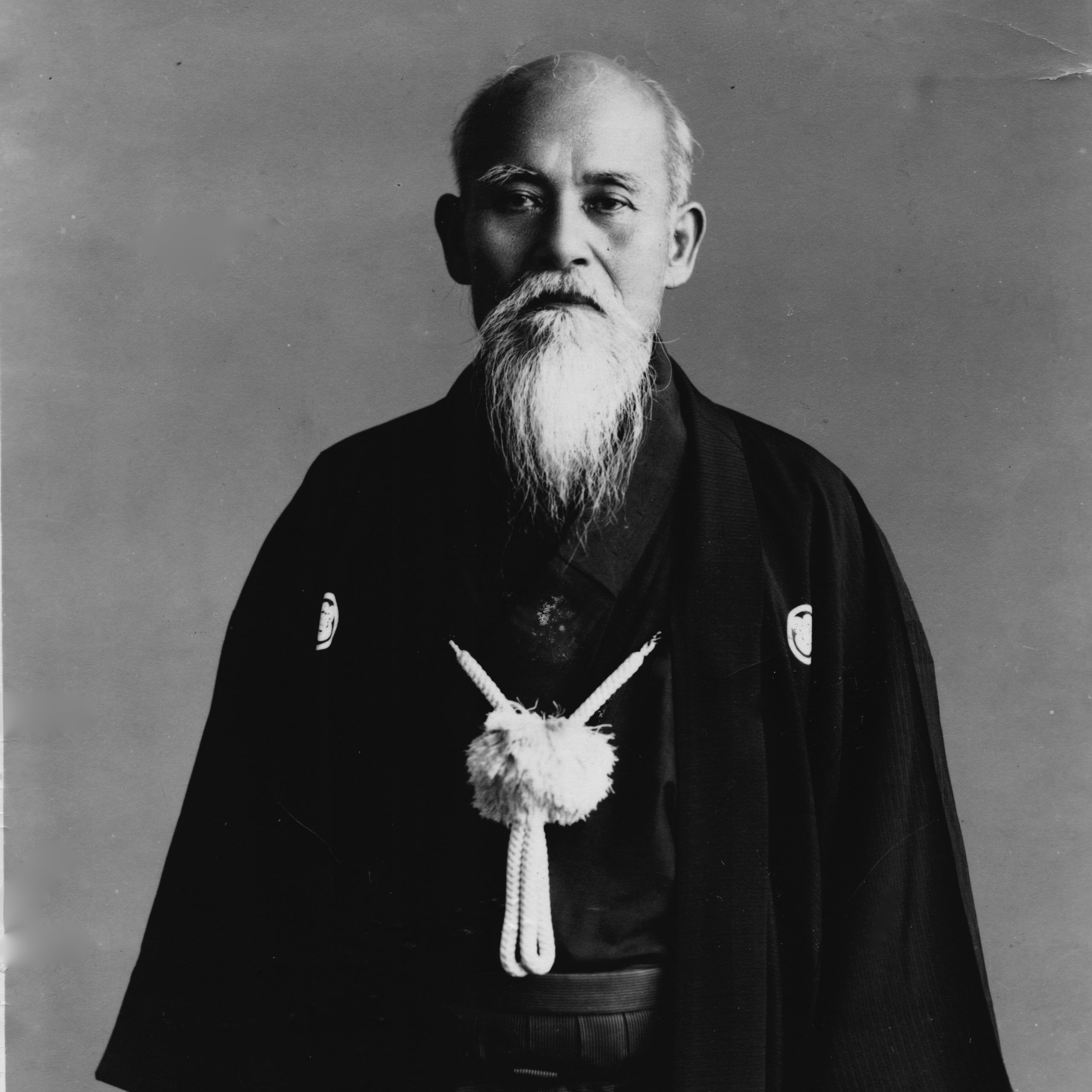




We switched from kotegaeshi to koteoroshi about 1997 in Ki Society circles. Dropping straight down instead of cutting back, this overcomes most resistance to the technique as long as nage remains relaxed and does not force the technique but allows it to happen in conjunction with dropping their one point simultaneously.
Kotegaeshi was how I learnt to take high falls/flip and I still think its great training for uke to regulary have nage allow them to receive in this manner.
The trouble in a martial sense is ukes free hand which can deliver the ‘mother of all hooks’ on the way around.
The memory I have of my Senseis’s (Sugano Shihan) kotegaeshi is that it did not allow this attack by uke’s free hand or the high fall, as not only the fingers but back of hand got pointed straight to the ground in a most authoritive manner…
Perhaps i should study videos of his technique to confirm this.