
 Josh Gold
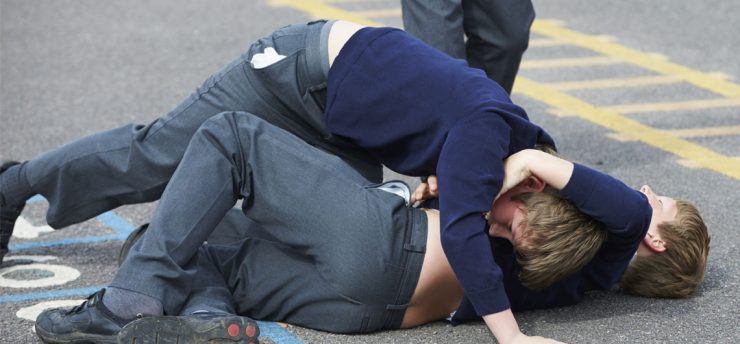
The blog that follows was submitted as a comment to my article title Risking your life to help someone. I found it to be an excellent take on the thorny issue of choosing to intervene in a dangerous situation where you have only a split second to decide on a course of action and know next to nothing about the circumstances. – Editor
The question, as I read it, seemed to be three-fold:
(1) When is it appropriate to intervene in a violent situation?
(2) What factors ought be considered?
(3) What are some good strategies to do so?
There’s no one-size-fits-all answer to any of those questions. The situation as posed doesn’t give us enough to make an informed decision. While some may disagree, many of us would acknowledge that there are rare occasions when someone being “beat down” may actually “have it coming” — and acknowledging that doesn’t mean we condone vigilantism.
Perhaps this is gang violence, where criminals are fighting criminals, or perhaps an initiation is taking place, and outside help might be unwelcome by all? Is it a domestic dispute, where the victim could potentially turn on a good Samaritan? We just can’t know. A judgment has to be made, and we have to be willing to live with the consequences, for better or worse. And when it’s time to act, one has to act.
But, applying what we do know — if we can agree that Aikido is, among many other things, about deflecting hostile energy in a way that is least destructive, then it’s easy enough to conceptualize ways to do this in such situations without engaging the attackers directly. Distraction comes to mind immediately as something anyone can do that can redirect hostile action. Bright lights, alarms, blaring horns — these are things that can capture the attention of assailants, which may be all it takes to convince them to clear off. Or they might not.
If the victim(s) is in bad enough shape that intervention is a matter of life or death, it may be too late for distraction — but a quick hit-and-run attack might get them to cease their assault on their previous victim and chase you instead. But perhaps running isn’t your best option, either.
If it is a foregone conclusion that you must engage a group of attackers, and getting away is not an option, don’t get fancy — stick to basics. Be aware of your surroundings, use them to your advantage, and don’t allow yourself to be cornered or held — you have to move fast, and look to incapacitate — joints, eyes, throats — there’s no dishonor in “fighting dirty” if you’re being attacked by a group that’s intent on harming you. You have to assume it’s a life or death situation.
The decision to intervene most likely needs to be made in haste, and if you are going to assert yourself into a violent situation, you must be all-in, totally committed to “winning”. Making that sort of commitment, on the fly, is not easy to do. Having foolishly done this myself, on one occasion, I can only tell you what saved me from harm. It was not my wisdom or my skill. It was my bearing. It was successfully selling the lie that I wasn’t afraid, that I was totally prepared kill with my hands. My apparent lack of fear was enough to end the encounter without having to fight. I was greatly fortunate – -having made the commitment to involve myself in that situation, there were many ways that could have ended more poorly for me than it did.
At the end of the day, thugs who run in packs to commit acts of violence are obviously cowards. They seek weak prey. Of course, I was scared silly, but I absolutely was prepared to engage them all, and do whatever necessary to protect myself. That sort of confidence can be formidable. But, they might also call your bluff, which can have grave consequences for everyone. So the question is really, do you have sufficient reason to take this sort of risk?
Anyone cowardly enough to roam in packs to fight is also likely to be cowardly enough to stab you in the kidneys, hit you in the head with a bottle, or pull a pistol and shoot you in the back. Even experienced fighters can find themselves surrounded, and in most group attacks, once that happens, they will hit you, probably with weapons, and they won’t stop until you quit moving.
Also, in any altercation, there can be legal ramifications. Until you make the decision to intervene, in this scenario you are not being attacked. Self-defense laws in your state may not cover good Samaritans. Depending on the demographics of those involved and where you live, there may, sad to say, be racial implications that could effect how your involvement is characterized — by witnesses, by police, or perhaps by media — which may in turn create more conflict. Again, one has to be willing to accept the consequences, for better or worse. In almost every case, if you are alone, it’s best to call 911 whether you get involved or not. If you don’t, and you join the victim on the ground, help won’t be on the way. If you’re not alone, you can’t necessarily count on others to think to call for help, so prompt them to do so.
We train our bodies to be able to respond to violence. We try to condition our muscle memory to take over when we need it. But that doesn’t mean that every time we are faced with violence that we have to rely on automatic responses. If you are forced into an encounter where you have no choice but to resort to violence, you have already lost — at that point it’s just a matter of damage control. We’re far better off if we have also conditioned our brains to foresee consequences, so we can choose whether — and how — to engage adversaries with sense and honor.


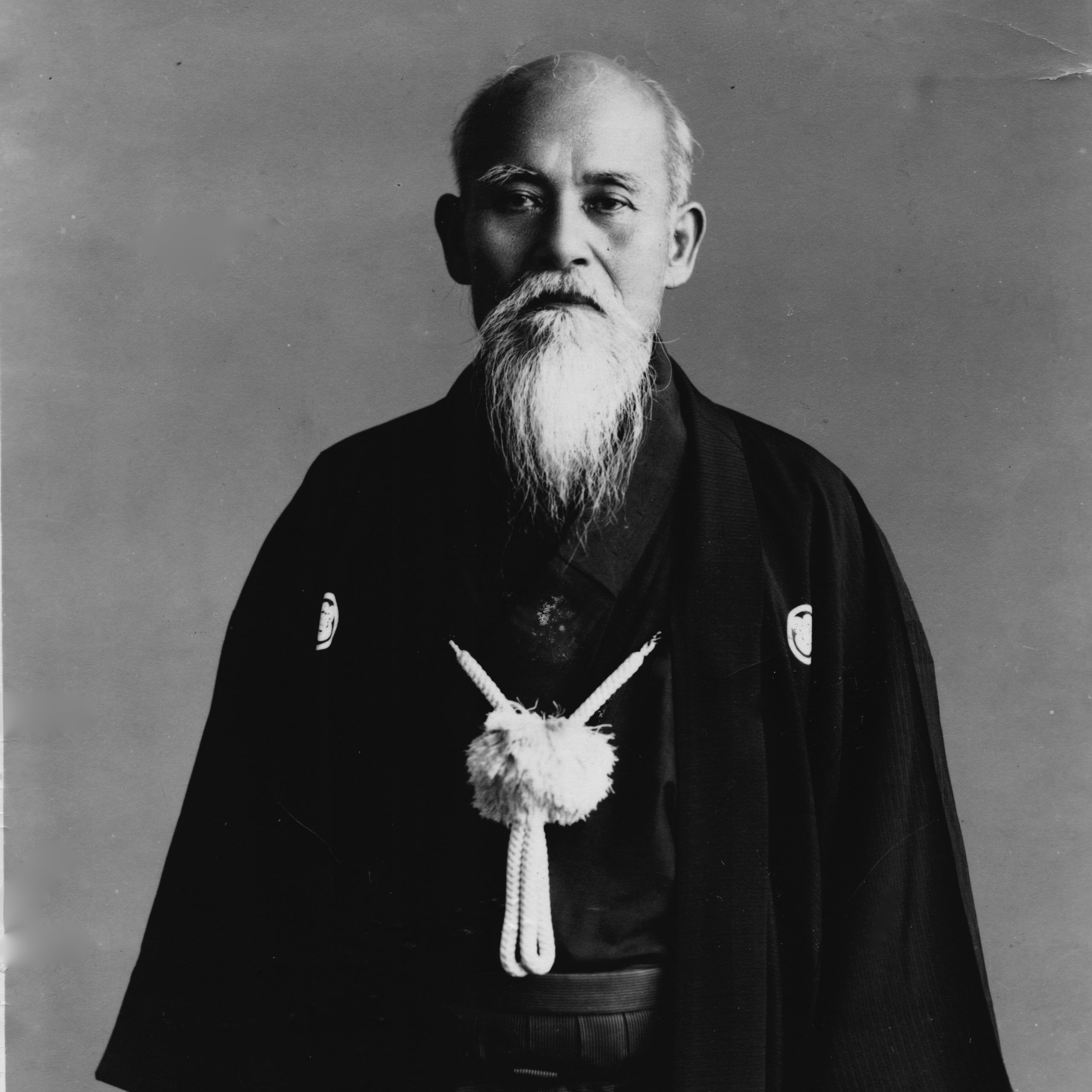




I like the idea of mentioning the police. I even like the idea of calling them then announcing they’re on the way. Response time for 911 dial-a-prayer is found to vary. In the unlikely event you’re armed, I recommend leading with that. Don’t threaten. Do. Takeda Sensei got into a gang fight in his travels. On a dark bridge he got down on the ground and used his sword on anything he saw moving. He snuck away unscathed, and undetected. I won’t recommend how to use a weapon, but sticking around to brag about it is probably unwise.
There are exceptions. I met a fellow who was trying to clean the drug dealers off his street. They put a hit on him. He was mobbed by young teens one evening as he was going out for pizza. At some point one of them asked a pal for “the gun”. The intended victim shot the kid, who at that point was armed. All ran away. The wounded one collapsed after a block but lived. In the usual course of events the next thing that happened was a mommy riot about the poor dear boy, who eventually got a five figure settlement from the guy’s homeowners insurance. Unusually, the shooter, being an assistant district attorney, actually had a concealed carry permit. btw – This was all black-on-black.
I’ve written elsewhere that before getting into the scuffle scan carefully for “wing men” and “tail gunners”. A good Samaritan attempting to intervene in a hostage situation in the last couple years found out the hard way that it wasn’t just one hostage taker. The guy’s wife shot him in the back and killed him. If you find a lookout, wing man or tail gunner, consider taking him out… as noisily as possible. After all, lookouts are there to warn of unforeseen events. You should qualify in that category.
I also hope you’ve been practicing your kicks. Not that we do many of those, but they’re good exercise and help your understanding. Think about taking them up. In a best case you will be taking your target out from the rear. Is it a concern of yours if they get injured? Judo foot sweeps are a kicking variant.
Now, again if you actually mix it up, YOU are the attacker. I hope you’ve been paying attention in the dojo. After all we spend half our time doing that. Oh. You hadn’t thought about it that way? Oh. Maybe you should keep your distance, then.
Now, once you get your head around the paradox of defense in offense and offense in defense your randori should also improve. Five on one? That’s a target rich environment.
If you strongly feel, that you are physically capable of safely stopping a fight, then the best times to intervene, is before the fight gets started, or, when you think the loser is about to die.
If you think that the fight has become too violent, then maybe a 911 call should be initiated. What is a violent fight? One indicator is, you are seeing a lot of blood. Another indicator is anatomically altered body parts.
Another strong indicator would be weapons (guns, edged weapons, blunt force weapons, etc…).
I’m flattered that you thought enough of my comments to reblog them, Mr. Pranin.
Domo arigato gozaimasu.
You wrote a fine comment which is demonstrated by the excellent response to your ideas. I welcome your continued participation.
Good observations Brett, about if / and when to intervene. Best to proceed with caution, as these two of my screw ups clearly demonstrate:
Walking on my college campus I see yelling, and look to see a man tugging at a woman’s hand bag in the parking lot. I charge toward him at full speed. Just before crashing into him, I hear, “We’re only playing – he’s my boyfriend!”
Downtown Brooklyn, NYC, I enter a deli as a man runs out, with the clerk chasing him and yelling something in Spanish. I join the chase, dodging cars as we run through traffic across Flatbush Ave. I catch up to him and slam him against a parked (police) car. I hold him there as the cop gets out of his car. The deli lady finally catches up to us. Handing the guy some money, she says to me in English “He forgot to take his change.”
Very enlightening, Tom!