
 Josh Gold
“Is the anime version of O-Sensei more tantalyzing to today’s aikidoka?”
 Yesterday was an exciting day for me. That being said, I’m sure I was alone in my elation at what happened. Let me explain.
A Chilean aikido friend of mine, Felipe Pérez Montecinos, sent me a link to a video. This was a video produced by the city of Engaru in Hokkaido with the cooperation of the Aikikai Hombu Dojo in Tokyo. In this Japanese-language video of seven minutes and 48 seconds, the viewer views a presentation of the highlights of Morihei Ueshiba’s life during period of 1912-1919 and their importance in the evolution of aikido.
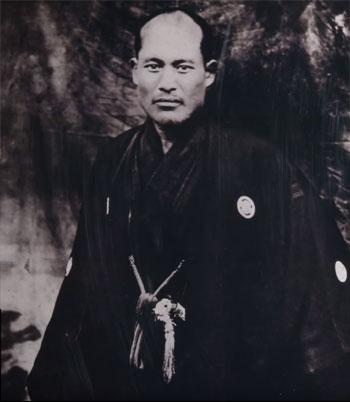
Parts of the video contain a first-person narration presumably in Morihei’s own words. He describes what happened during his stay in the harsh territory of northern Hokkaido as he and some 80 settlers from his native town of Tanabe carved out a village called Shirataki in the inhospitable wilderness. It is implied that the Hokkaido expedition was the brainchild of Morihei, fawningly referred to as the “King of Shirataki” elsewhere in Aikikai publications. The settlers from Tanabe were his flock, the charges of this intrepid young man who would soon create aikido.
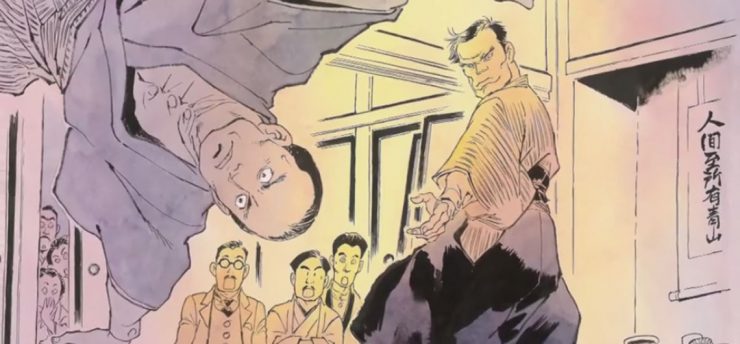
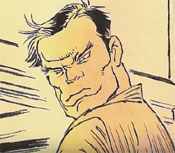
The role of Sokaku Takeda, Morihei’s jujutsu teacher, is briefly mentioned as well. Morihei and Sokaku are both depicted in anime-style drawings that the Japanese like so much. Sokaku is drawn in a way so as to suggest that he was a somewhat unsavory character.
What made this video so interesting to me is the presentation of several rare photos and documents relating to Morihei. This would serve to lead viewers to believe that this is a factual documentary put together by people who are experts in the subject matter. I was already aware of most of these materials but had never seen such high-resolution reproductions before. In fact, I spent a couple of hours extracting screenshots and stitching together parts of several photos for my collection. Exciting fare for an incurable aikido historian!
Here is the video. Even though it’s in Japanese, you’ll be able to follow along with the storyline.
Omissions… Lies? So what does the title of the article have to do with this video?
To put things in historical perspective, this video is a propaganda piece of a long-standing tradition designed to convey the following message: Morihei Ueshiba was the mastermind behind the Hokkaido expedition; the 80 settlers from his hometown were under his direction and he was, in effect, the “King of Shirataki”; Morihei met jujutsu expert Sokaku Takeda in Hokkaido, trained under him for a short while, and went on to create the wonderful and original martial art of aikido.
For several years early in my research, I faithfully parroted this view of aikido history. At that stage, I was an outsider who had no other sources of information to guide me. Later, as my research progressed, I gradually changed my view of Morihei’s Hokkaido years. I came to understand the social dynamic of the Ueshiba and Inoue families of Tanabe who were related by marriage, and the importance of this relationship to Morihei’s early formation and life decisions. Also, I began to research Daito-ryu Aikijujutsu and its influence on the development of modern aikido by interviewing Tokimune Takeda, Sokaku Takeda’s son. and several leading experts of the art. Over time, my view of Daito-ryu’s significance on aikido became dramatically different.
As an antidote to what is presented in this little video, let me mention a few historical facts I have verified that lead to totally different conclusions about the Hokkaido period.
Zenzo Inoue who married Morihei’s eldest sister was a fabulously wealthy man and a mentor to Morihei. Present with Morihei in Shirataki were his father, mother, daughter, Zenzo, his wife Morihei’s sister, their children including Yoichiro Inoue, a total of some 15 members of the extended families. Morihei was in his early 30s at the time and was coming out of a restless period of his life when he was sporadically employed and searching for a direction in life.
Morihei met Sokaku Takeda in Engaru in 1915 in the dead of the Hokkaido winter. Snow was piled up high making travel by horse and sleigh difficult and dangerous. Yet Morihei spent a month studying with Sokaku without even informing his family back in Shirataki. As the “King of Shirataki”, this can only be considered highly irresponsible behavior.
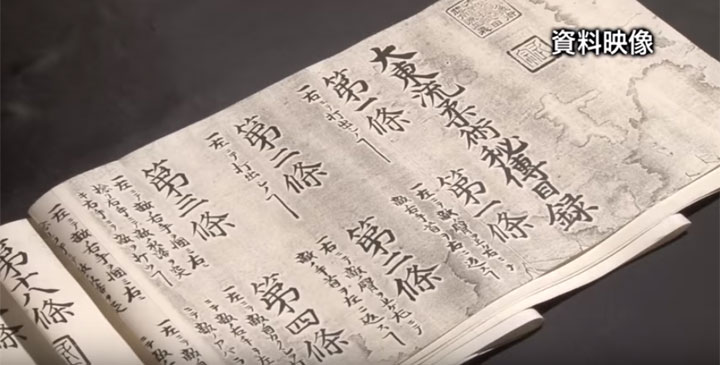
Furthermore, he took it upon himself to invite Sokaku to come to Shirataki to learn the master’s impressive jujutsu skills. Not only did Sokaku relocate to Shirataki, a backward village with only a few hundred people, he uprooted his family, bought property and made Shirataki his residence for the rest of his life! Another important fact is that, in an unpublished interview, Morihei reveals that Sokaku was grooming him to be his successor period. The two’s relationship lasted some 20 years during which their lives and careers were irrevocably intertwined.
In closing, let me relate to you what a close friend of mine asked me many years ago. To paraphrase his words, “Stanley, why are you so obsessed with what a bunch of dead guys did 80 years ago?”
Let me tell you what my obsession is for me. I have learned some fascinating details of an extraordinary man, the founder of aikido, and what were the events leading to the creation of the art I love. I have met and interacted with literally thousands of people who played roles in aikido’s history and who practiced the art under Morihei Ueshiba personally. Many of the people who have most influenced my life have been among them. I encountered a few egotistical jerks along the way as well!
I learned that a studied view of history would serve me well in life. I discovered the possibility to observe human behavior under a microscope and view past events from the vantage point of the present. This led me to make some intelligent guesses about the motivations and behaviors of key actors and apply the lessons they learned to my own life. I also learned that the personalities and motives of persons in the present could be reasonably inferred by how they described past occurrences. This greatly influenced my career choices and the individuals I would gravitate towards during my years of research in Japan. Yes, history has served me as a barometer of human behavior and guided me in life.
So, Felipe, thank you for thinking of me and sending me this delightful gift.
With that, I shall now descend from my bully pulpit!
If you wish to study the research that led to the above conclusions, I recommend you start with these articles:
Yoichiro Inoue: Aikido’s Forgotten Pioneer.
Interview on Daito-ryu Aikijujutsu with Katsuyuki Kondo
Click here to discover the secrets of the highest level of aikido to accelerate your progress!






The most insidious omission of most aikido schools is that their stuff only works if everybody cooperates. Now, can aikido be taught that way? I think so… if – the techniques actually would work when perfected. I’ve spent a lot of my aikido career “going through the motions”, aikido without a partner. That’s the short story. I’m pretty pleased with the results. The motions, however, are not random. They’re based on the Iwama repertory. Now, many feel that Iwama is clunky and relies too much on strength. There’s some truth to that, but one of the students at old College Avenue in the ’70s, studying with Bruce Klickstein, was a nurse at the psych ward of a Berkeley hospital. It was real. It worked for him and none of us had been training long in the day.
Fascinating, Stan. Thanks for posting.
Having followed your researches for about three decades, Stan, I wish to repeat my deep gratitude to you for correcting the historical misrepresentations of O-Sensei’s life and training. I fell in love with Aikido c. 1960 from a paperback book but, at that time, there was no one teaching in all of Canada. A move to grad school in Toronto where I found Takeshi Kimeda, the Father of Canadian Aikido, teaching in Tanino sensei’ Judo dojo. Kimeda shihan was and still is my ideal of a budo teacher. He appears to be relatively unknown because he belongs to the Yoshinkan/kai. It would seem the prevarications come from another organization and also from a multitude of individuals and books. Suffice it to say, your efforts have performed a miracle in revealing the truth but there is resistance. Many years ago one of my most talented students appeared to have raised O-Sensei to the level of a god – European style not a mere Shinto kami. After I told him as much of the truth as I had gleaned from your writings, Stan, he left to continue his new “religion”. I wonder how many Aikido deshi prefer the lying legend to the truth?
Douglas, I recognize your name and your feedback for these many years. Thanks for being an integral part of this effort.
Stan
The one thing I’ve learned, with the help of Aikido Journal, the writings of quite a few other people and, most of all, practice with my main teacher, is really the obvious: That there is nothing mysterious or exotic about Aikido practice, but instead everything that a master can do anyone can achieve if they are dedicated enough and willing to put in the time and effort to perfect it and **realise** internally what “AIKI” is.
The common criticism of Aikido and uke co-operating boils down to one, simple thing: We are supposed to learn to “receive” the technique in a way that we aren’t harmed **if it is applied correctly**. I am thankful to be able to train with a 7th dan who attends class as a student, who is a retired policeman, solid as a rock, but will ONLY go with a technique if it is applied correctly. Then, despite being ~65 years of age and very heavily built, will take full ukemi so you can experience applying the technique in full. Whenever I feel myself getting confident with any technique, I make sure to ask him after class if I can try it with him to make sure. I know I cannot rest on what I know, or think I know or believe I can do.
A friend of mine, wise beyond comprehension (through effort!) wrote once: ” The true measure of intellect is seen in the ability of a person to re-evaluate what they believe to be true when additional and clarifying knowledge is received, and then apply this knowledge in their life so as to intimately embrace the higher truth that has been revealed in the endeavor to receive still Higher Truth. That most people are incapable of making this critical re-evaluation of what they already believe, is simply a reality of life that inhibits man from making any real intellectual and spiritual gains in life.”
Quite frankly I thought the video was a load of nonsense. Ever noticed there is no video footage of Osensei taking on a real, uncooperative attacker for demo purposes from someone who is not an Aikidoka? There are plenty of him with his students, which in my opinion, is not credible and not good enough. Thankfully, I woke up and moved on from 20 years in Aikido.
Joe Rogan did a video about the fraud of Aikido and in my opinion it was very informative.
Aikidoka can’t make up their mind what Aikido really is. On one hand they desperately want vailidation and approval from others to say it is an effective self defence system and then on the other hand they say it has nothing to do with fighting.
Do you remember when Koichi Tohei went up against the Skeptical American Journalist in Rendez Vous With Adventure? Koichi Tohei was a 9th dan under Osensei, yet, he was in great trouble in that film and it was his 6th dan in Judo that saved him.
If you are going to idolize an old man with whom you have never met or never attacked, I think you need more solid evidence that he really could handle himself, rather than a bunch of prearranged dojo attacks with his loving students. In my opinion after doing Aiki for 25 years and going to Japan…he would have got smashed by an above average street fighter. Just my opinion.
The only Aikidoka in the world who really truly understood the essence of it and who cut a load of the techniques out was Master Steven Seagal. Even he said most people’s Aikido simply doesn’t work. And he is spot on.
My present interest is state of mind. Anime is good at conveying that through facial expressions and postures. I guarantee that my aikido would not work well if my state of mind bore much resemblance to that portrayed in the cartoon. The cartoon conveys intent and self-satisfaction with a result. These are exactly the traits I am presently seeking to minimize. I never met Tohei Sensei. I am grateful to his students of the day who preserved and taught some of his exercises which I still use and value. Grade inflation had to be real then. I don’t care how talented you are, how much will you assimilate in a decade or two? Tohei is quoted as saying that what he valued most of O Sensei’s teachings was relaxation. That’s a good point. I probably value irimi most. There are a few recorded instances in which Tohei Sensei ignores irimi which leads him into difficulty. Yes, he successfully dealt with it, but it was still difficulty.
Truth is what the majority is ready to accept.
Patrick Augé