
 Josh Gold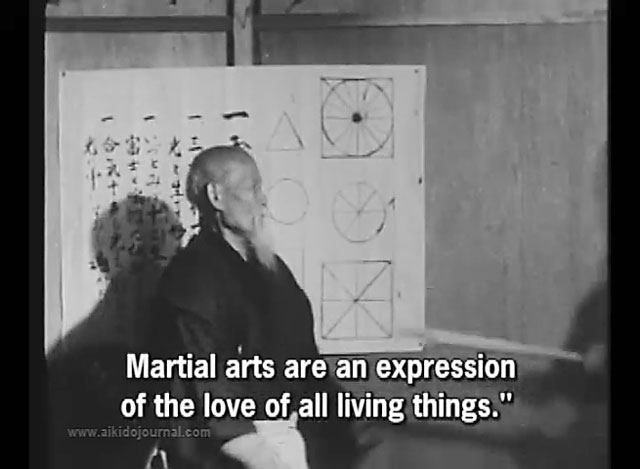
“These three basic shapes are a visual aid and should
be understood as movements of the entire body”
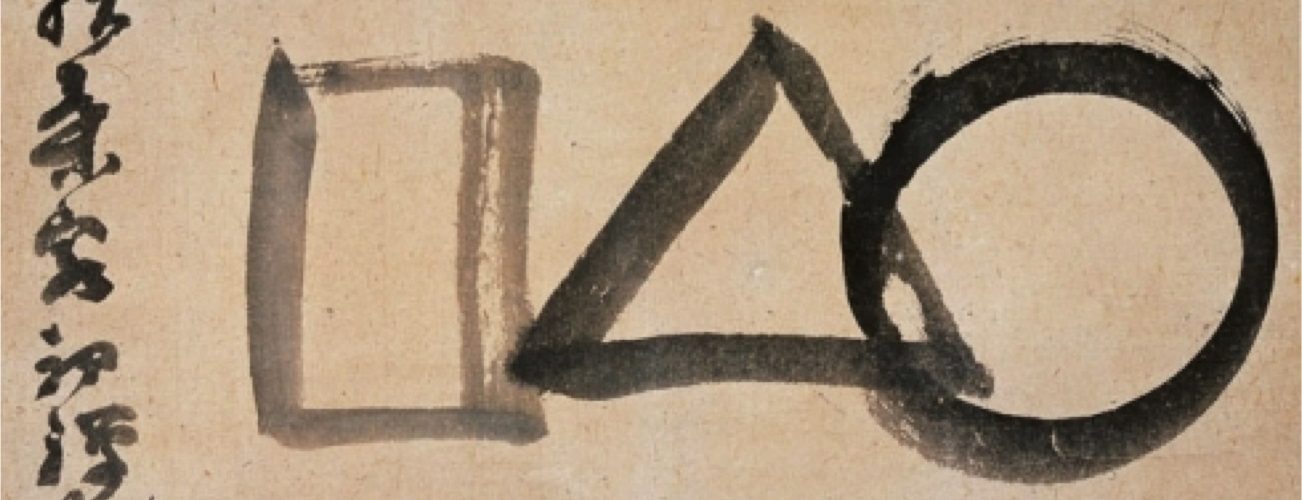
 According to John Stevens (in the Spanish-language “El Libro de Aikido”), the triangle represents Ki and Ryu, the production and flow of energy, and symbolizes the different trinities of existence: Heaven, Earth and Humanity; body, mind and spirit; man, woman and child; birth, maturity and death; truth, goodness and beauty. Technically, the triangle represents the triangular shape of the Aikido stance, initiative and entering. The circle is the principle of ju, flexibility and elasticity. A circle with a point in the center symbolizes perfect resolution, the harmony of all forces and continuous rotation. Physically, circular movements are the key to blending with the an opponent, and the source of unlimited techniques. The square represents kon, the diamond element: solid, stable, real and well proportioned. The square is the basis of total control necessary for the proper execution of the Aikido techniques.
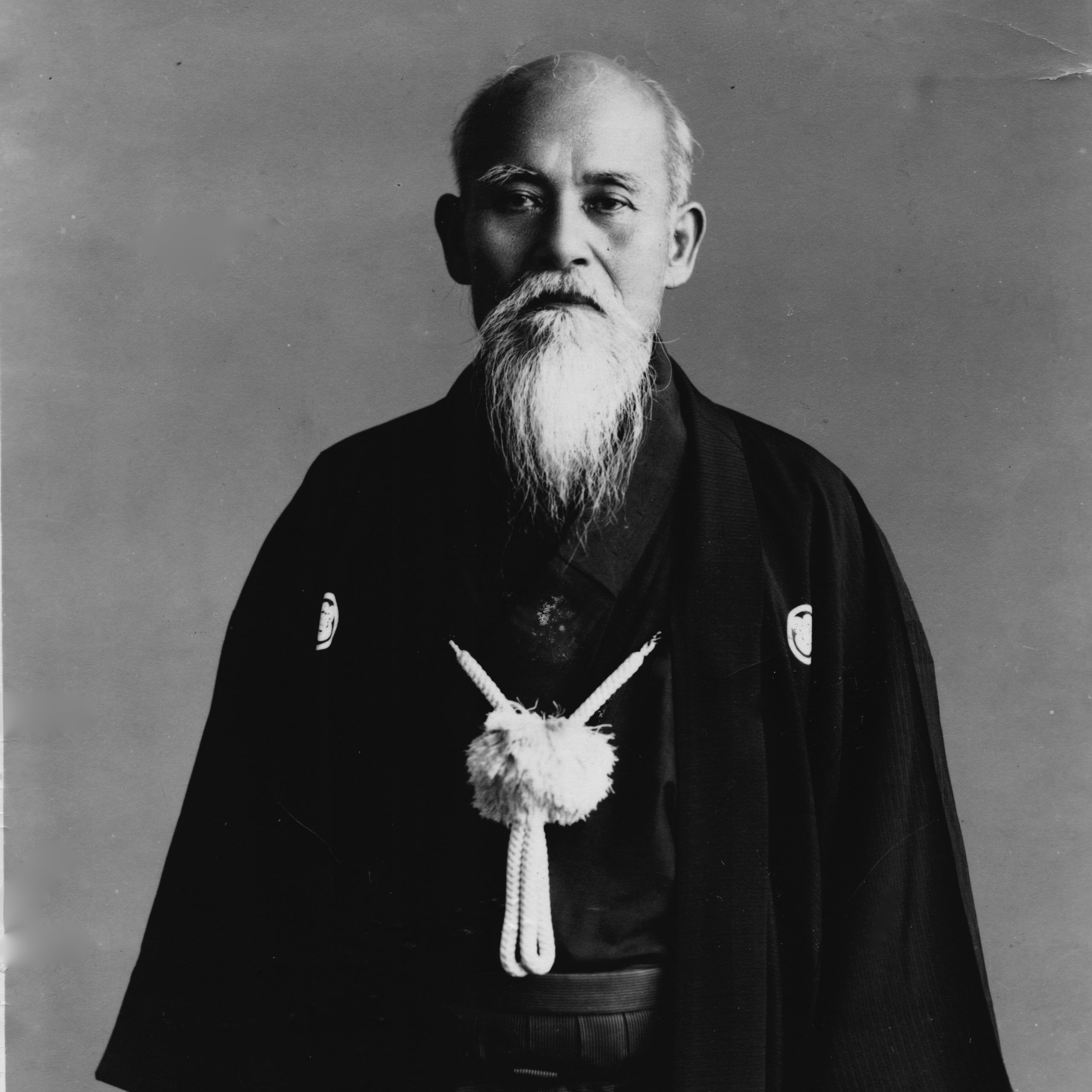
According to oral tradition (kuden), and also mentioned by Saito Shihan in his books, O-Sensei used the principles of the three basic shapes (triangle, circle and square) so that his students would understand what they were practicing and to illustrate the different concepts of movements and techniques. These three basic shapes are a visual aid and should not be understood as a static position of the body, but rather as movements of the entire body (tai sabaki). Some forms are very evident in daily practice. Others are discovered as the aikidoka matures and becomes more sensitive to his surroundings and his attacker. It is said that the body should be triangular and the mind circular. The triangle represents the generation of energy and the most stable physical posture. A good stance may also be an example of a triangular stance (sankaku-tai). The circle in turn represents serenity and perfection. The square represents solidity, the basis of applied control.
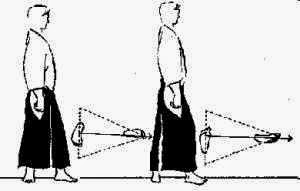
TRIANGLE (Sankaku): O-Sensei associated the shape of the triangle with the idea of flowing water (nagare). An example might be Irimi (entering). When a strike from a hand or foot or a cut with a bokken descends, the aikidoka advances simultaneously to one side to assume a defensive position. Sometimes, direct responses to an attack are effective to unbalance an opponent.
CIRCLE (Maru): In the case of a face-to-face attack, an opponent would have an opportunity to strike multiple times, and the energy waves are quite evident. After the initial attack, the aikidoka must escape the line of attack using a circular movement positioning himself to the side or behind the attacker. One should continue to move circularly only for a moment and in a controlled manner. One’s actions should lead to a correct aikido technique before the attack has ended. In this manner, the circular movement neutralizes the attack because it is very difficult to strike someone to the rear and at a close distance. Thus, depending on the position of the aikidoka and the opponent’s balance, any technique may be executed both “inside” and “outside” of the opponent’s body (omote/ura). The circle is not stable while stationary as in the case of the square. However, it is stable in the sense that it never stops since it is in constant motion. An analogy is the principle of the gyroscope whose stability is based on its spinning.
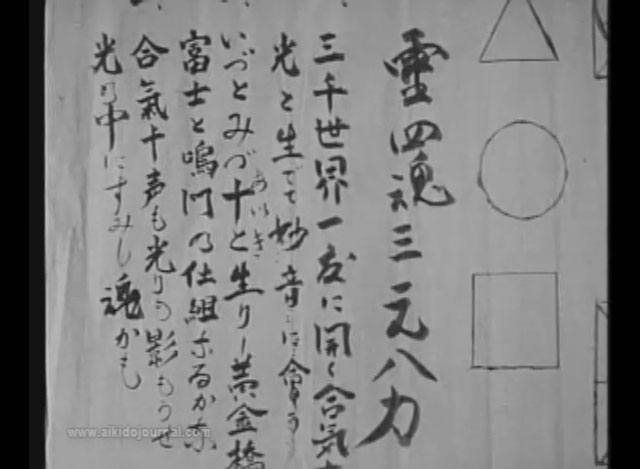
It is said that the body should be triangular and the mind circular. The triangle represents the generation of energy and the most stable physical posture. A good stance may also be an example of a triangular stance (sankaku-tai). The circle in turn represents serenity and perfection. The square represents solidity, the basis of applied control.
SQUARE (Shikaku): The square is a very stable and strong shape or position. However, unlike the triangle and circle, it lacks movement. When O-Sensei “drew” a square, he would often write the character “Go” (強) which means strength. He would say that since a square is formed by four 90-degree angles, the most effective attack would also be at a 90-degree angle. One normally begins in a “squared” position, being calm and neutral. From this initial state, if an attack comes, one may be ready and move or change to a triangular stance and counter by entering (irimi), or may change to a circular movement to blend with the attack and separate from it.
Click here to read the original Spanish version of this article.






Add comment