
 Josh Gold
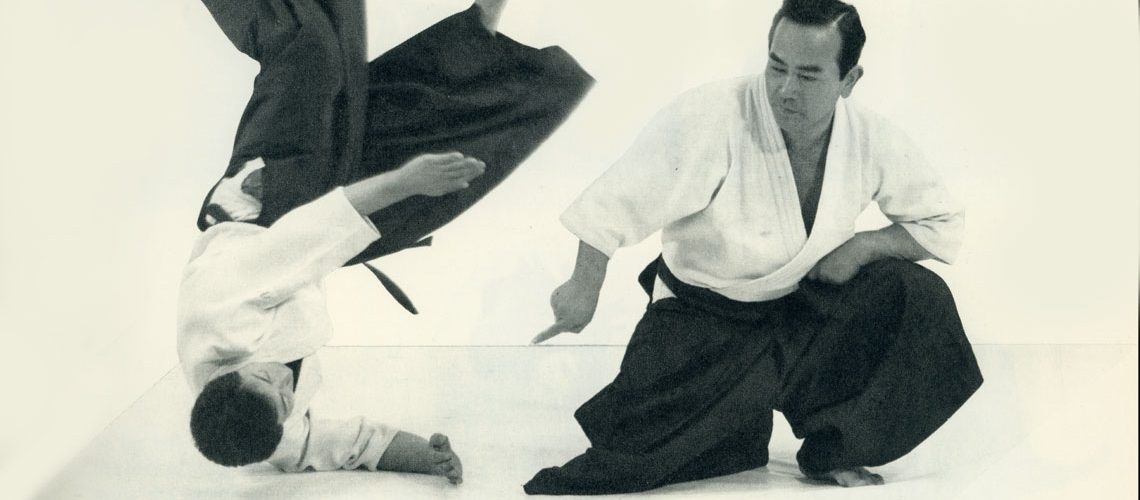
Those who have been following our posts for the last few days will understand that the famous Koichi Tohei, then chief instructor of the Aikikai Hombu Dojo in Tokyo, resigned his post in 1974. This was a major event in the aikido world that would dramatically alter the course of the evolution of the art from that point forward.
I can state categorically that his technique was among the most impressive I have ever experienced.
The immediate result affecting the status of aikido was that everyone united under the Aikikai umbrella — this was especially true of Japan and the USA — had to choose to remain with the Hombu Dojo, or join Tohei Sensei in his newly formed “Shinshin Toitsu Aikido” (Aikido with Mind and Body Coordinated). Practitioners who had friends and freely mingled with members of the two camps found themselves overnight separated from one another due to this organizational split. The psychological effect was devastating.
 Although the Aikikai system was numerically much larger than Tohei Sensei’s organization, it lost one of its most prominent figures, an outstanding teacher, and standout technician. After his resignation, Koichi Tohei went his own way with several hundred dojos worldwide in its fold and it continues to this day headed by Tohei’s son, Shinichi Tohei.
Tohei’s departure caused a major shift within the Aikikai that would forever affect the technical development of aikido. The Second Doshu Kisshomaru Ueshiba filled the void left by chief instructor Koichi Tohei and began to impose his own technical curriculum as the official standard of the Aikikai. Kisshomaru, clearly less talented than Tohei, instituted his art as the technical model that was followed in the Aikikai system from that point on. This explains the emphasis on light, circular, free-flowing movements that characterize the Hombu Dojo technically today.
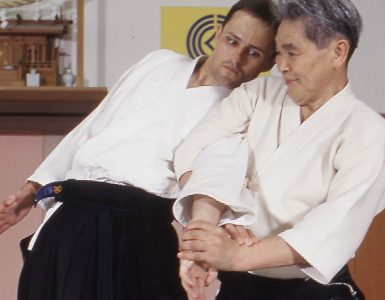
Those who practice the art within the Aikikai system today have little knowledge of who Koichi Tohei was and what his aikido was like. The short video of Tohei Sensei that we offer here will give you a good glimpse of the 10th dan’s unique approach to aikido that was one of the major trends within the Aikikai through 1974. The video contains footage from the 1973 All-Japan Aikido Demonstration and highlights of a seminar Tohei Sensei gave in Northern California in 1974.
Those who have been following our posts for the last few days will understand that the famous Koichi Tohei, then chief instructor of the Aikikai Hombu Dojo in Tokyo, resigned his post in 1974. This was a major event in the aikido world that would dramatically alter the course of the evolution of the art from that point forward.
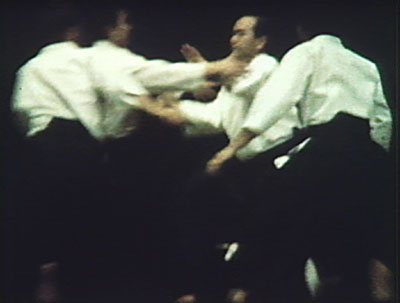 Watch this video carefully and you will notice that Tohei Sensei is physically powerful, but remains completely relaxed when executing techniques. He moves very lightly while still fully controlling his opponents by manipulating their balance and positioning himself skillfully. The two multiple-attack scenes that you will see are among the finest examples of Tohei’s high-level skills.
Many have observed that Tohei Sensei’s art does not appear martial, but as someone who studied in his system for several years and actually was thrown by him on a number of occasions, I can state categorically that his technique was among the most impressive I have ever experienced. We invite Aikido Journal readers to have a look at this video and form their own opinions.
 Antonio Aloia



When someone like O-Sensei or Koichi Tohei is completely relaxed, is not saying that they are “physically powerful” somewhat of a misunderstanding, if not simply misleading, when the source of their power is obviously not physical strength? It sounds like the language of someone who does not believe in, or understand, the expression of Ki in their actions. Of course there is always a physical component to whatever the incarnate human organism does, and the power felt might well come across as “purely physical” to an inexperienced uke on the receiving end, simply because they do not understand power that is something less tangible or obvious than just the physical, expressed through the coordinated mind and body of the tori. Most would say they could not explain it, or how it was done, without making allusions to “physical” power.
Perhaps Koichi Tohei’s portly girth suggested a physical emphasis to his demonstrations of power, but such a claim could hardly be made of others of much slighter build who also expressed extraordinary power and skill that belied their size and weight in their demonstrations; two of several that come to mind being the late Seigo Yamaguchi (Aikikai Chief Instructor) and the still active Ken Williams (Ki Federation of GB director).
Tohei Sensei was physically very powerful. Period. He was also relaxed and seldom used his strength. I trained in his system and learned from him directly and took falls. I know what I’m talking about.
George, you can put whatever metaphysical “other worldly” spin on it you like, but to this simple minded fellow – when I took falls for Tohei and Yamaguchi back in 1978, it sure felt physical to me. Skillful, but physical.
I would sneak away from Hombu Dojo on Fridays, to get tossed around by Tohei in his small group at the Ki No Kenkyu Kai, just around the corner from the Hombu. He kindly never asked where I usually trained, but he knew. Anyway, when he threw me it felt like a VERY heavy weight was just dropped on me (him) – and that sure felt physical to me. I also felt his subtle but powerful judo skills underneath his aiki.
I stopped training with him after about 6 months because training was so relaxed, we never broke a sweat, so it did not feel like budo. I remember commenting ” we are all moving around here like a bunch of limp rags.” His constant admonitions “weight under side – relax – relax ” started getting really irritating, so I moved on to other teachers.
After a decade of training in other styles, one day I found myself on the mean streets of Brooklyn struggling to arrest a very crazy – hyped up drug dealer. A big guy who absolutely refused to be arrested. Locks-pressure points-police tactics – atemi- none of it was working. A very scary situation. As exhaustion was setting in (maybe because of it) I heard that irritating Tohei refrain in my head again “relax – relaaaax – weight under side.” I dropped to my knees like a big sack of potatoes. To my surprise, both the bad guy and my partner “big Ray” came crashing down with me. The fall knocked the wind out of the dope dealer, so we finally got him handcuffed. I went home that night scratched up, bruised, sore – but alive.
Describe Tohei any way you want, but I say – Thank You Mr. Tohei !
Great stories, Tom. Thank you. You are spot on in your observations.
great!!!!
I think it was unfortunate for Tohei sensei to claim proprietorship over his teaching methods of mind and body unity – though he had every right to do so. His 4 principles were concise, easily applied and essential in effecting aikido techniques without the use of physical strength. “The Unbendable Arm,”, “The Unliftable Body,” and various exercises among others, weren’t just party tricks, but had real demonstrable value in highlighting the difference between using physical force or using the intrinsic strength of posture, balance and weight.
I wonder if any of those who remained with the Aikikai would have incorportated some elements of Tohei’s methods if Tohei sensei had not made that restriction in his letter of resignation. Would aikikai aikido have developed differently if one of its core edicts were that relaxation is indeed synonymous with power? Maybe not, but I think today’s aikido suffers the dilema of effecting techniques without the use of strength.
I’ve cross-trained in Systema for a couple years now and am repeatedly impressed with the depth and variety of exercises that focus simply on breathing and relaxed movement. I sometimes feel I’m in a super-charged “Ki Class” of Tohei. The systema of Ryabko/Vasiliev was not only a revelation to me of martial effectiveness, but also a confirmation of principles and validation of the direction Tohei felt compelled to take. However, though I respect and admire Tohei sensei and will continue to practice his 4 priciples of mind and body coordination, I am dissapointed in what Tohei’s aikido has evolved into. In my opinion today’s Ki Society bears little resmeblance to Tohei’s original aikido, and that both the Aikikai and Ki society are qualitatively less than what they could have been.
Hi Stan,
My teacher in Philippines Dr. Leonilo Del Carmen studied under Max Tian Sensei of Cebu Ki Society who happen to be the pioneering student of Tohei Sensei in Philippines. I am now with Takemusu Aikido Association under Sensei Hans Goto, a direct student of Saito Sensei. I first experienced the power of Kokyu power of Ki from a Ki society teacher and myself can attest the power of word “Relax”. The more we always use our muscle for strength is the more we build up lactic acid which cause common build up of muscle weakness and cramps. It is not a mystical in nature rather allowing proper forms and angles causing proper alignment of the body posture in order to facilitate a throw or excution of techniques.
In Tai-chi it is called “Peng” or the proper passage of Energy by correct posture. In Taoist approach, relaxation allows the energy or Ki flow in tendons which is longer rather than the muscles which are shorter and easily accumulates muscle waste products such as the lactic acid and other protein breakdowns due to muscle wasting and catabolism.
The mind,body and coordination of Tohei system complements with Saito Sensei’s proper form, angles and blending and often emphasize the essence of Kokyu.
My two cents only
Thank You,
Cesar
Musubi Tenchi Aikido of Palm Beach